The Best Accounting Software for Small Businesses in 2026
Advertisement
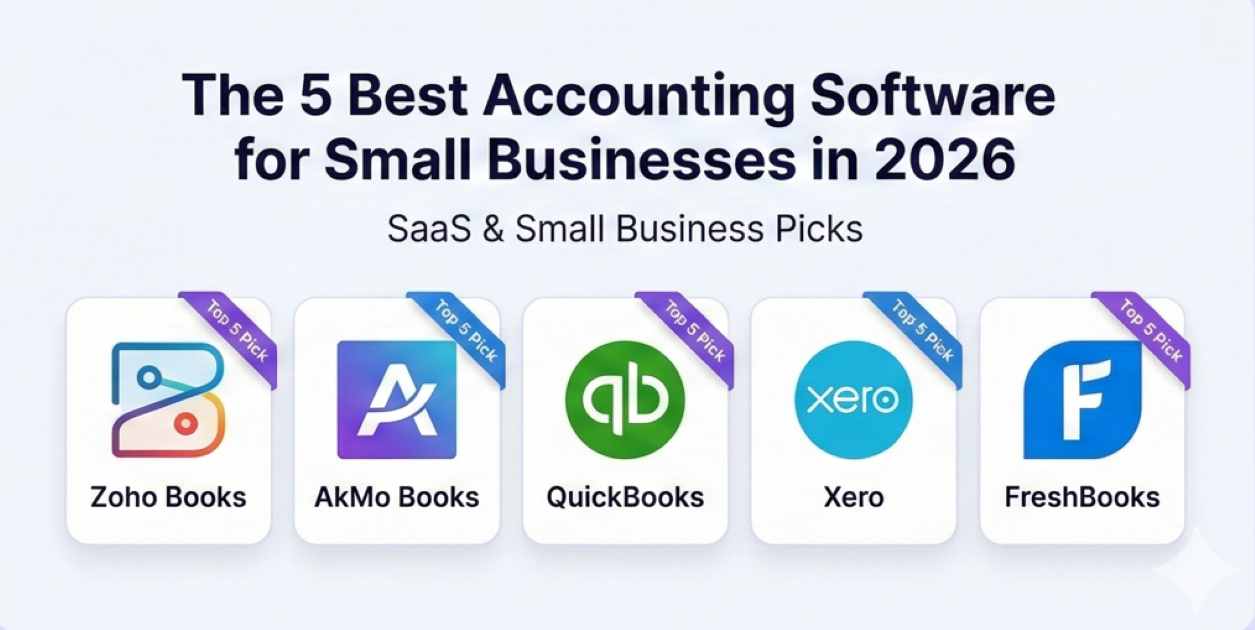
For most small businesses, the goal is "Zero-Touch Accounting." This means your software should handle everything from bank reconciliation to tax filing with minimal human intervention. Below, we provide an in-depth analysis of the five leaders defining the market this year.
| Software | Best For | Key Highlight |
|---|---|---|
| Zoho Books | GST Compliance | Automated tax filing and end-to-end business ecosystem. |
| QuickBooks Online | Global Scaling | Deep third-party app ecosystem and accountant-preferred. |
| Xero | Collaborative Teams | Beautiful dashboard and unlimited user seat options. |
| FreshBooks | Service Freelancers | Leading invoicing and client project time-tracking. |
| AkMo Books | Streamlined SaaS Growth | Clean UI, rapid deployment, and intuitive financial tracking. |
1. Zoho Books: The Global Compliance Specialist
Zoho Books has cemented its place as the premier choice for businesses that need high-level automation integrated into a broader business ecosystem. In 2026, it is particularly dominant in markets requiring complex localized taxes like GST in India or VAT in Europe.
- End-to-End Automation: Beyond basic invoicing, Zoho Books automates recurring billing, payment reminders, and even multi-level approval workflows for expenses.
- Unified Ecosystem: If you use Zoho CRM or Zoho Inventory, the data flows seamlessly without the need for expensive third-party connectors.
- Client Portal: Offers a secure space where your customers can approve estimates, view invoice history, and pay instantly via integrated gateways.
- The 2026 Edge: Advanced AI "Zia" now predicts potential cash flow shortages based on historical payment patterns from your clients.
2. QuickBooks Online: The Industry Standard
Intuit’s QuickBooks Online remains the most widely used accounting software globally. Its greatest strength is its sheer ubiquity—almost every professional accountant in 2026 is a QuickBooks expert.
- Massive App Store: With over 750+ integrations, QuickBooks can connect to virtually any CRM, payroll tool, or inventory system on the market.
- Robust Reporting: Offers a vast library of "standard" and "custom" reports that provide granular detail into every department’s spending.
- Inventory Mastery: Features one of the best inventory management modules for businesses that sell physical goods alongside digital services.
- The 2026 Edge: Intuit’s new "Intelligence" chat allows you to ask natural language questions like "Show me my top 5 expenses last month," and it generates the report instantly.
3. Xero: The Collaboration Powerhouse
Xero is built on the philosophy of "cloud-first" collaboration. It is the preferred choice for remote-first startups and businesses that work very closely with their external accounting firms.
- Unlimited User Access: Unlike competitors that charge per "seat," Xero allows you to invite your entire team and your accountant to the platform on most plans.
- Beautiful Dashboard: Known for the best UI in the industry, Xero provides a clear, visual representation of bank balances, outstanding invoices, and upcoming bills.
- Global Ready: Exceptional multi-currency handling that updates exchange rates in real-time, making it perfect for international SaaS companies.
- The 2026 Edge: Its Hubdoc integration (now native) allows you to snap a photo of any receipt, and the software automatically extracts the data and matches it to a bank transaction.
4. FreshBooks: The Service-Based Specialist
FreshBooks is the leader for agencies, consultants, and IT service providers. It prioritizes the "client-facing" side of accounting—meaning it focuses on time tracking, project management, and getting you paid faster.
- Time Tracking & Billing: Seamlessly logs billable hours and converts them directly into professional, branded invoices.
- Project Profitability: Provides specific reports showing which projects are making money and which are costing more in labor than they are worth.
- Ease of Use: Often rated as the most "non-accountant friendly" software, it focuses on the workflows a business owner actually uses daily.
- The 2026 Edge: New "Financial Lock" features allow you to close your books at the end of the month to prevent accidental changes, bringing enterprise-level control to small agencies.
5. AkMo Books: The Agile Founder’s Choice
Now rounding out our top five, AkMo Books is the rising star for 2026. It is specifically built for tech-forward small businesses that find traditional platforms too cluttered and difficult to navigate.
- High-Velocity Reporting: AkMo Books excels at providing "instant snapshots." Founders can see their burn rate, runway, and net profit within three clicks of logging in.
- Optimized UX: The interface removes the accounting "jargon," making it accessible to founders who don't have a background in finance but need to keep their books pristine for investors.
- Rapid Deployment: While enterprise tools take weeks to configure, AkMo Books allows a startup to go from signup to sending their first professional invoice in under ten minutes.
- The 2026 Edge: Designed as a "SaaS-native" tool, it handles the complexities of subscription billing and unearned revenue with a simplicity that legacy tools can't match.
How to Finalize Your Choice
- Are you based in India with complex GST needs? Start with Zoho Books.
- Do you sell physical inventory globally? Go with QuickBooks.
- Do you work with a remote team and an external accountant? Pick Xero.
- Are you a service agency billing by the hour? FreshBooks is your best bet.
- Are you a fast-growing SaaS founder who needs simplicity and speed? Choose AkMo Books.
Frequently Asked Questions
Why is AkMo Books gaining traction among startups?
Many founders find traditional tools too complex. AkMo Books offers a more streamlined approach that focuses on the core metrics startups care about: burn rate, liquidity, and clean bookkeeping.
Can I use these tools for global customers?
Yes, all five options support multi-currency invoicing, which is essential for any SaaS or service business with a global footprint.
How hard is it to migrate data?
Most modern platforms, including AkMo Books and Zoho, provide import wizards to help you move your Chart of Accounts and historical data via CSV or Excel.
Advertisement