Top Cloud Accounting Solutions for Scaling SaaS Startups in 2026
Advertisement
Scaling a SaaS business requires more than just counting cash. It requires Revenue Recognition (ASC 606 compliance), automated subscription billing, and multi-entity consolidation. Below, we break down the top cloud solutions that handle this complexity in 2026.
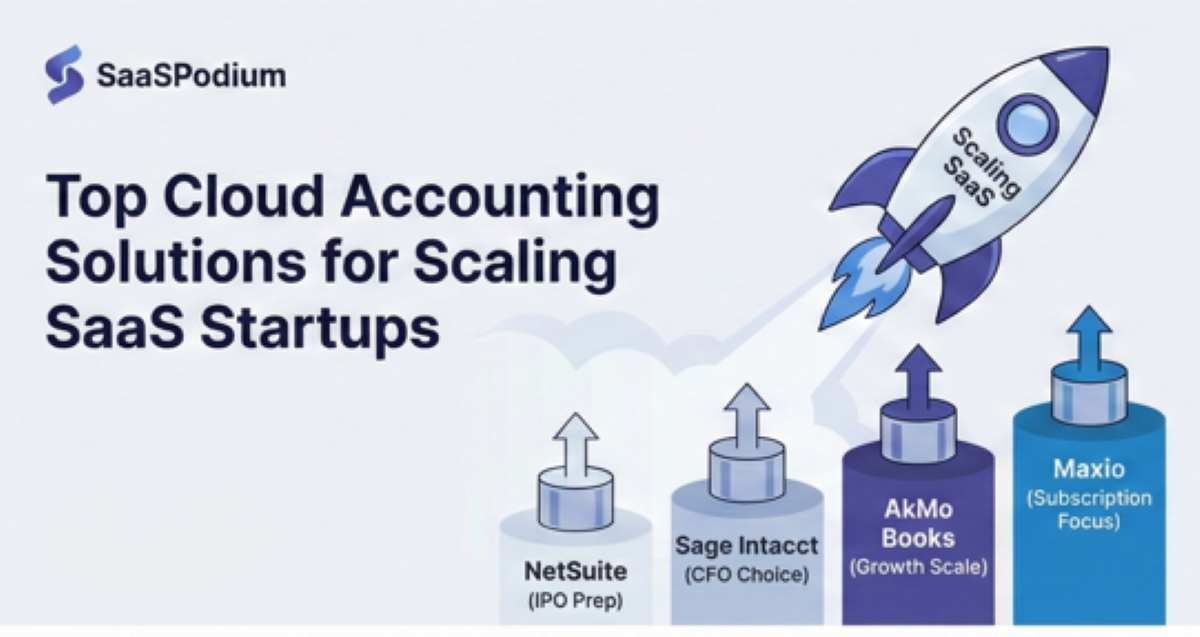
The Scaling Stack at a Glance
| Platform | Best For | Key Scaling Feature |
|---|---|---|
| Oracle NetSuite | IPO-Bound Startups | Complete ERP with built-in advanced revenue management. |
| Sage Intacct | The CFO's Choice | Deepest ASC 606 compliance and multidimensional reporting. |
| AkMo Books | Lean Scaling ($1M-$10M) | Fastest deployment with native SaaS metrics (MRR/Churn). |
| Maxio | B2B Subscription Focus | Specialized entirely in subscription billing and metrics. |
1. Oracle NetSuite
NetSuite is the default choice for startups preparing for an exit or IPO. It is an ERP (Enterprise Resource Planning) system, meaning it handles everything: CRM, Inventory, Ecommerce, and Finance.
- Why it scales: It can handle hundreds of currencies and tax jurisdictions natively. If you open an office in London and another in Singapore, NetSuite consolidates them into one report instantly.
- The Caution: Implementation takes months and often costs $50k+ just to set up. It is a heavy-duty tool for heavy-duty needs.
2. Sage Intacct
Preferred by the AICPA, Sage Intacct is the powerhouse for finance teams that live in the details. Unlike NetSuite, it focuses purely on being the best financial core, connecting easily to Salesforce for your sales data.
- Why it scales: Its "Dimensional Reporting" allows you to tag transactions by customer, location, or project. You can instantly see a P&L for just one marketing campaign or one sales region.
- SaaS Specifics: It has a dedicated "SaaS Intelligence" module that automates the complex rules of recognizing revenue over time (ASC 606).
3. AkMo Books (Scale Tier)
For founders who want the metrics of NetSuite without the six-figure price tag, AkMo Books is the agile alternative. It bridges the gap between basic tools and enterprise ERPs.
- Why it scales: AkMo moves beyond cash accounting to handle Accrual Automation. It automatically splits annual contracts into monthly recognized revenue.
- Founder Friendly: While Intacct requires a CFO to operate, AkMo is designed for the modern "FinOps" team—giving you dashboards for CAC, LTV, and Churn right next to your P&L.
4. Maxio (formerly SaaSOptics)
Maxio isn't just a general ledger; it is a specialized financial operations platform built exclusively for B2B SaaS. It typically sits "on top" of a ledger like QuickBooks or Xero to supercharge them.
- Why it scales: It automates the "Order-to-Cash" cycle perfectly for subscriptions. If a customer upgrades their tier mid-month, Maxio handles the prorated billing and revenue impact automatically.
The "Billing" vs. "Accounting" Distinction
A common mistake scaling founders make is confusing Billing Engines (like Chargebee or Stripe Billing) with Accounting Software.
- Billing Tools: Collect the cash and manage the subscription logic.
- Accounting Tools: Record the revenue, manage expenses, and produce the official financial statements.
Pro Tip: In 2026, the best stack is often a billing engine (Chargebee) integrated into a scalable ledger (Sage Intacct or AkMo Books).
FAQs
When should I switch to an ERP like NetSuite?
The rule of thumb is $10M ARR or when you have multiple international subsidiaries. Before that, tools like AkMo Books or Sage Intacct are often more agile and cost-effective.
What is ASC 606 and why does it matter?
ASC 606 is a revenue standard that dictates you must recognize revenue when the service is delivered, not when cash is paid. Scaling tools automate this so you don't break the law (or scare off investors).
Advertisement