5 Signs You’ve Outgrown Your Spreadsheet and Need Accounting Software
Advertisement
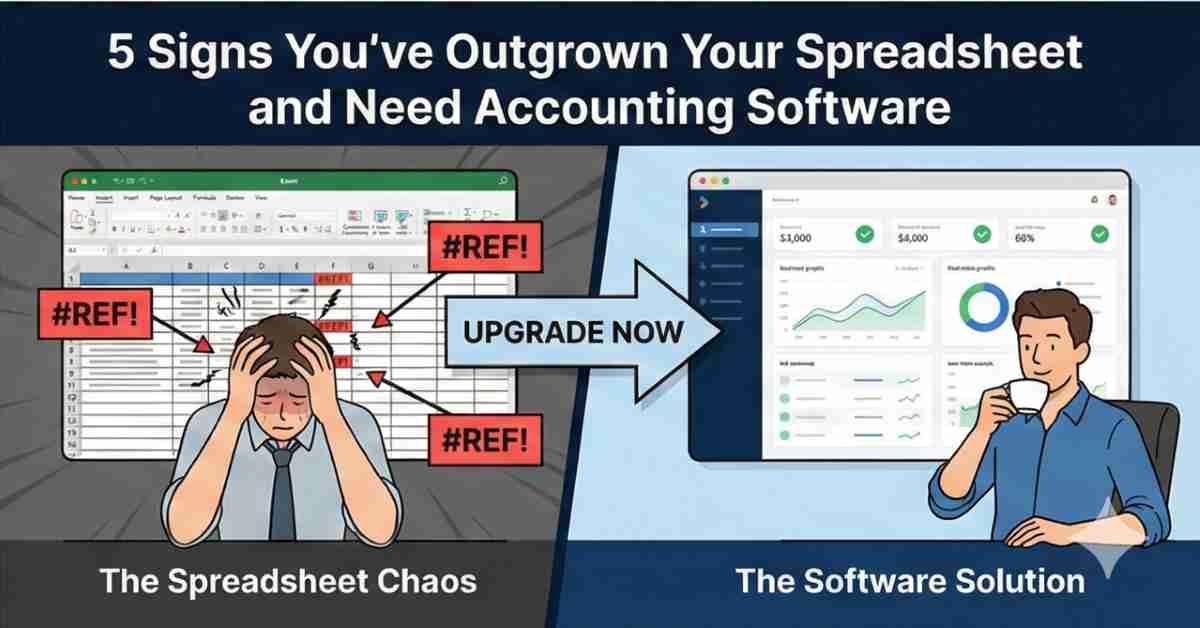
Moving to professional accounting software is often seen as a "big company" move, but waiting too long can lead to data loss, tax penalties, and lost revenue. If any of the following five signs sound familiar, it is time to retire the spreadsheet and upgrade to a dedicated accounting tool.
1. You Spend More Time Entering Data Than Analyzing It
Data entry is a low-value task. Modern software connects directly to your bank feed and categorizes transactions automatically. If you are still copy-pasting dates and amounts, you are wasting the most valuable asset a founder has: time.
2. The "Broken Formula" Panic
Spreadsheets are fragile. One wrong keystroke can break a formula that calculates your tax liability. Accounting software uses hard-coded logic that cannot be "broken" by a typo, ensuring your Balance Sheet always balances.
3. You Have No Real-Time Visibility
Spreadsheets are static. They only show you history. Accounting software is dynamic. It shows you who owes you money today, what bills are due tomorrow, and predicts your cash flow for next week. In a fast-moving market, operating on old data is flying blind.
4. Invoicing is a Manual Chase
If you are using Word or Excel to create invoices, you are missing out on automation. Tools like AkMo Books or Zoho can send automatic reminders 3 days before due date, on due date, and 3 days after—dramatically reducing your "Days Sales Outstanding" (DSO).
5. Investors (or Tax Officials) Ask for an Audit Trail
Spreadsheets don't have a history log. If a number changes, there is no record of who changed it or why. This is a red flag for investors during due diligence. Accounting software maintains an immutable "Audit Trail" that logs every single modification, providing the transparency required for serious growth.
The Verdict
Switching doesn't have to be expensive. With free options available for early-stage companies, the cost of staying on a spreadsheet is far higher than the cost of upgrading software.
Advertisement