What is Accounting Software? The Financial Engine for SaaS Growth
Advertisement
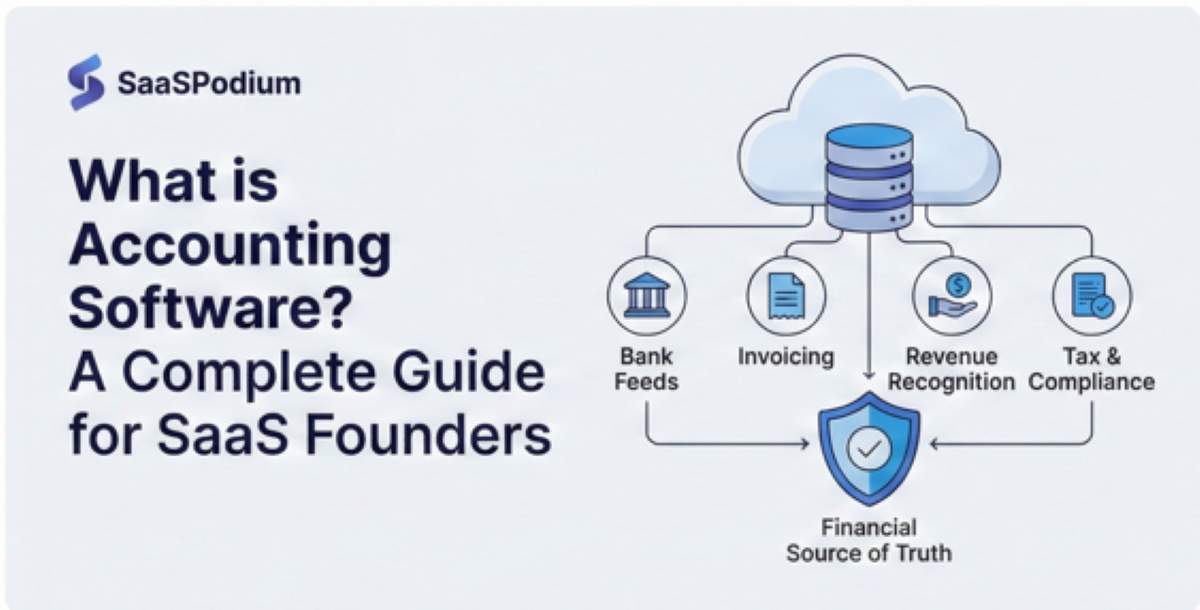
At its technical core, accounting software is a computer program that captures, records, and processes financial transactions within functional modules. Unlike a simple spreadsheet, it uses the "Double-Entry" system to ensure that every debit has a corresponding credit, keeping your Balance Sheet in perfect equilibrium. For a modern SaaS business, this software is the hub that connects your bank accounts, payment gateways, and payroll systems into one unified view.
The Technical Pillars: Core Modules
To understand how these tools work, you must look at the specific modules that handle your company's data flow:
- General Ledger (GL): The "Master Record" of all transactions. It categorizes every cent into accounts like Revenue, Assets, Liabilities, and Expenses.
- Accounts Payable (AP): This is where you track what you owe to vendors (server costs, API fees, office rent). It helps you manage cash outflows and avoid late fees.
- Accounts Receivable (AR): This tracks the money customers owe you. In SaaS, this module often integrates with your billing system to track outstanding subscription renewals.
- Bank Reconciliation: An automated module that pulls data from your bank and matches it against your books, identifying discrepancies instantly.
Integration: The SaaS Financial Stack
For a software-based business, accounting software doesn't exist in a vacuum. It sits at the center of what we call the Financial Stack. Because SaaS companies often deal with thousands of micro-transactions, manual entry is impossible.
Modern tools use API integrations to pull data from:
- Payment Processors: Tools like Stripe or PayPal feed transaction data directly into the software.
- Payroll Systems: Employee salaries and taxes are automatically logged as expenses.
- Expense Management: Corporate cards (like Brex or RazorpayX) sync receipts and spending categories in real-time.
Why Founders Must Move Beyond Spreadsheets
Many early-stage founders start with Excel or Google Sheets. While spreadsheets are flexible, they lack three critical components needed for scale:
- Audit Trails: Accounting software logs every change made to a transaction, showing *who* changed it and *when*. Investors require this transparency during due diligence.
- Automation Logic: Spreadsheets cannot automatically recognize revenue over a 12-month period for an annual plan; accounting software does this via "Revenue Recognition" rules.
- Error Reduction: Broken formulas in Excel can lead to massive financial misstatements. Accounting software uses hard-coded logic to prevent "unbalanced" entries.
Frequently Asked Questions
What is the difference between Bookkeeping and Accounting software?
Bookkeeping software is focused on recording daily transactions (the "data entry" phase). Accounting software is broader—it includes those records but also provides the high-level analysis, reporting, and compliance tools needed to manage a business's health.
Does accounting software handle GST/VAT in India?
Yes, modern cloud tools like AkMo Books or TallyPrime are built specifically to handle Indian tax compliance, automatically generating GSTR reports and calculating E-invoices.
When is the right time to invest in a professional tool?
Ideally, the moment you incorporate. Even if your revenue is zero, tracking your "Founder's Capital" and initial expenses (domain, hosting, legal) correctly from Day 1 saves hundreds of hours of cleanup later.
Advertisement