What is Business Intelligence (BI)? (Definition, Key Features, and Benefits Explained)
Advertisement
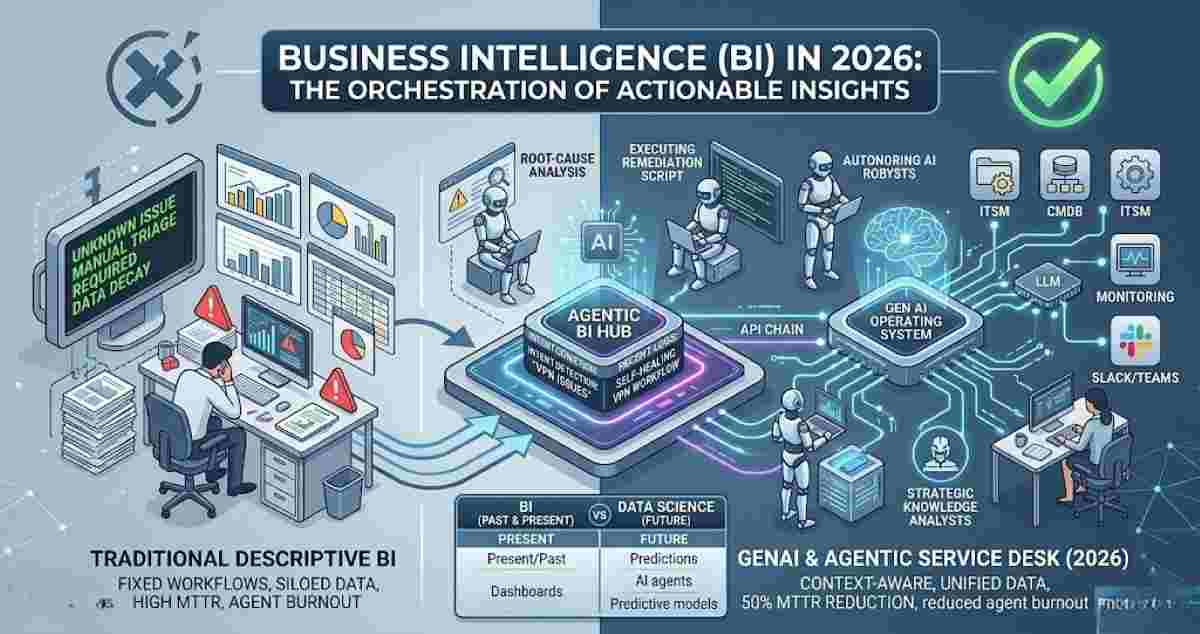
Business Intelligence (BI) is an umbrella term that encompasses the technology, infrastructure, and best practices used by organizations to collect, integrate, analyze, and present business data. The primary objective of BI is to transform raw, fragmented data into actionable insights that inform strategic and tactical business decisions. In the 2026 landscape, BI has evolved from "Descriptive Analytics" into Agentic BI, where autonomous AI agents not only visualize data but also suggest proactive business interventions based on real-time stream processing.
Quick Navigation: The Architecture of Intelligence
The Core Pillars of Business Intelligence
To understand how BI functions, one must look at the data lifecycle. BI is not a single tool but a process consisting of four critical stages:
- Data Ingestion and Extraction (ETL): Pulling data from disparate sources—such as CRM systems and ERPs.
- Data Warehousing: A centralized "Single Source of Truth" where cleaned data is stored in a structured format.
- Data Mining and Discovery: Identifying patterns and correlations within the historical data sets.
- Data Visualization: Converting complex data into intuitive dashboards and charts.
According to Microsoft, modern BI thrives on the cloud, allowing organizations to scale their analytical power without massive on-premise investments.
Key Features of Modern BI Platforms
In 2026, the feature set of a BI platform must go beyond simple bar charts. To remain competitive, a BI strategy must include:
- Real-Time Data Streaming: Providing up-to-the-second visibility into supply chains and stock levels.
- Augmented Analytics: Using machine learning to automatically highlight the most important insights in a data set.
- Natural Language Processing (NLP): Allowing users to ask questions in plain English and receive instant visualizations.
- Embedded BI: Pushing dashboards directly into daily apps like Microsoft Teams or Slack.
Business Benefits: From Efficiency to Revenue
1. Accelerated Decision Making
Traditional manual reporting can take days. BI reduces this to seconds. Real-time dashboards allow managers to adjust inventory or marketing spend instantly, preventing lost revenue opportunities.
2. Operational Efficiency and Cost Reduction
BI identifies operational waste. According to Tableau, optimizing processes through data-driven insights can lead to an average OpEx reduction of 20%.
3. Enhanced Customer Experience (CX)
By integrating data from purchase history and support tickets, BI creates a 360-degree view of the customer, enabling hyper-personalized marketing campaigns.
BI vs. Data Science: Understanding the Difference
| Category | Business Intelligence (BI) | Data Science (DS) |
|---|---|---|
| Primary Focus | The Present and Past | The Future and Predictions |
| Data Type | Structured (Table-based) | Unstructured (Audio, Video, Text) |
| Output | Dashboards & Reports | Predictive Models & AI Agents |
The most successful companies treat data as a high-value asset. According to Gartner, investing in "Data Literacy" across the workforce is key to long-term success.
Business Intelligence FAQs
What is the difference between Business Intelligence and Business Analytics?
BI focuses on what happened, while Business Analytics includes predictive and prescriptive models for what will happen next.
Does a company need a Data Warehouse for BI?
While small businesses can use spreadsheets, larger enterprises require a Warehouse like Snowflake to handle data volume without slowing down operations.
What is "Self-Service BI"?
It refers to platforms designed for non-technical business users to create their own reports without needing help from the IT department.
Advertisement