Agentic AI in CRM — what it does, what works, and what to watch in 2026
Advertisement
Introduction
What agentic AI actually does (Practical examples)
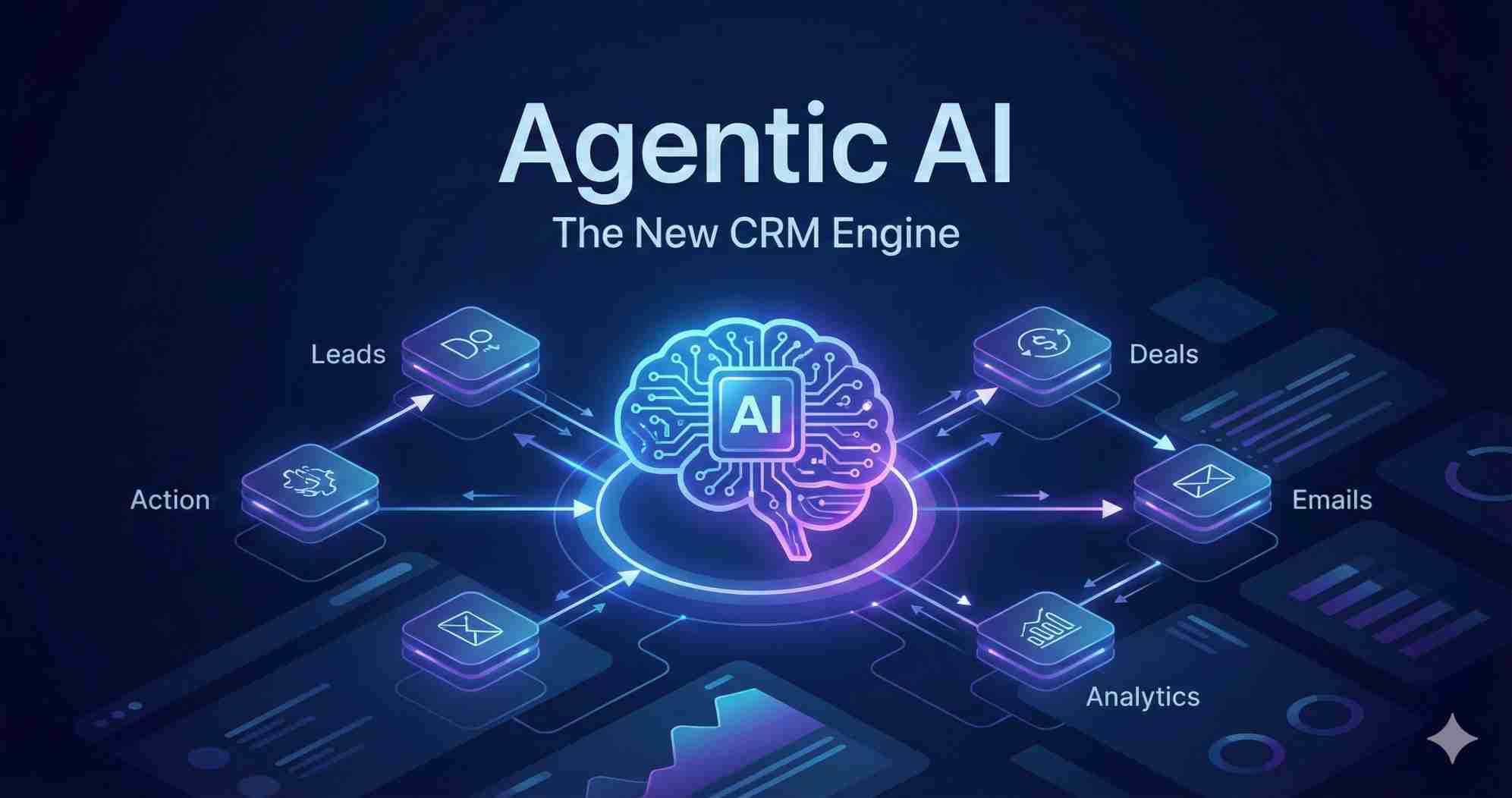
Most agentic CRM tools rely on a three-part loop:
- Goal-setting: You tell it to "book five meetings this week."
- Autonomous action: It identifies leads, sends emails, and manages the calendar.
- Learning: It sees which subject lines get ignored and pivots its strategy.
Early adopters are using these for "Autonomous SDR" workflows. The agent handles the initial "hello," filters out the window shoppers, and only alerts a human rep when a prospect is actually ready to talk.
AI-powered sales automation — what changes
Traditional automation is a series of "if/then" statements: If someone fills out a form, send Email A. Agentic automation is more like a living conversation. It looks at context. If a prospect mentions they’re going on vacation, the agent knows to pause the sequence and follow up later. It can split-test itself in real-time or re-route leads based on which rep has the best closing rate for that specific industry. It’s about being effective, not just being fast.
Automated lead scoring in 2026 — not just a number
By 2026, lead scoring has evolved from a static "75/100" to a dynamic, explainable metric. These systems pull from everywhere: how a user interacts with your product, what they said in a chat, and their company’s recent funding rounds.
The Golden Rule: Never let an agent act on a score if it can't explain why that score exists.
Without transparency, you risk burning through good leads because of a glitch in the logic. Treat automated scoring as a controlled experiment before you give it the keys to your database.
Predictive customer analytics — forecasting and risk detection
Instead of just telling you "Customer X might churn," an agentic system notices the red flags and automatically launches a "retention play." This might involve sending a personalized check-in or offering a training session. For Success teams, this turns data into a decision pipeline: Predict → Act → Measure → Refine. It shifts the focus from "what happened?" to "what are we doing about it?"
Hyper-personalization in sales — scale without the "bot" feel
The goal here is scale without losing the human touch. Agents can synthesize LinkedIn activity, recent company news, and CRM history to write outreach that feels specific. To keep this safe, use "constrained variables." Don't let the AI write whatever it wants (that leads to hallucinations); instead, give it a framework: "Reference their recent webinar and link it to Feature X." This keeps the messaging accurate and the reply rates high.
Risks, governance, and measurement — the "non-sexy" part
Agents can fail in new ways—like doubling down on a bad goal or accidentally leaking data. To keep things on the rails:
- Human-in-the-loop: Require approval for big moves (like signing a contract).
- Audit logs: Keep a clear record of every action the agent took.
- Key Metrics: Track the "False Positive" rate in qualification and the actual conversion rate from meeting to opportunity.
How to pilot agentic AI — a short playbook
- Start Narrow: Choose one goal (e.g., "Book more demos from inbound forms").
- Set Boundaries: Decide what it can't do (e.g., "Do not offer discounts over 10%").
- Review Weekly: Check the dashboards for errors or weird logic.
- Demand Logic: Make the agent explain its rationale for every action.
- A/B Test: Run the agent against your current manual process to see if it actually wins.
Bottom Line
Agentic AI is the next logical step for CRM. It’s moving from "helping" to "doing." It offers massive gains in speed and volume, but only if you have clean data and tight guardrails. Think of it as a 60-day experiment, not a total replacement of your current sales stack.
Salesforce Sales Cloud
Salesforce
FAQs
Is this just marketing hype?
There is plenty of "agent-washing" out there, but the ability to automate multi-step workflows is a real value-add. Stick to narrow pilots to find the truth.
What are the best KPIs for a pilot?
Look at action-based metrics: meetings booked per lead, time-to-first-contact, and the accuracy of lead qualification.
Will this replace sales reps?
No. It replaces the "grunt work." It frees up humans to do the things AI can't: build deep relationships, handle complex negotiations, and navigate office politics.
Advertisement