What is an Electronic Signature? (Legality, Features, and Benefits Explained)
Advertisement
In the hyper-automated business landscape of 2026, the "wet-ink" signature is becoming a relic of the past. As organizations prioritize speed and security, the Electronic Signature (e-signature) has evolved from a simple convenience to a legal and technical necessity. But an e-signature is much more than just a digital image of your handwriting; it is a sophisticated legal concept backed by rigorous cryptographic standards.
Quick Navigation:
Defining the Electronic Signature
1. Defining the Electronic Signature
At its core, an electronic signature is defined as an electronic sound, symbol, or process attached to or logically associated with a record and executed by a person with the intent to sign. It is important to distinguish between an electronic signature (the broad legal concept of intent) and a digital signature (the specific encryption technology used to secure the document). In 2026, most professional-grade e-signature platforms use digital signature technology—specifically Public Key Infrastructure (PKI)—to ensure that a document cannot be altered once the "seal" is applied.
2. The Global Legal Landscape: ESIGN, UETA, and eIDAS
The legality of electronic signatures is no longer a "grey area." Most jurisdictions have established clear frameworks to ensure digital agreements are as binding as their paper counterparts.
United States (ESIGN & UETA): The federal ESIGN Act (2000) and the state-level UETA establish that a contract cannot be denied legal effect solely because it is in electronic form. The US model is "permissive," meaning almost any electronic mark is valid as long as you can prove intent and consent.
European Union (eIDAS 2.0): The EU utilizes a more "prescriptive" tiered system under eIDAS:
Simple Electronic Signature (SES): Basic level (e.g., a scanned image).
Advanced Electronic Signature (AdES): Requires unique linkage to the signer and tamper-detection.
Qualified Electronic Signature (QES): The gold standard. It requires a face-to-face (or equivalent video) ID check and is automatically granted the same legal status as a handwritten signature across all EU member states.
3. Key Features of Modern E-Signature Platforms
To be legally defensible and operationally efficient, modern e-signature tools in 2026 provide several critical features:
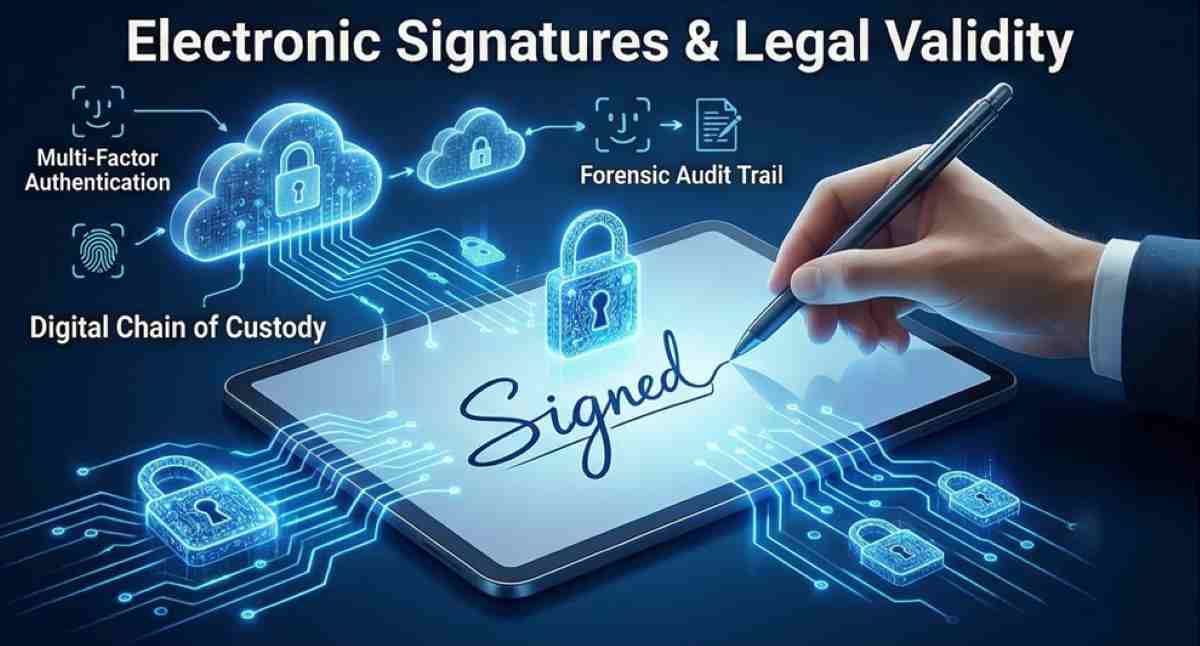
Forensic Audit Trails: Every action—from the moment the document is opened to the final signature—is logged with a timestamp, IP address, and device ID. This creates a "digital chain of custody" that is nearly impossible to refute in court.
Multi-Factor Authentication (MFA): To verify the signer’s identity, platforms now use SMS codes, knowledge-based authentication (KBA), or even biometric checks (FaceID/Fingerprint) before granting access to the document.
Tamper-Evident Seals: Once signed, the document is digitally "wrapped." If even a single comma is changed post-signature, the digital certificate will show as "invalid," alerting all parties to potential fraud.
Seamless Integrations: Top-tier platforms now live directly inside your CRM, ERP, or HRIS, allowing you to generate and send contracts without ever leaving your primary workflow.
4. The Business Benefits of Going Digital
The transition to electronic signatures isn't just about technology; it’s about the bottom line.
Velocity: Organizations report that electronic documents are completed 80% faster than paper-based ones. Transactions that once took days for "mail and return" now close in minutes.
Cost Efficiency: Between paper, ink, postage, and the labor required to chase down missing signatures, companies save an average of $20 to $40 per document by switching to digital.
Sustainability: By eliminating the need for physical transport and paper production, e-signatures are a cornerstone of ESG (Environmental, Social, and Governance) goals, significantly reducing a company’s carbon footprint.
Enhanced Compliance: Automated reminders and "required fields" ensure that no document is ever returned incomplete, reducing the administrative burden of "fixing" errors.
Frequently Asked Questions (FAQs)
1. Is a scanned image of my handwritten signature legally binding?
In many jurisdictions, yes—it qualifies as a "Simple Electronic Signature." However, it is the least secure form and is easily challenged in court because it lacks a verifiable audit trail. For high-value contracts, always use a dedicated e-signature platform that provides a digital certificate.
2. Can I use electronic signatures for all types of documents?
While most commercial contracts are eligible, some jurisdictions still require "wet-ink" signatures for specific documents, such as Wills, Codicils, and certain real estate deeds. Always check local regulations for "Exempted Documents" before proceeding.
3. What happens if the e-signature vendor goes out of business?
A compliant e-signature solution should be "vendor-independent." This means the digital signature is embedded into the PDF itself. You should be able to verify the validity of the signature using standard software like Adobe Acrobat, even if the original provider’s website is offline.
Advertisement