Why Your Demand Gen Campaigns Are Disappearing into the Void
Advertisement
If you are a Demand Gen Manager in 2026, you aren't just fighting for attention; you are fighting the AI-driven gatekeepers of the inbox. Google and Yahoo have moved past simple keyword filters. They now use sophisticated behavioral models that can smell "marketing slop" from a mile away.
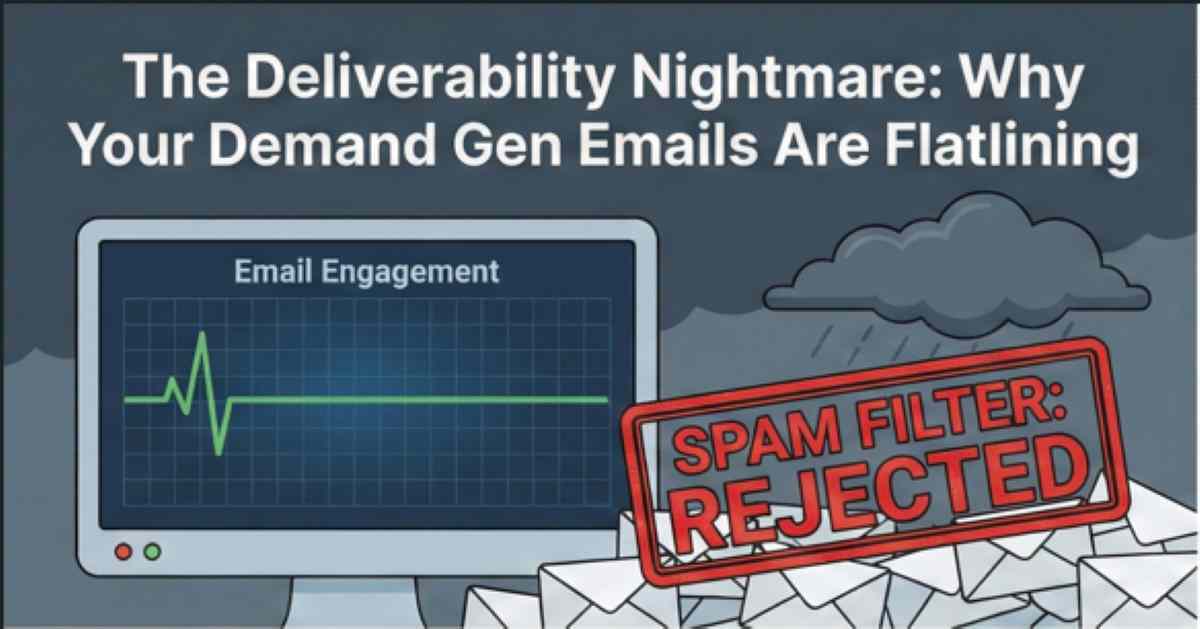
If your open rates have plummeted recently, you don't have a "messaging" problem. You have a deliverability nightmare. Here is why the spam filters have turned against you.
1. The DMARC Hammer: Authentication is No Longer Optional
Back in the day, having SPF and DKIM records was a "nice to have" for small teams. In 2026, it is the bare minimum for entry. If your DMARC policy isn't set to p=quarantine or p=reject, modern mail servers will treat you like a Russian bot trying to sell crypto.
Demand Gen Managers often fall into the trap of "buying a list" and blasting it from their primary domain. This is the fastest way to get your entire company’s email—including the CEO’s—blacklisted. Deliverability is a shared asset; when Demand Gen burns it, everyone pays.
2. The "AI Slop" Filter
Spam filters are now trained on the same Large Language Models (LLMs) that your team is using to write the emails. If your "personalized" outreach looks like a template—even if an AI wrote it—the filters catch the pattern.
"I noticed you are the [Job Title] at [Company] and thought you might like [Generic Benefit]" is no longer just bad copy; it’s a spam trigger. To survive, your content needs to be truly idiosyncratic. Use human-to-human language. If it sounds like a computer could have written it, a computer will definitely block it.
3. Engagement-Based Reputation (The "Ghosting" Tax)
In the modern inbox, silence is a signal. If you send 5,000 emails and 4,900 people don't even open them, the mail server learns that your content is irrelevant. Your Sender Score drops, and eventually, even your legitimate emails to active customers start landing in the spam folder.
Demand Gen teams often prioritize "Volume over Value." But in 2026, volume is a liability. Every unread email is a "vote" against your domain's health.
FAQ
What is the difference between a Hard Bounce and a Soft Bounce?
A Hard Bounce means the email address doesn't exist (it’s a permanent error). A Soft Bounce is usually a temporary issue, like a full inbox or a server being down. If your Hard Bounce rate is over 1%, you need to scrub your lead list immediately with a tool like ZeroBounce.
Should I use a separate domain for cold outreach?
Yes. Always. Never send cold "demand gen" emails from your primary corporate domain. Use a "lookalike" domain (e.g., get[yourcompany].com) and warm it up for at least 3–4 weeks using an automated tool like Lemlist or Instantly before sending high-volume campaigns.
How do I check if my domain is blacklisted?
Use a tool like MXToolbox or GlockApps. These services scan dozens of global blacklists and run "seed list" tests to show you exactly where your emails are landing (Inbox, Promotions, or Spam) across different providers.
Advertisement