The Scientific SDR: A Playbook for A/B Testing Cold Outreach at Scale
Advertisement
Scaling your outreach doesn't mean sending more emails; it means sending better emails more frequently. When you are sending thousands of messages across a global territory, a 1% increase in reply rate can translate into millions of dollars in the pipeline. Here is the framework for turning your outreach into a scientific engine.
1. The Variable Hierarchy: What to Test First
Not all variables are created equal. If your emails aren't being opened, testing your CTA is a waste of time. Follow this hierarchy to optimize your sequence:
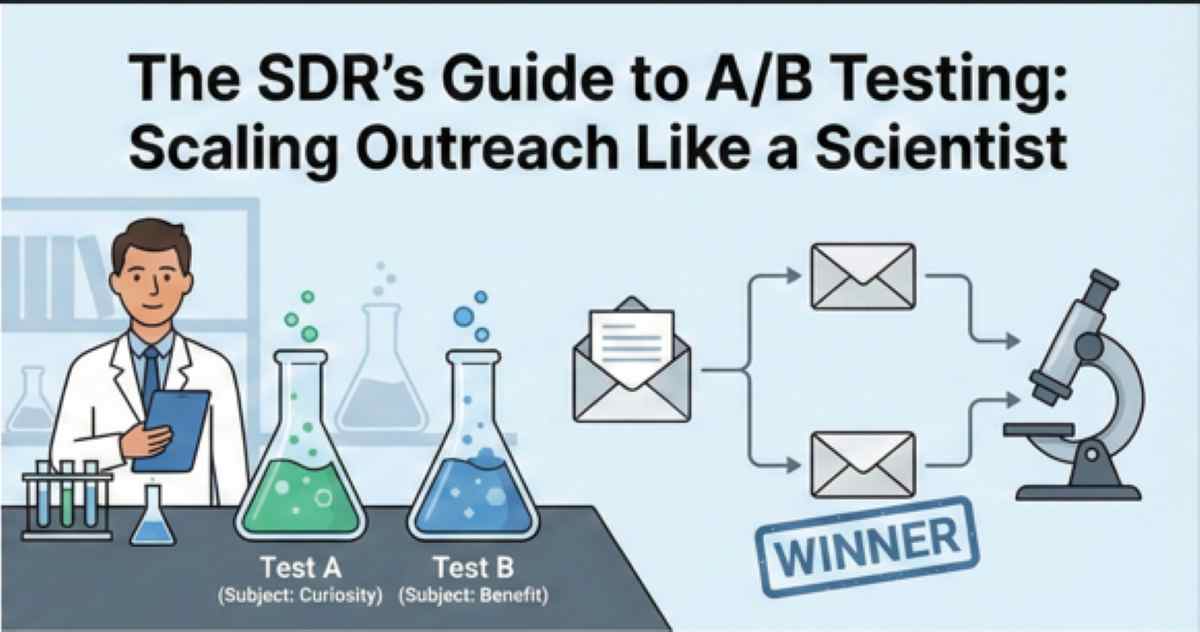
Level 1: The "Open" Gate (Subject Line & Preview Text): Test curiosity-driven lines (e.g., "Quick idea for [Pain Point]") against benefit-heavy lines (e.g., "How [Competitor] cut CAC by 20%").
Level 2: The "Read" Gate (Opening Line & Length): In 2026, prospects can spot "AI slop" immediately. Test a deeply researched personal observation against a "straight-to-the-point" business observation.
Level 3: The "Reply" Gate (CTA & Offer): Test the "Low Friction" ask (e.g., "Open to a brief exchange?") against the "Direct" ask (e.g., "Are you free Thursday at 2 PM?").
2. The Golden Rule: The Power of One
The most common mistake SDRs make is changing the subject line and the CTA at the same time. If your reply rate goes up, you won’t know why. To test at scale, you must change exactly one variable per experiment.
Use tools like Outreach or Salesloft to split your audience 50/50. Ensure your sample size is large enough to be statistically significant—usually at least 500 to 1,000 prospects per variation—before declaring a winner.
3. Avoiding the "False Positive"
In an era of sophisticated spam filters, a high open rate doesn't always mean a winning subject line. Some subject lines "trick" people into opening but lead to high bounce rates or "unsubscribe" requests because the body of the email doesn't deliver on the promise.
Your North Star metric should always be Positive Reply Rate or Meetings Booked. If Version A has a 40% open rate but zero meetings, and Version B has a 25% open rate with three meetings, Version B is your winner.
FAQ
How long should I run an A/B test before calling a winner?
For cold outreach, patience is key. While open rates stabilize within 24 hours, reply rates often take 3 to 7 days to mature. Avoid "peeking" at the data too early, as early results can be skewed by time-zone biases or specific industry rhythms (like "No-Meeting Wednesdays").
What is the "p-value" and why should an SDR care?
The p-value is a statistical measure that tells you if your result was due to luck or the change you made. In 2026, most sales execution platforms like Apollo or Instantly calculate this for you. You are looking for a p-value of less than 0.05, which means there is a 95% chance your "winner" is actually the better version.
Is it better to test a sequence or a single email?
Start with the first email in your sequence, as it gets the most volume. Once you have a "Control" email that performs consistently well, move on to testing the follow-up steps. High-performing teams often test "Step 2" as a "thoughts?" bump vs. a value-add resource (like a case study).
Advertisement