Best Global HRIS Software for Remote and Distributed Teams (2026)
Advertisement
Best Global HRIS Software for Remote and Distributed Teams (2026)
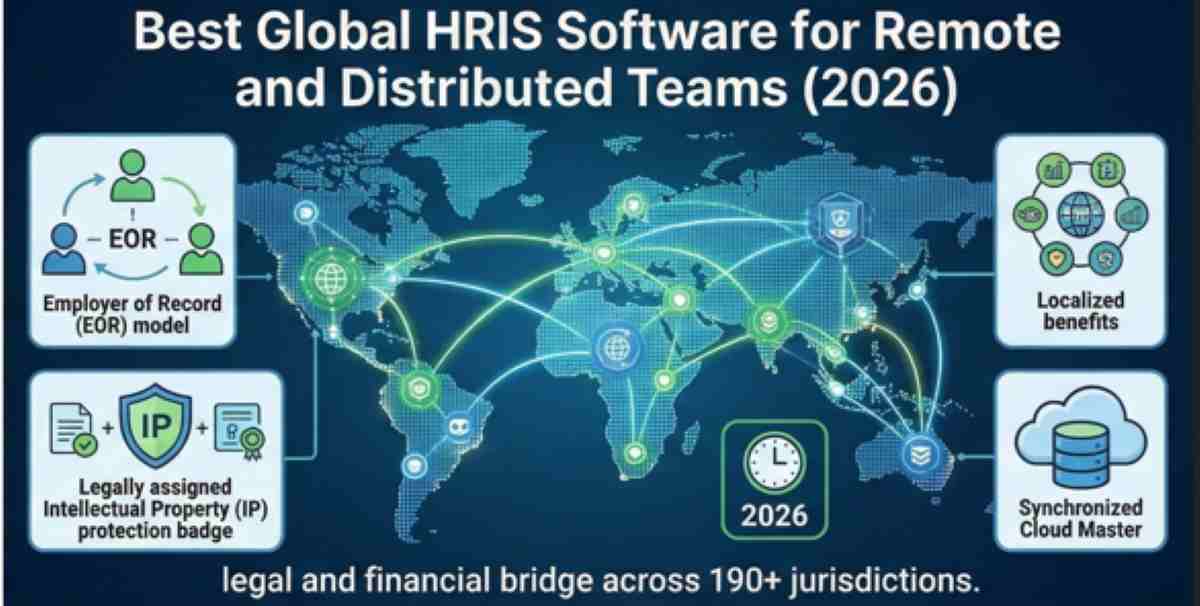
The challenge for remote leaders today is no longer just "storing employee data"—it's navigating the complex web of Employer of Record (EOR) services, intellectual property (IP) protection across borders, and localized benefits that actually matter to a developer in Lagos or an accountant in Tokyo.
1. Deel: The King of Global Reach
Deel remains the undisputed leader for companies that need to hire anywhere in minutes. By 2026, Deel has refined its "Deel HR" offering into a robust, free-tier HRIS that perfectly complements its paid EOR and contractor services.
Why it’s best for remote teams: Its "Compliance Hub" automatically monitors changes in local labor laws in 150+ countries, notifying you if a remote contract needs an update.
Best For: Companies with a heavy mix of international contractors and EOR employees.
2. Rippling: The Automation Powerhouse
Rippling’s 2026 platform is the only one that truly merges HR with IT. For a distributed team, the biggest headache is often hardware. Rippling solves this by automating device provisioning alongside payroll.
Why it’s best for remote teams: When you click "Hire," Rippling can automatically buy a MacBook, ship it to the employee's home in Berlin, and set up their SSO permissions before they even log in.
Best For: Tech companies that want a single "source of truth" for both people and machines.
3. Remote: The IP Protection Specialist
Remote.com distinguishes itself by owning its legal entities in over 80 countries, rather than using third-party partners. This provides a level of legal security and IP protection that is vital for creative and tech-heavy firms.
Why it’s best for remote teams: Their "Remote IP Guard" offers the strongest guarantee in the industry that your company owns the work produced by international hires.
Best For: Scale-ups prioritizing security and consistent service quality.
4. Papaya Global: The CFO’s Choice
If your distributed team is large and you have your own entities in multiple countries, Papaya Global is the premier "Workforce Payments" platform. It treats global payroll as a fintech problem, offering a unified "Payments OS."
Why it’s best for remote teams: It provides real-time "Gross-to-Net" reporting, allowing finance teams to see exactly what a global workforce is costing in a single currency.
Best For: Mid-market and enterprise companies with complex global payroll needs.
5. Multiplier: The Benefits Specialist
Multiplier excels at providing "localized" benefits that go beyond a simple health plan. In 2026, they lead the way in offering remote-specific perks like coworking stipends and localized equipment allowances as part of the core package.
Why it’s best for remote teams: They offer one of the most seamless "Visa & Immigration" support systems for teams that want to help their remote stars relocate.
Best For: Teams that want to offer "Fortune 500" level benefits to employees in emerging markets.
FAQ
What is the difference between an HRIS and an EOR?
An HRIS (Human Resource Information System) is the software used to manage employee data, while an EOR (Employer of Record) is a service where the provider legally employs the person on your behalf in a country where you don't have a business entity. In 2026, the best platforms (like Deel and Rippling) offer both in one interface.
How do global HRIS platforms handle intellectual property?
Most platforms use "IP Assignment" clauses within their localized contracts. However, for maximum security, providers like Remote use an "owned-entity" model, which means there is a direct legal chain of custody for all IP from the employee to your company, minimizing the risk of local labor courts challenging ownership.
Can I use these systems to pay international contractors?
Yes. All the listed platforms support contractor management. They generate compliant local contracts, collect tax forms (like W-8BENs), and allow you to pay dozens of contractors in different currencies with a single mass payment.
Advertisement