HRIS vs. HRMS vs. HCM: What is the Exact Difference?
Advertisement
Understanding these differences is the key to ensuring you don’t overpay for enterprise-grade features you don't need, or conversely, outgrow a basic system within six months. Here is the breakdown of what each term actually signifies in the current tech landscape.
1. HRIS: The Administrative Foundation
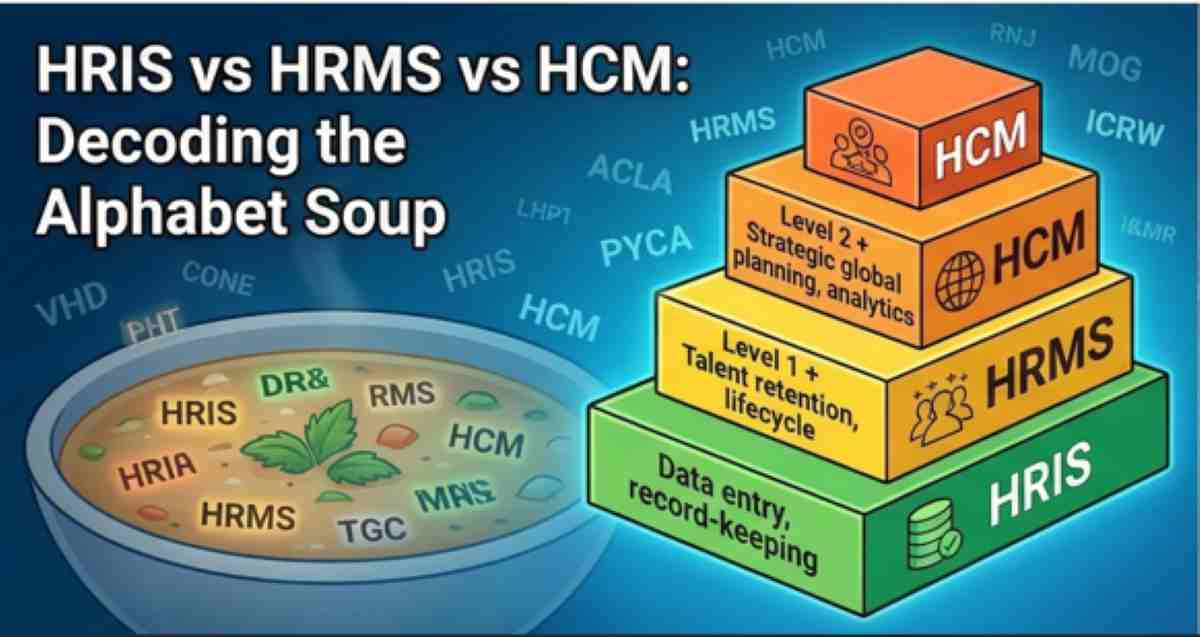
The Human Resource Information System (HRIS) is the digital bedrock. Its primary focus is on data and transactions. If you need to store employee records, manage benefits, and ensure payroll is accurate, you are looking for an HRIS.
Core Focus: Data entry, record-keeping, and basic reporting.
Key Features: Employee database, benefits administration, time and attendance, and payroll integration.
Best For: Small to mid-sized businesses that need to move away from spreadsheets and automate core admin tasks.
2. HRMS: The Management Layer
The Human Resource Management System (HRMS) takes the data within an HRIS and adds a layer of performance and talent management. It’s not just about storing who the employee is; it’s about managing their growth within the company.
Core Focus: The employee lifecycle and productivity.
Key Features: All HRIS features + Performance reviews, recruitment/ATS, onboarding workflows, and training modules.
Best For: Companies focused on talent retention and internal development.
3. HCM: The Strategic Umbrella
Human Capital Management (HCM) is the most comprehensive of the three. It treats employees as a strategic asset (capital) rather than just a cost center. In 2026, HCM platforms are defined by their use of AI-driven workforce planning and global compliance features.
Core Focus: Strategy, global scalability, and predictive analytics.
Key Features: All HRMS features + Global compliance, workforce planning, succession planning, and advanced "People Analytics."
Best For: Large enterprises or fast-scaling international startups that need to navigate complex labor laws across multiple borders.
FAQ
Does the specific term really matter when I’m buying software?
Technically, the lines have blurred. Many modern platforms like Rippling or Gusto began as an HRIS/Payroll tool but have added HCM capabilities. However, when you are in the RFP (Request for Proposal) stage, using the correct term helps vendors understand if you need simple record-keeping or deep strategic analytics.
Which one is best for a remote-first startup?
For a startup, you likely need a "Global HCM Lite." You need the core database (HRIS), but you also need the global compliance and onboarding features of an HCM to hire across different countries. Platforms like Deel or Remote have pioneered this "all-in-one" approach for the modern era.
Can an HRIS eventually "become" an HCM?
Yes. Most modern HR software is modular. You might start with the "Core HR" module (HRIS) and, as your headcount grows, "turn on" modules for performance management (HRMS) and predictive workforce planning (HCM). This modularity is why it's critical to choose a platform with a robust API and integration ecosystem.
Advertisement