The Role of AI and Automation in Modern HRIS Platforms
Advertisement
Rather than just storing data, modern platforms like Rippling, Workday, and Deel now use AI to interpret patterns, predict outcomes, and execute complex workflows without human intervention.
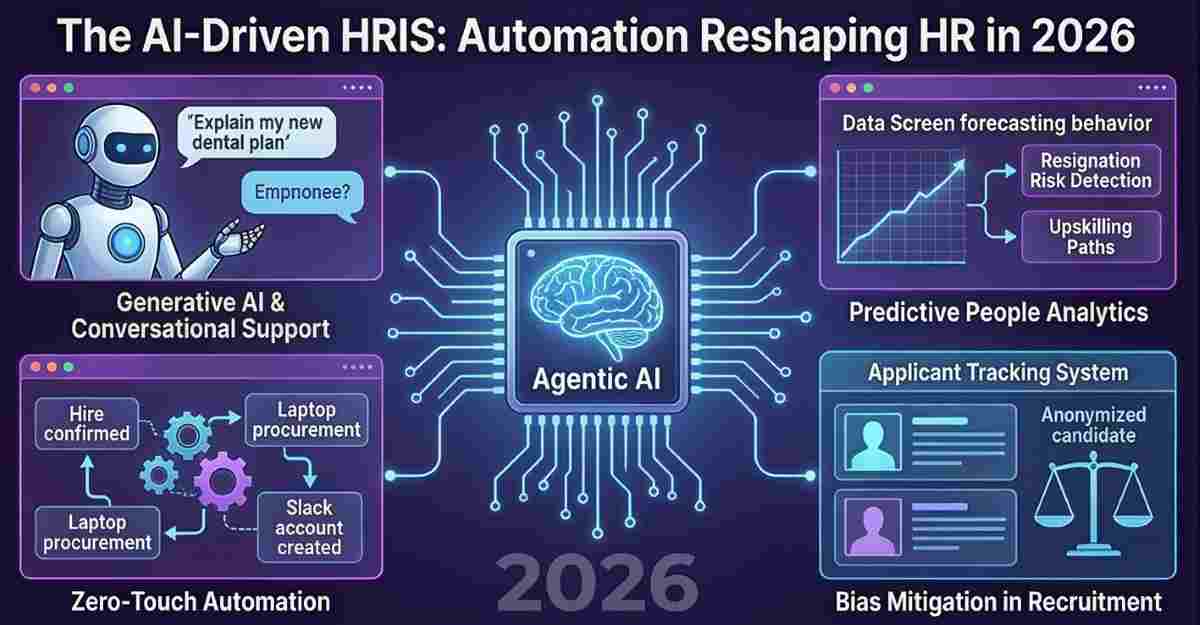
1. Generative AI & Conversational Support
The most visible shift is the death of the "HR Helpdesk" ticket.
Conversational AI: Employees now interact with HR via natural language bots (e.g., "How much PTO do I have left?" or "Explain my new dental plan"). These bots handle up to 80% of routine inquiries instantly.
Content Generation: AI assistants within the HRIS now draft inclusive job descriptions, personalized offer letters, and "SMART" performance goals based on an employee’s specific role and history.
2. Predictive People Analytics
HR is moving from reactive to predictive. Modern systems analyze thousands of data points to provide "Strategic Foresight."
Flight Risk Detection: By analyzing patterns in attendance, engagement survey sentiment, and compensation benchmarks, AI can flag employees at high risk of resignation before they even start looking for a new job.
Skill Gap Analysis: Systems now automatically map the skills your workforce has versus the skills your 2026 business plan requires, suggesting specific "Upskilling Paths" for internal mobility.
3. "Zero-Touch" Workflow Automation
Automation has moved beyond simple "if-then" logic to "Agentic" workflows that span across departments.
IT-HR Sync: When a hire is confirmed, the HRIS automatically triggers laptop procurement, creates Slack/Gmail accounts, and sets up security permissions based on the hire's department—no manual handoffs required.
Payroll Validations: AI agents now "score" timesheets and payroll runs, flagging anomalies (like a 50% jump in overtime for one department) for human review, virtually eliminating manual auditing.
4. Bias Mitigation in Recruitment
In 2026, ethical AI is a core feature. Modern Applicant Tracking Systems (ATS) use "Anonymized Screening" modes.
Objective Scoring: AI ranks candidates based purely on verified skills and project history, hiding names, genders, and ages from the initial review to ensure a more diverse and equitable talent pipeline.
FAQ
Does AI in HRIS replace human HR professionals?
No. It replaces administrative tasks. In 2026, the most successful HR teams are "Human+AI." The AI handles the data synthesis and routine questions, freeing humans to focus on high-impact areas like culture building, conflict resolution, and leadership coaching.
How does AI handle employee data privacy?
Leading 2026 platforms operate on "Privacy-First" AI models. They use role-based permissions and data masking, ensuring that the AI only "sees" the data it needs to perform a task. Most systems are now compliant with both GDPR 2.0 and the latest AI transparency regulations.
Can AI actually detect if an employee is unhappy?
It doesn't "read minds," but it does perform Sentiment Analysis. By looking at the tone of anonymous feedback and the frequency of interactions with company platforms, it can detect "low engagement" trends at a departmental level, allowing leaders to intervene with support.
Advertisement