10 Best Identity Governance and Administration (IGA) Software 2026
Advertisement
10 Best Identity Governance and Administration (IGA) Software Tools
The modern identity landscape demands more than simple access provisioning; it requires continuous visibility and strict governance. Today's IGA platforms act as an intelligent control center, allowing risk officers to run automated access certifications, flag privilege creep, and manage the complete identity lifecycle from hire to retire. We have evaluated the market leaders to rank the ten best Identity Governance and Administration tools built to secure corporate architectures.
1. SailPoint Identity Security Cloud
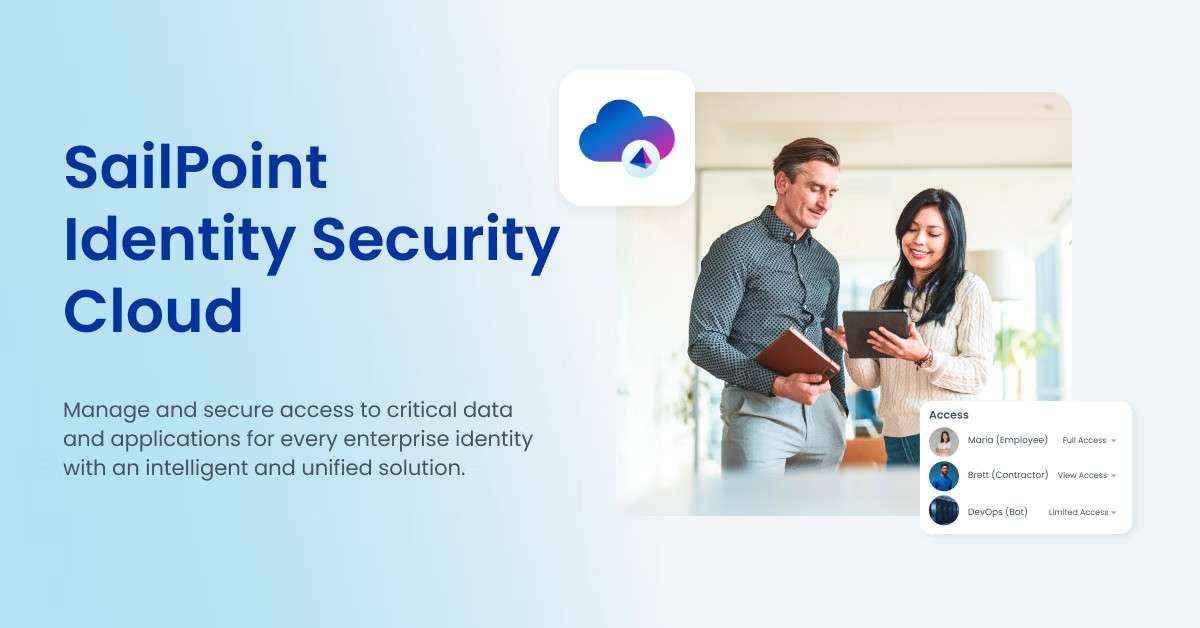
SailPoint is widely considered the absolute benchmark in the identity governance space, built to handle massive enterprise scale. It integrates intelligent automation and deep machine learning to analyze access patterns and secure digital identities cleanly.
- AI-Driven Access Insights: Automatically detects outlier accounts, flags over-privileged users, and suggests optimal roles based on real-time peer group analysis.
- Automated Lifecycle Management: Governs user digital identities uniformly across complex hybrid networks, automatically provisioning system access permissions as roles shift.
- Comprehensive Field Feedback: Industry deployment briefs on SaaSPodium highlight SailPoint's ability to reduce manual access certification timelines by up to 70 percent.
2. Saviynt Enterprise Identity Cloud
Saviynt delivers a powerful, cloud-native platform that unifies IGA, application access governance, and privileged access management into a singular control interface. It is engineered specifically to secure modern multi-cloud infrastructures.
- Unified Data Governance: Connects seamlessly with heavy enterprise applications like SAP, Workday, and Salesforce to govern granular data permissions out of the box.
- Continuous Compliance Guardrails: Features built-in Segregation of Duties (SoD) analysis engines that systematically block toxic combination privileges before they create security violations.
- Strategic Implementation Notes: Expert technical reviews shared on this Medium Blog commend Saviynt for its frictionless integration with distributed AWS and Azure cloud architectures.
3. Ping Identity (PingGovernance)
Ping Identity provides an elite, highly flexible governance module designed to merge identity administration with modern, contextual workforce single sign-on access layers seamlessly.
- Self-Service Access Requests: Employees can browse a structured service catalog to request application permissions, routing requests to data owners for fast digital approval.
- Frictionless Access Reviews: Deploys intuitive, simplified dashboards for department managers to quickly complete mandatory seasonal access attestation campaigns.
- Verified Security Metrics: Comprehensive analyst testing reports compiled by PCMag highlight Ping's exceptional balance of strict administrative security policies and frictionless employee experiences.
4. Okta Identity Governance (OIG)
Okta bridges the historical division separating baseline identity access management (IAM) and deep governance, delivering a unified platform that makes user provisioning completely programmatic.
- Resource Request Automation: Ties directly into enterprise communication channels like Slack and Microsoft Teams to run access approvals inside active chat streams.
- Dynamic Certifications: Automatically triggers focused, out-of-cycle access validation campaigns whenever an employee switches corporate departments or locations.
- Unified Log Tracking: Aggregates login authentication events right next to historical access privilege records to simplify security auditing.
5. Omada Identity Cloud
Omada provides a thorough, full-featured cloud IGA framework built around standard configuration guidelines, avoiding heavy, custom-coded software installations to accelerate deployment schedules.
- Standardized Connectivity Frameworks: Utilizes configurable templates to rapidly establish secure data pipelines to legacy directories and cloud targets.
- Granular Role Analytics: Maps out how access rights are distributed across organizational nodes, helping data teams clean up unused security groups.
- Rigid Compliance Attestation: Generates audit-ready evidence logs documenting exactly who approved every corporate access privilege across the timeline.
6. OneLogin Identity Governance
OneLogin offers an exceptionally agile, low-overhead identity governance alternative designed for mid-market corporate teams looking for simple, highly repeatable provisioning configurations.
- Streamlined Identity Pipelines: Synchronizes live HR system changes directly with application access rules, executing silent user additions or removals in the background.
- Approachable Access Audits: Formats complex technical security permissions into plain business language so non-technical team heads can audit records accurately.
- Centralized Account Controls: Lock down critical data access boundaries globally from a single administrative command center if security parameters fail.
7. IBM Security Verify Governance
For large legacy footprints requiring deep data synchronization, multi-tier compliance calculations, and tight cross-platform infrastructure tracking, IBM delivers an industrial-grade enterprise solution.
- Business Activity Modeling: Maps raw technical system access privileges straight to high-level corporate business activities to track organizational risks.
- Advanced Risk Optimization: Deploys predictive data engines to scan user permissions, flagging hidden toxic security configurations weeks before audits occur.
- Mass Data Reconciliation: Handles heavy database processing tasks across disparate enterprise systems cleanly without creating processing network delays.
8. Oracle Identity Governance
Oracle provides a robust identity governance stack optimized heavily for businesses utilizing extensive Oracle database configurations, cloud application arrays, and complex financial frameworks.
- Granular Target Integration: Deeply integrates into native enterprise storage clusters to audit row-level database access permissions.
- Flexible Attestation Workflows: Program multi-level conditional access review routing chains to meet strict organizational risk management requirements.
- Unified Governance Reports: Generates comprehensive executive compliance summaries designed to satisfy demanding internal and external oversight groups.
9. Hitachi ID Bravura Security Fabric
Hitachi ID Bravura structures its identity utility around providing high-speed credential governance, user profile synchronization, and secure automated provisioning across global IT frameworks.
- Accelerated User Onboarding: Packages core software licenses and standard group permissions into automated profile bundles to make new hires operational on day one.
- Orphan Account Interception: Constantly evaluates your active corporate listings to flag detached user permissions or unused developer profiles to secure your network perimeter.
- Robust Security Shielding: Encrypts stored identity attributes heavily, protecting sensitive administrative directories from external intrusion threats.
10. OpenText NetIQ Identity Governance
NetIQ delivers a highly visual, data-driven governance system designed to clarify security risks and streamline the management of employee access privileges across massive distributed systems.
- Visual Risk Scoring: Assigns an intuitive numerical risk index score to individual corporate accounts based on the weight of their active system privileges.
- Automated Remediation Actions: Instantly revokes unverified or out-of-policy user access rights the moment an attestation deadline expires.
- Flexible Policy Customization: Establish custom governance parameters to seamlessly coordinate identity configurations across hybrid networks and physical office systems.
FAQs
What is the difference between Identity Access Management (IAM) and Identity Governance and Administration (IGA)?
IAM focuses on the operational execution of access management—handling things like daily user authentication, single sign-on (SSO), multi-factor verification, and granting access permissions. IGA adds a critical layer of compliance oversight and administration above IAM. It focuses on auditing who *should* have access, managing automated lifecycle adjustments, tracking segregation of duties, and executing mandatory access attestation reviews.
What is access attestation, and why is it legally mandatory for enterprise teams?
Access attestation (or access certification) is a formal compliance validation process. It requires data owners or department managers to systematically audit and digitally sign off on the active access privileges held by their employees. This process is legally required under frameworks like SOX and HIPAA to guarantee that workers hold only the minimum necessary permissions required to fulfill their daily tasks, stopping unauthorized data exposure.
How does Segregation of Duties (SoD) enforcement prevent corporate fraud?
Segregation of Duties (SoD) guidelines ensure that a single user cannot hold conflicting high-level permissions that would allow them to execute fraudulent actions undetected. For example, an IGA system enforces SoD by blocking the same employee from holding both the permission to approve a new vendor and the permission to issue financial payouts. If a manager attempts to assign a conflicting privilege, the platform triggers an automatic compliance alert.
Advertisement