10 Best System Monitoring Software Tools for 2026
Advertisement
10 Best System Monitoring Software Tools (2026)
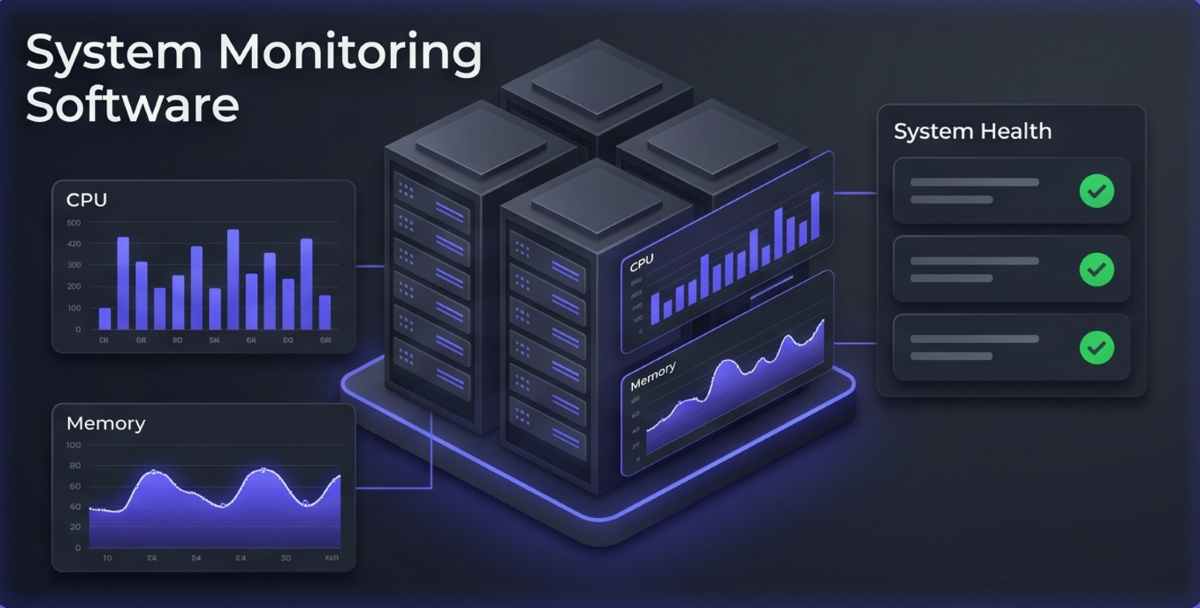
System monitoring extends beyond simple ping checks; it involves deep inspection of CPU usage, memory allocation, and database queries. Deploying these solutions often requires a strong understanding of industry standards. For foundational guidelines on network protocols and management frameworks, you can consult the IETF Official Site. Furthermore, ensuring your monitoring strategy aligns with robust cybersecurity standards is vital, and resources from the NIST Computer Security Resource Center can provide excellent guidance.
We have carefully evaluated the leading platforms on the market to bring you the ten best system monitoring software tools available today, balancing feature depth, scalability, and ease of use.
1. ManageEngine OpManager
ManageEngine OpManager is a unified IT operations management solution that excels in tracking network systems and server health. It provides an all-in-one approach that is highly scalable for both SMBs and large, distributed enterprises.
- Unified Monitoring: Tracks servers, VMs, switches, routers, and hardware components from a single console.
- Advanced Visualizations: Features real-time heatmaps and custom dashboards that provide an instant summary of network status.
- External Reference: Explore the platform directly at ManageEngine OpManager.
2. Site24x7
Site24x7 is a powerful cloud-based platform designed to eliminate server outages by constantly tracking key performance indicators across application, mail, web, and virtual servers.
- AI-Based Forecasts: Utilizes machine learning to predict metric trends, allowing teams to auto-remediate issues before they cause downtime.
- Endpoint Visibility: Monitors diverse client endpoints and networks simultaneously to reduce operational complexities.
- Real-Time Alerts: Delivers critical notifications instantly via SMS, email, voice calls, and push notifications.
3. PRTG Network Monitor
Paessler PRTG is renowned for its flexible, sensor-based architecture. It allows IT departments to check the health of all devices, traffic patterns, and applications across their entire infrastructure without hidden fees.
- Live Heatmaps: Utilizes real-time visual mapping to help administrators stay proactive with live performance data.
- Custom Web Pages: Enables the creation of customized, public-facing dashboards to share real-time monitoring insights with stakeholders.
- Failover Notifications: Ensures continuous visibility by providing failover-tolerant monitoring setups.
4. ActivTrak
ActivTrak approaches system monitoring from a workforce productivity and endpoint performance angle. It is particularly effective for organizations managing remote or hybrid teams.
- Behavior Analytics: Provides AI-powered insights into application usage patterns to optimize workforce efficiency and resource allocation.
- Application Tracking: Monitors which software and websites consume the most system resources on employee endpoints.
- Privacy-Focused: Offers highly configurable privacy settings to balance deep system monitoring with ethical compliance.
5. ManageEngine Applications Manager
While OpManager focuses on the infrastructure, Applications Manager dives deep into the software layer, providing profound visibility into application performance, database health, and server metrics.
- Real User Monitoring (RUM): Tracks actual user interactions and page load times to identify frontend performance bottlenecks.
- Database Performance: Monitors query performance across Oracle, SQL Server, MySQL, and PostgreSQL environments.
- Business Transactions: Traces end-to-end transactions across multiple server tiers to maintain application reliability.
6. SolarWinds Network Monitoring Software
SolarWinds offers a heavyweight, enterprise-grade platform that provides unparalleled observability into complex IT environments, specifically focusing on bandwidth and protocol analysis.
- Bandwidth Optimization: Easily identifies which network applications and endpoints are consuming the most bandwidth.
- Path Analysis: Monitors traffic path changes hop-by-hop, helping engineers quickly locate hidden latency points.
- Protocol Support: Offers deep integration with SNMP, WMI, and flow-based protocols for comprehensive data collection.
7. Nagios
Nagios is a legendary open-source monitoring system that has been the backbone of IT infrastructure management for decades. It is highly customizable and supported by a massive community.
- Infinite Customization: Can be scripted to monitor virtually any hardware device, operating system, or custom application.
- Plugin Ecosystem: Benefits from thousands of community-developed plugins that extend its native capabilities.
- Proactive Alerting: Features a robust, rule-based notification engine that ensures the right team members are alerted during specific outages.
8. LogicMonitor
LogicMonitor is a fully automated, cloud-based platform that utilizes agentless data collection to provide immediate visibility into complex hybrid IT environments.
- Automated Discovery: Automatically detects and begins monitoring new devices the moment they connect to the network.
- Cloud Integration: Natively tracks performance metrics across AWS, Azure, and Google Cloud alongside on-premise hardware.
- Built-in Integrations: Comes with thousands of out-of-the-box logic modules for instant compatibility with modern tech stacks.
9. Spiceworks Network Monitor
Spiceworks provides a totally free, ad-supported IT management suite that is incredibly easy to set up, making it the perfect choice for small businesses and lean IT departments.
- Zero Cost: Offers essential monitoring features with no hidden licensing fees or device limits.
- Rapid Deployment: Designed for simplicity, allowing administrators to start monitoring critical servers in just minutes.
- Community Support: Backed by a massive, active community of IT professionals who share troubleshooting tips and custom scripts.
10. Zabbix
Zabbix is an incredibly powerful, open-source enterprise monitoring solution capable of tracking millions of metrics simultaneously without exorbitant software licensing fees.
- High Scalability: Built to monitor massive, multi-tenant enterprise environments effortlessly.
- Predictive Analytics: Analyzes historical data to forecast capacity limits and predict when storage or bandwidth will run out.
- Distributed Monitoring: Allows administrators to easily deploy and manage monitoring nodes across global offices from a central interface.
FAQs
What is the main purpose of system monitoring software?
The primary goal of system monitoring software is to track the performance and health of an IT infrastructure. By keeping an eye on metrics like CPU usage, memory allocation, and network traffic, these tools help IT teams detect and resolve issues before they cause system downtime or affect end-users.
Can I use a system monitoring tool for cloud environments?
Yes, most modern system monitoring tools, such as Site24x7 and LogicMonitor, are designed to support hybrid IT environments. They offer native integrations with major cloud providers like AWS, Azure, and Google Cloud, allowing you to monitor virtual servers and cloud applications alongside your on-premise hardware.
Is open-source monitoring software as good as paid software?
Open-source tools like Zabbix and Nagios are incredibly powerful and often match or exceed the capabilities of paid commercial software. However, they typically require a much higher level of technical expertise and time to configure, whereas paid tools usually offer easier setup, automated mapping, and dedicated customer support.
Advertisement