What is ITSM? (Definition, Core ITIL Processes, and Benefits Explained)
Advertisement
The Definition of ITSM
Effective ITSM ensures that the right people, processes, and technology are in place to help the organization meet its overarching objectives. According to the Gartner IT Glossary, ITSM focuses on satisfying the customer's perspective of IT's contribution to the business.
The ITIL 4 Framework: Value Over Lifecycle
To implement ITSM, most organizations rely on ITIL (Information Technology Infrastructure Library). The transition to ITIL 4 represents a significant shift from rigid process lifecycles to a more flexible Service Value System (SVS). This framework emphasizes "value co-creation," ensuring that IT activities are constantly aligned with what the business actually needs to succeed in an agile environment.
5 Core ITIL 4 Practices You Should Know
ITIL 4 replaced the term "processes" with "practices" to encompass a broader range of organizational resources. While there are dozens of practices, these five form the operational foundation of modern IT:
- Incident Management: Restoring normal service operation as quickly as possible following a disruption to minimize business impact.
- Problem Management: Identifying and resolving the "root cause" of incidents to prevent recurring issues.
- Change Enablement: A systematic approach to managing the lifecycle of all updates and patches to avoid service outages.
- Service Request Management: Handling routine user requests—like password resets—through standardized workflows and automated fulfillment.
- IT Asset Management (ITAM): Tracking the financial and physical lifecycle of all assets to optimize costs and ensure compliance.
The Strategic Benefits of ITSM
Investing in a robust ITSM strategy delivers hard business value beyond technical organization. By standardizing workflows, companies increase efficiency and remove administrative bottlenecks. Better asset tracking directly leads to cost optimization, while defined Service Level Agreements (SLAs) ensure predictable service delivery for end-users. In 2026, AI integration further enhances productivity by automating ticket categorization and self-service answers.
ITSM vs. ITIL vs. Help Desk
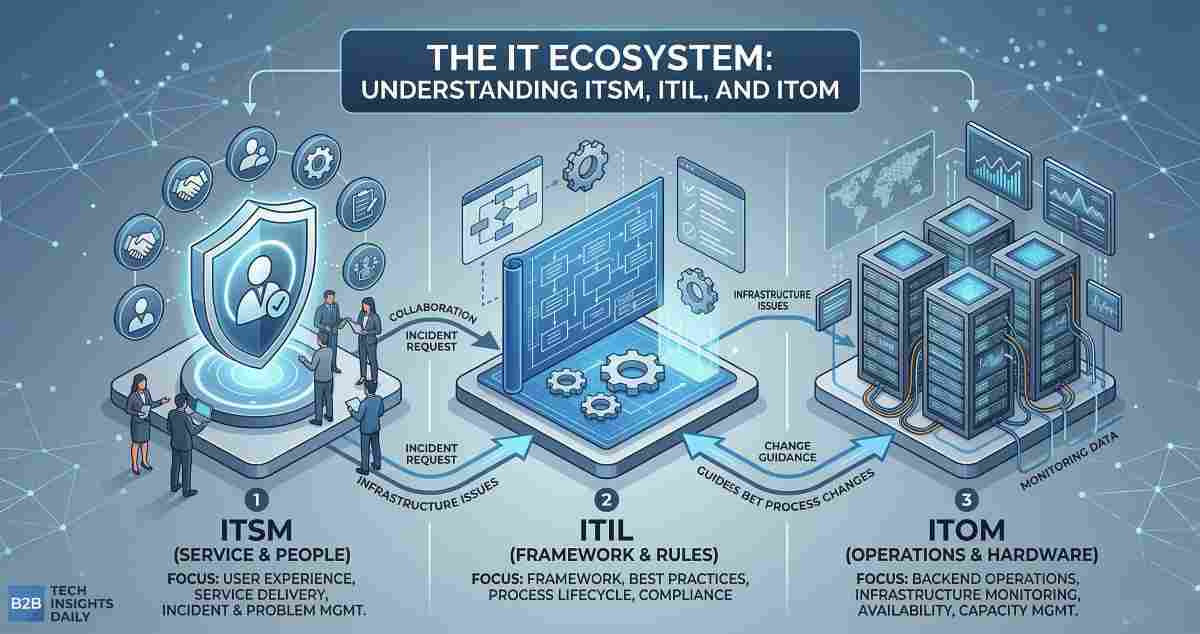
It is common to see these terms used interchangeably, but they represent different layers of the IT infrastructure:
| Term | Context | Function |
|---|---|---|
| ITSM | The Discipline | The "What"—Managing IT as a service provider. |
| ITIL | The Framework | The "How"—The best-practice manual for ITSM. |
| Help Desk | The Tactical Unit | The "Action"—Focused on reactive end-user support. |
FAQs
Does ITSM apply to small businesses?
Yes. Small businesses benefit from standardized documentation and workflows that ensure IT knowledge isn't trapped in a single person's head, making the infrastructure easier to scale.
How does AI change the role of IT staff?
AI handles routine inquiries and "Tier 1" support, allowing IT professionals to focus on higher-value strategic projects like infrastructure architecture and digital transformation.
What is the difference between an Incident and a Problem?
An incident is a single event where a service is disrupted (e.g., a printer is broken). A problem is the underlying cause (e.g., a faulty driver) that causes one or more incidents.
Advertisement