Best RAM for PC Builders & Gamers (2026 Guide)
Advertisement
Best RAM for PC Builders and Gamers: Navigating the Memory Crisis
The global shift toward artificial intelligence has forced memory manufacturers to reallocate their raw semiconductor wafer capacity away from consumer memory sticks to produce enterprise High Bandwidth Memory (HBM). This structural supply squeeze has sent desktop RAM prices soaring. To make sure you maximize performance per dollar, we have cross-referenced real-world lab benchmarks to rank the top ten DDR5 and DDR4 memory kits available for builders today.
1. G.Skill Trident Z5 RGB DDR5-7200
For builders assembling high-end configurations, G.Skill continues to rule the enthusiast market. Leading hardware publications frequently point to this kit as the absolute benchmark for top-tier desktop speed.
- Enthusiast-Grade Velocity: Operates at a blistering 7200 MT/s out of the box, offering massive bandwidth advantages for CPU-bound games and rendering pipelines.
- Premium Testing Data: The experts over at PC Gamer formally named this specific G.Skill Trident Z5 dual-channel kit the best overall DDR5 RAM for high-end systems.
- Strict Quality Sorting: Uses highly screened integrated circuits (ICs) to ensure manual overclocking stability and reliable thermal performance under heavy loads.
2. G.Skill Trident Z5 Neo RGB DDR5-6000
While maximum raw frequency looks impressive on spec sheets, system stability relies heavily on platform architecture optimization. The Trident Z5 Neo is built exclusively to pair perfectly with AMD infrastructure.
- AMD EXPO Certification: Programmed with native AMD Extended Profiles for Overclocking, ensuring plug-and-play stability on Ryzen motherboards.
- Sweet-Spot Performance: In independent evaluation data published by Tom's Hardware, this kit was highlighted for its superb performance and tight CL30 timings.
- Optimized Latency Profile: Reaches an ideal balance of 6000 MT/s at exceptionally low latency, eliminating communication delays between the memory and processor.
3. TeamGroup T-Force Vulcan DDR5-5200
Given the severe hardware price inflation hitting modern systems, builders need entry-level configurations that avoid total platform budget destruction. The T-Force Vulcan serves as a reliable baseline.
- Cost-Effective Architecture: Shaves off expensive luxury additions like customizable RGB lighting diffusion bars to deliver uncompromised core functionality.
- Hassle-Free Compatibility: Operates at a conservative 5200 MT/s baseline, allowing it to function reliably on budget-tier motherboards with weaker power phases.
- Low-Profile Aluminum Heatsink: Features a highly compact physical format that easily fits underneath massive dual-tower CPU air coolers.
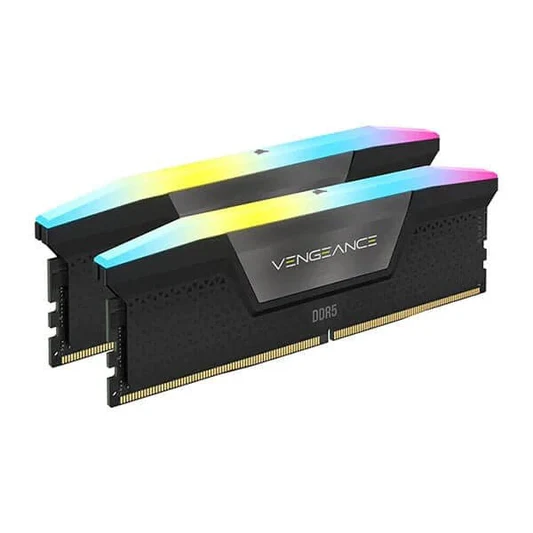
4. Corsair Vengeance DDR5-6000
Corsair is a bedrock brand in PC building history. Its Vengeance product line remains the go-to standard for system integrators who require rock-solid reliability across thousands of client workstations.
- XMP 3.0 Customization: Supports Intel Extreme Memory Profiles, allowing users to save custom performance tuning settings directly onto the module’s onboard power management IC (PMIC).
- On-Module Power Management: Features localized voltage regulation directly on the PCB stick itself, providing highly stable power delivery compared to legacy designs.
- Widespread Software Control: Fully integrates with Corsair iCUE software, enabling detailed real-time temperature tracking and alert profiling.
5. TeamGroup T-Force Xtreem ARGB DDR4-3600
Despite the forward-looking trend of DDR5, mature memory infrastructure has made an unprecedented comeback. Industrial analysts at TechSpot detailed that component manufacturers are actively ramping older DDR4 production back up due to severe DDR5 market shortages.
- Peak Legacy Tuning: Reaches an exceptional DDR4 sweet spot of 3600 MHz with aggressive CL14 latencies that rival the snappiness of new generations.
- Ryzen Platform Optimization: Highly prized by owners of mature AMD AM4 systems looking to squeeze maximum performance out of existing hardware.
- Heavy-Duty Heatspreaders: Encased in dense, polished aluminum shields that manage high electrical voltages cleanly.
6. Patriot Viper Steel DDR4-4400
For builders running highly tuned legacy rigs who refuse to move to expensive new motherboards, Patriot offers some of the highest-clocked DDR4 kits ever manufactured.
- Ultra-High Frequency Baseline: Pushes DDR4 parameters to an extreme 4400 MHz, maximizing data transfer pipelines across compatible enthusiast motherboards.
- No-RGB Focus: Designed purely for clean utility, featuring thick gunmetal gray steel styling without any power-drawing LED components.
- Aggressive Timings: Delivers elite benchmark speeds that frequently match or outperform entry-level un-tuned DDR5 platforms.
7. G.Skill Ripjaws V DDR4-3600
The Ripjaws V is perhaps the most heavily deployed DDR4 memory stick in modern computing history. It represents the quintessential budget upgrade component.
- The Value Standard: Delivers optimal 3600 MHz speeds at a highly competitive cost point, ensuring builders don't pay a premium for visual gimmicks.
- Excellent Clearance: Features a classic offset shape designed to comfortably fit around tight motherboard layouts and large internal cooling components.
- Rock-Solid Reliability: Backed by extensive verification validation across generations of Intel and AMD chipsets.
8. Corsair Dominator Platinum RGB DDR5-6400
The Dominator Platinum series represents Corsair's absolute crown jewel of design craftsmanship. It targets premium open-loop liquid-cooled builds where aesthetics and build quality are prioritized without compromise.
- Capellix LED Technology: Features ultra-bright, highly efficient customizable lighting zones that consume less power than traditional modules.
- Patented DHX Cooling: Uses custom-designed dual-path heat exchange structures that directly cool both the printed circuit board and the external housing.
- High Capacity Headroom: Available in dense 64GB configurations to support demanding professional applications like 3D animation and machine learning workflows.
9. Crucial Pro DDR5-5600
Crucial, powered directly by Micron's silicon foundries, builds components focused heavily on stability and strict system compatibility. The Crucial Pro avoids aggressive factory overclocks in favor of long-term consistency.
- Universal Plug-and-Play: Operates natively via standard JEDEC timings, allowing it to boot safely on almost any DDR5-compatible processor without manual bios tuning.
- Intel & AMD Cross-Compatibility: Supports both Intel XMP and AMD EXPO settings within the exact same module SKU, minimizing builder purchasing confusion.
- Sleek Matte Black Aesthetics: Utilizes a minimalist aluminum shield design that blends cleanly into professional workstation builds.
10. Kingston FURY Beast DDR5-6000
Kingston’s FURY Beast delivers a dependable blend of mid-range speed and high stability, making it a favorite for system configuration builders who need simple, repeatable performance.
- Low-Profile Design: Avoids bulky physical heights to remain highly compatible with compact Mini-ITX small form factor PC configurations.
- On-Die ECC: Utilizes native internal Error Correction Code to detect and correct data corruption inside the memory chip itself, improving system uptime.
- Streamlined Overclocking: Evaluated for simple installation paths, making it highly approachable for first-time builders entering modern computing architectures.
FAQs
Why has RAM become so prohibitively expensive recently?
The global explosion of artificial intelligence has created an unprecedented demand for enterprise AI servers. These data centers require a specialized type of memory called High Bandwidth Memory (HBM). Because manufacturing HBM consumes roughly three times the raw semiconductor wafer capacity compared to standard consumer RAM, major chipmakers have pulled lines away from desktop DDR5, causing retail prices to spike significantly.
Can I install DDR5 RAM into an older DDR4 motherboard socket?
No. DDR4 and DDR5 modules are physically incompatible. They utilize entirely different pin configurations, layout placement notches, and operating voltages. A motherboard is engineered to accept only one specific generation of memory; upgrading across standards requires a wholesale swap of your CPU, motherboard, and RAM simultaneously.
What is the difference between RAM speed and CAS Latency?
RAM speed (measured in MHz or MT/s) dictates the total volume of data that can be transferred through the pipeline every second. CAS Latency (the CL rating) indicates the delay or number of clock cycles it takes for the memory module to respond to a specific command from the processor. For optimal system performance, you want a combination of high raw speed paired with a low CL latency rating.
Advertisement