Enterprise Network Virus Scanning: Architectures, Packet Analysis & Threat Detection
Advertisement
Enterprise Network Virus Scanning: Architectures, Packet Analysis & Threat Detection
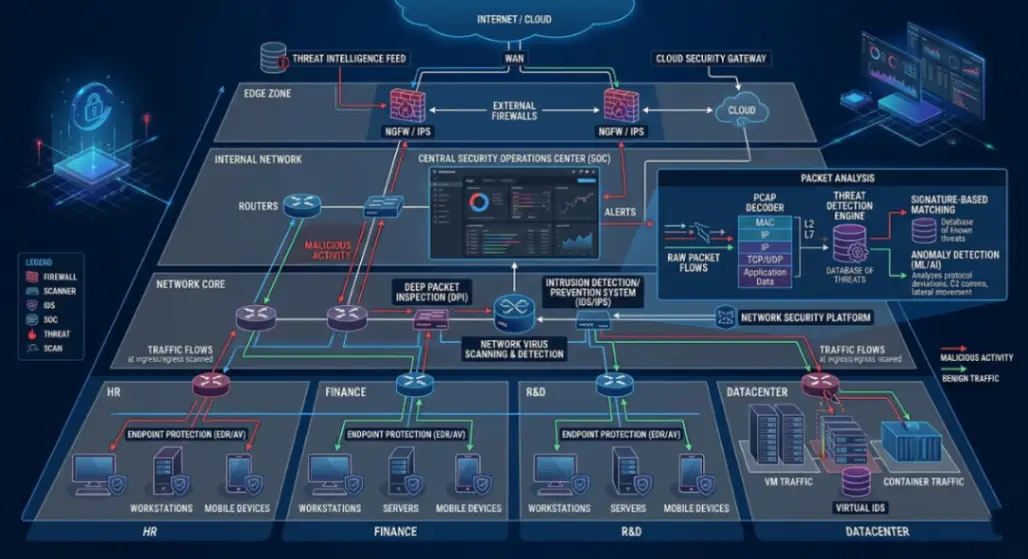
Modern enterprise defense strategies demand a hybrid scanning telemetry framework capable of executing deep packet inspection (DPI) and security information and event management (SIEM) correlations in real time. According to technical security benchmarks from NIST, network virus mitigation requires proactive packet analysis and automated alert orchestration to intercept zero-day exploits before lateral movement compromises core infrastructure assets.
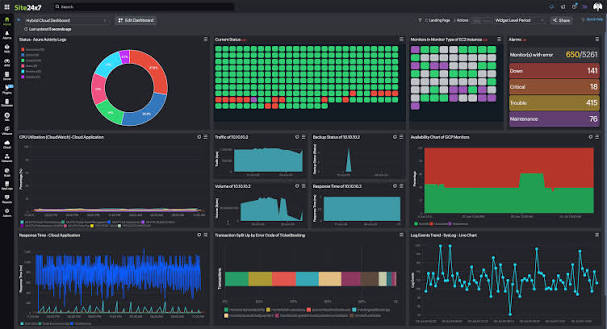
Site24x7
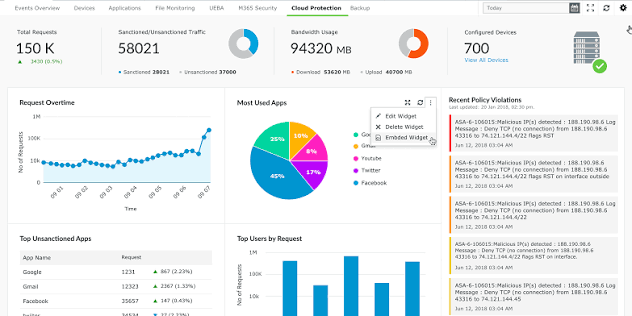
Site24x7 leverages cloud-native monitoring telemetry to execute continuous network traffic analysis and anomaly detection across distributed enterprise endpoints. Its SaaS-based architecture ingests NetFlow, sFlow, and J-Flow protocols to correlate traffic spikes with potential malware proliferation without imposing local agent overhead.
- Deployment & Data Ingestion: Fully SaaS-deployed collector agent capturing NetFlow, IPFIX, and SNMP v1/v2/v3 telemetry across cloud and hybrid topologies.
- ML Threat Detection: Employs proprietary statistical machine learning models for baseline behavioral profiling and real-time network anomaly scoring.
- API Integration: Comprehensive REST APIs and webhook integrations for automated ITSM incident escalation and SIEM log forwarding.
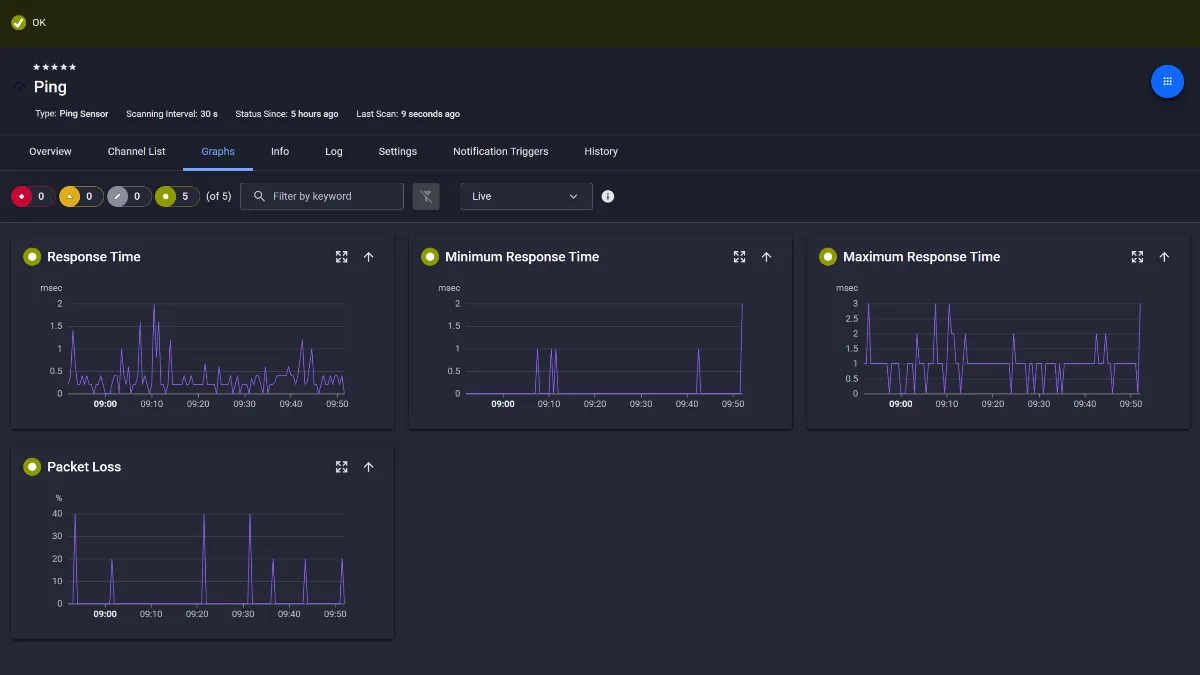
Paessler PRTG Network Monitor
Paessler PRTG operates on a sensor-driven architecture designed to perform real-time packet sniffing and flow monitoring across heterogeneous network topologies. It collects raw Ethernet headers and analyzes payload structures directly within local or virtual server instances to isolate suspicious payload signatures.
- Deployment & Data Ingestion: On-premises Windows Server deployment alongside cloud-hosted options using modular, customizable sensor objects.
- Packet Analysis Engine: Native packet sniffing and protocol filtering engine capable of inspecting TCP/UDP port behaviors and payload volume metrics.
- API & Extensibility: Robust HTTP REST API and custom PowerShell/Python script execution triggers for automated network isolation.
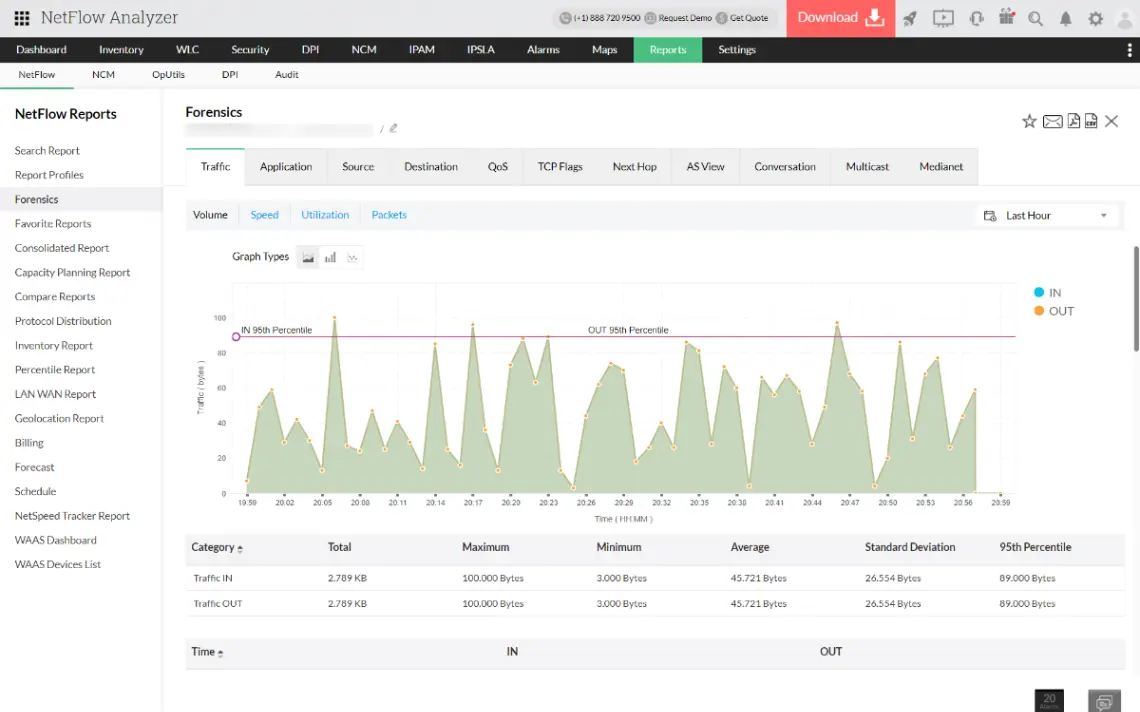
ManageEngine NetFlow Analyzer
ManageEngine NetFlow Analyzer is a dedicated flow collection and bandwidth analysis platform built to inspect high-throughput enterprise backbones for malicious traffic profiles. It processes export streams from major router and switch architectures to isolate command-and-control (C2) communication attempts and denial-of-service vectoring.
- Deployment & Data Ingestion: Supports Windows Server and Linux enterprise deployments supporting NetFlow v5/v9, sFlow, IPFIX, and AppFlow formats.
- Threat Engines: Continuous Security Analytics Engine (CSAH) utilizing heuristic rule sets to detect port scanning and malware replication traffic.
- API Integration: Built-in RESTful APIs for third-party firewall policy adjustments and SOC orchestrator sync.
ManageEngine Log360
ManageEngine Log360 combines SIEM functionality with network threat intelligence to deliver centralized log management and event correlation across network perimeter devices. It ingests syslog data, event logs, and packet telemetry to reconstruct attack paths and detect complex multi-stage network virus infections.
- Deployment & Data Ingestion: On-premises enterprise server architecture with distributed log collector nodes ingesting network, firewall, and endpoint telemetry.
- UEBA & ML Models: Integrated User and Entity Behavior Analytics (UEBA) driven by ML algorithms for risk-scoring anomalous network activity.
- Automated Remediation: Built-in incident response workflows executing automated scripts to disable compromised active directory accounts or update perimeter firewalls.
CrowdStrike Falcon
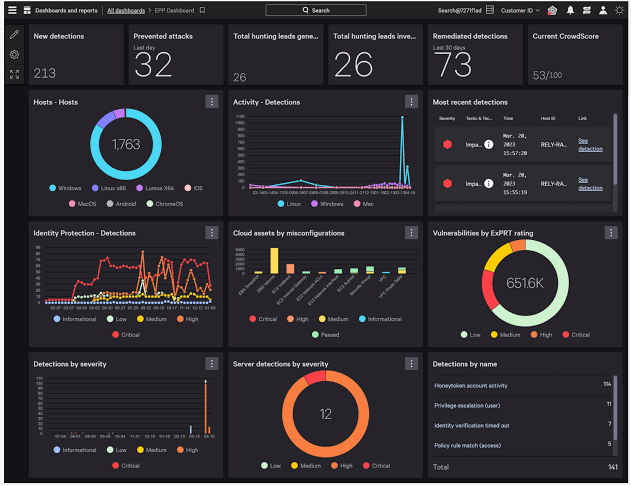
CrowdStrike Falcon delivers unified endpoint protection and cloud-delivered network threat intelligence through a lightweight kernel-level agent architecture. By streaming endpoint and network activity metrics to its Threat Graph cloud platform, it identifies network propagation vectors in real time.
- Deployment & Data Ingestion: Hybrid architecture utilizing a single unified agent across Windows, macOS, and Linux endpoints paired with a cloud-native processing engine.
- AI & Threat Engine: Powered by CrowdStrike Falcon AI algorithms and indicator-of-attack (IOA) engines to stop fileless and worm-based network propagation.
- API & Ecosystem: Extensible Falcon Fabric REST APIs for zero-trust ecosystem orchestration and automated threat hunting playbooks.
SolarWinds Security Event Manager
SolarWinds Security Event Manager functions as a high-performance SIEM appliance dedicated to real-time log consolidation and automated threat response. It parses, normalizes, and correlates log events across all network infrastructure layers to intercept virus signatures and unauthorized port scans immediately.
- Deployment & Data Ingestion: Deployed as a hardened virtual appliance (Hyper-V/VMware) with in-memory correlation engines for ultralow-latency log parsing.
- Detection Rules: Pre-built active response rules and heuristic detection algorithms designed specifically for network malware vector identification.
- Compliance & APIs: Enterprise REST API suite enabling seamless integration with external security orchestration, automation, and response (SOAR) platforms.
Frequently Asked Questions
How does network virus scanning differ from endpoint antivirus scanning?
Network virus scanning inspects data packets, flow records (NetFlow/sFlow), and protocol behavior as traffic traverses switches, routers, and firewalls to stop lateral propagation. Endpoint antivirus runs locally on OS filesystems to detect, quarantine, and delete file-based payloads on execution.
Why are packet sniffers and IDS tools essential for network malware detection?
Network viruses often self-replicate directly via packet streams without leaving traditional file footprints on disk. Packet sniffers capture raw traffic payloads while IDS engines apply signature matching and machine learning anomaly detection to detect malicious packet sequences in transit.
Should enterprise teams choose signature-based or anomaly-based network scanning tools?
Enterprise security architectures require both: signature-based tools rapidly mitigate known exploits with low computational overhead, while anomaly-based (ML-driven) tools detect zero-day exploits and novel network propagation behaviors by identifying deviations from baseline traffic patterns.
Advertisement