How to Integrate BI Directly into Your Workflows (2026)
Advertisement
Embedded analytics is the integration of data visualization and business intelligence (BI) capabilities directly within the user interface of an existing application, such as a CRM, ERP, or custom SaaS product.
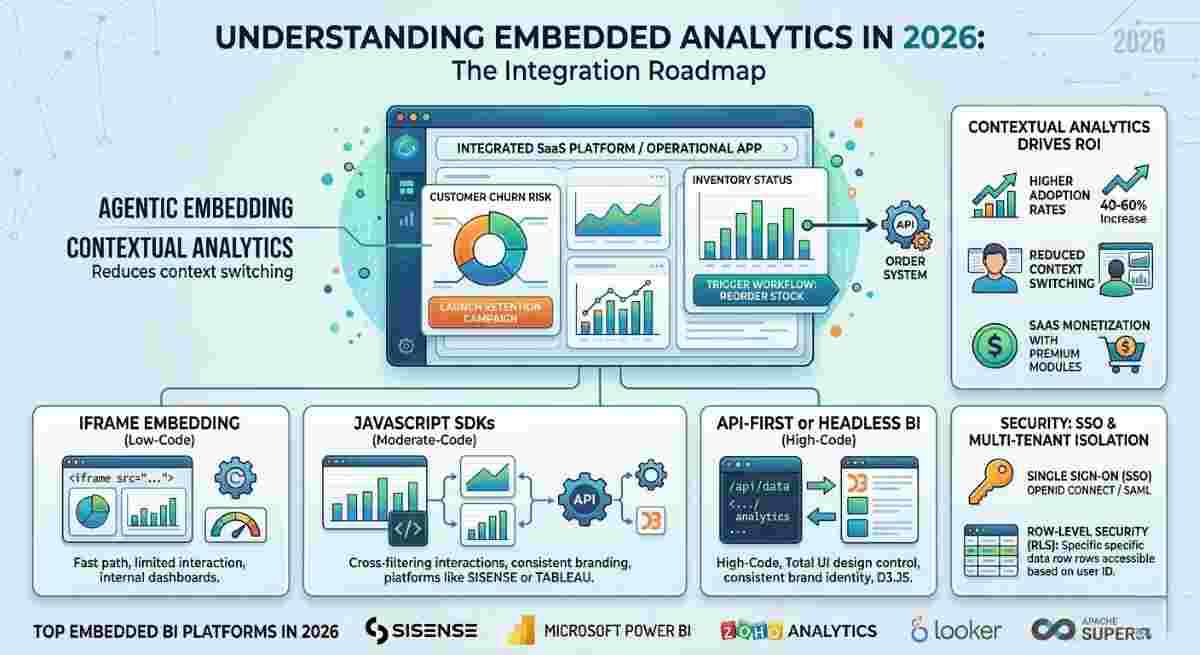
In 2026 the industry has moved beyond simple iframe embedding. The focus is now on agentic embedding where analytics are actionable. Instead of switching between an analytics tab and an operational tab users can trigger workflows such as launching a marketing campaign or adjusting a supply chain order directly from a data widget.
Quick Navigation: The Integration Roadmap
- The Three Tiers of Embedding Architecture
- Why Contextual Analytics Drives ROI
- Security: SSO and Multi-Tenant Data Isolation
- Top Platforms for Embedded BI in 2026
- Embedded Analytics FAQs
The Three Tiers of Embedding Architecture
Choosing the right technical approach determines your development speed versus your level of customization.
IFrame Embedding (Low-Code)
The fastest implementation path. Developers insert an iframe tag directly into an application's interface. It works well for internal dashboards but offers limited interaction and styling control.
JavaScript SDKs (Moderate-Code)
Using JavaScript SDKs provided by platforms such as Sisense or Tableau allows charts to function as native components inside an application. This enables cross-filtering interactions where actions inside the app update the embedded visualization dynamically.
API-First or Headless BI (High-Code)
The most customizable approach. Developers retrieve raw analytics data using APIs while rendering visualizations through UI libraries such as D3.js. This ensures complete design control and consistent branding.
Why Contextual Analytics Drives ROI
Dashboard fatigue has become a real issue across organizations. Employees often spend time searching for insights rather than acting on them. Embedded analytics solves this by placing insights exactly where operational work occurs.
- Higher Adoption Rates When analytics appear directly in workflow tools adoption can increase by 40 to 60 percent compared with standalone BI dashboards.
- Reduced Context Switching Switching between applications interrupts productivity. Embedded analytics keeps users focused within a single environment.
- SaaS Monetization Many SaaS platforms now offer premium analytics modules as an additional revenue stream.
Security: SSO and Multi-Tenant Data Isolation
One of the largest technical challenges in embedded analytics is ensuring users can only view the data they are authorized to access.
Single Sign-On (SSO)
Authentication standards such as OpenID Connect or SAML allow users to automatically access embedded analytics once they log into the primary application.
Row-Level Security (RLS)
Row-level security ensures data is filtered dynamically based on the user requesting the report. The analytics engine injects conditions such as customer identifiers to ensure tenant-level isolation.
Top Platforms for Embedded BI in 2026
| Tool | Best For | Key Integration Feature |
|---|---|---|
| Sisense | Custom SaaS applications | API-first architecture with deep embedding capabilities |
| Microsoft Power BI | Internal enterprise workflows | Native integration with Microsoft Teams and Power Apps |
| Zoho Analytics | Small and mid-size SaaS platforms | White-label portals and easy JavaScript embedding |
| Looker | Governed enterprise analytics | LookML-based data modeling |
| Apache Superset | Open-source analytics environments | SQL-native dashboards with flexible embedding |
Embedded Analytics FAQs
How does embedded analytics differ from traditional BI?
Traditional BI tools require users to leave their primary application and access analytics in a separate portal. Embedded analytics integrates those insights directly within the software users already operate, turning data into part of the operational workflow.
Can I white-label the analytics so it looks like my own software?
Yes. Many modern analytics platforms including Sisense, Zoho Analytics, and Tableau support white-label customization. Organizations can change branding elements such as colors, fonts, and logos while hosting analytics under their own domain.
What is Agentic Embedding?
Agentic embedding refers to analytics components that trigger operational workflows. For example a low inventory alert inside an embedded dashboard could include an action button that sends a reorder request to an ERP system through an API.
Advertisement