Acuity Scheduling Review 2026: Pricing, Features, Pros & Cons
Advertisement
Acuity Scheduling Review 2026: The Appointment Booking Software Built for Service Businesses
General-purpose scheduling tools handle the basics well enough, but they rarely account for the complexity of a real service business — deposit collection at booking, cancellation policy enforcement, multi-staff calendar coordination, class and package management, or HIPAA-compliant record keeping. Acuity is built specifically around these requirements, and that focus is what sets it apart from lighter-weight competitors like Doodle and even some tiers of Calendly. This review covers every dimension of the platform so you can evaluate it accurately against your actual workflow.
1. What Is Acuity Scheduling?
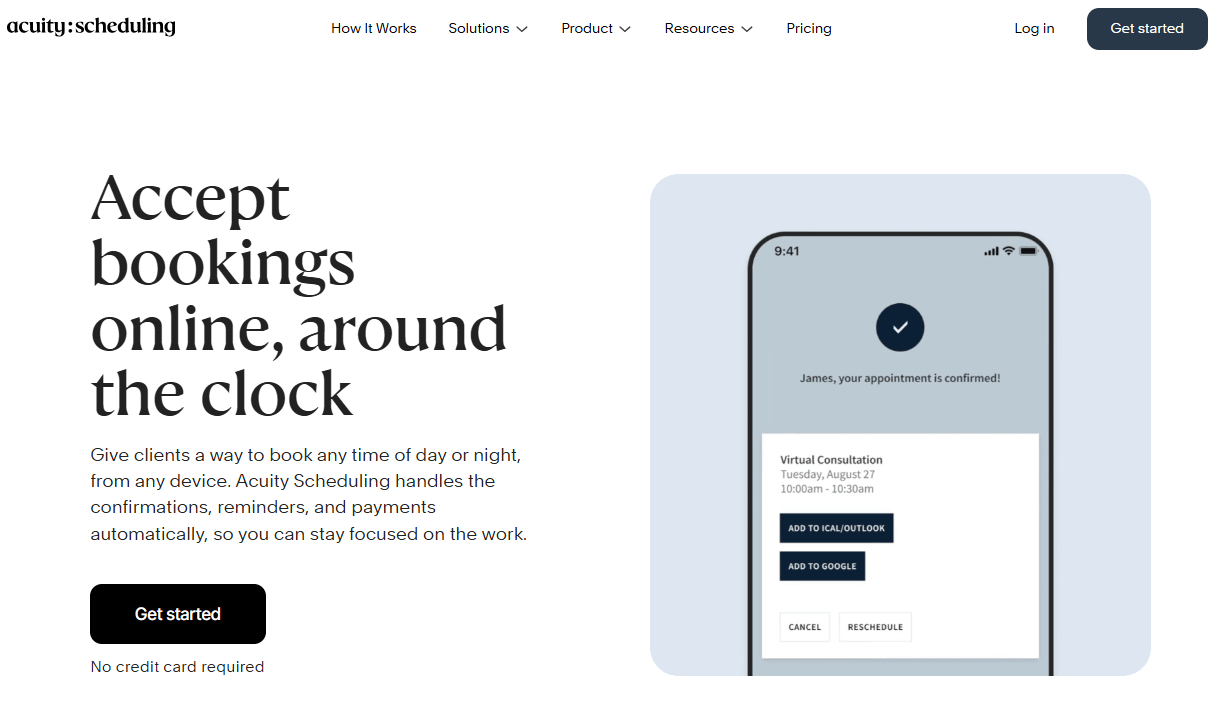
Acuity Scheduling is a cloud-based appointment booking platform that enables service businesses to accept bookings online, manage client relationships, process payments, and automate the administrative work that surrounds every appointment. Rather than simply providing a calendar link, Acuity gives businesses full control over how their booking experience looks, what information it collects, how it handles payments, and how it communicates with clients before and after every session.
- Self-Booking Pages: Clients can view real-time availability and book appointments at any time without requiring the business owner to be present or involved in the scheduling process.
- Branded Booking Experience: Business owners can customize the visual appearance of their booking page — colors, logo, service descriptions, and layout — to match their brand identity.
- Integrated Payment Processing: Acuity connects directly with Stripe, Square, and PayPal, allowing businesses to collect deposits, full prepayments, or stored card details at the moment of booking.
- Client Profiles and Intake Forms: Every client who books builds a profile that includes appointment history, notes, form submissions, package usage, and communication records — all accessible from a single dashboard.
- Automated Communications: Confirmation emails, reminder messages, follow-up notes, and rescheduling or cancellation notifications are sent automatically without requiring manual action from the business owner.
- Class and Group Scheduling: Beyond 1-on-1 appointments, Acuity supports group sessions, fitness classes, workshops, and events with participant capacity limits and waitlist management.
2. How Much Does Acuity Scheduling Cost?
Acuity Scheduling offers three paid plans in 2026, each designed for a different stage of business growth. All plans include a 7-day free trial with no credit card required, giving new users full access to evaluate the platform before committing.
- Starter Plan: Positioned for solopreneurs and side businesses with straightforward scheduling needs. Includes a single calendar, branded booking page, client self-scheduling, automated email confirmations, and basic intake forms. Best suited for independent practitioners managing a simple appointment flow.
- Standard Plan: Designed for small and growing businesses. Adds support for up to six calendars, SMS text reminders, advanced client loyalty tools including packages and gift certificates, subscription billing, coupon codes, and deeper payment integration options. This tier covers the majority of use cases for established service businesses.
- Premium Plan: Built for larger operations with complex workflows across multiple staff or locations. Adds HIPAA compliance tools for healthcare and wellness providers, full API access for custom integrations, custom CSS for booking page design, and the ability to remove Acuity branding entirely. Suitable for growing studios, multi-practitioner clinics, and businesses requiring compliance-grade data handling.
3. Pros of Acuity Scheduling
Acuity's strengths are concentrated in the areas that matter most to service businesses: reducing no-shows, automating client communication, and connecting booking directly to revenue. The platform's design reflects a deep understanding of how appointment-based businesses actually operate.
- Built-in payment collection at the point of booking — including deposits, full prepayment, and stored card details — directly ties revenue to the scheduling process rather than treating them as separate workflows.
- Cancellation policy enforcement at booking, including the ability to charge cancellation fees, gives businesses a practical mechanism to protect their time without awkward manual conversations.
- Detailed client profiles that accumulate intake form submissions, appointment history, package balances, and notes over time give service providers meaningful context before every session without any manual data entry.
- Class and group session support with capacity limits and waitlists makes Acuity a viable platform for studios, educators, and fitness professionals who run multiple session types simultaneously.
- Extensive integration ecosystem — including Google Calendar, iCloud, Outlook, Zoom, Google Meet, Mailchimp, QuickBooks, Zapier, Google Analytics, Instagram, and Facebook — connects Acuity to the broader operational stack most businesses already use.
- The 'Look Busy' availability feature, which selectively hides certain open time slots, gives solo practitioners the appearance of high demand — a subtle but commercially meaningful tool for newer businesses building their client base.
- HIPAA compliance tools on the Premium plan make Acuity one of the few scheduling platforms that can legally serve healthcare providers and therapists handling protected health information.
4. Cons of Acuity Scheduling
Acuity's feature depth comes with trade-offs that are worth understanding before committing to a plan. The platform is not the right fit for every use case, particularly those that prioritize simplicity over capability.
- The initial setup requires meaningful configuration time. Customizing appointment types, intake forms, availability rules, payment settings, and notification templates is not a one-click process — new users should expect to invest several hours before the system runs the way they want it to.
- SMS text reminders are not available on the entry-level Starter plan, which is a notable gap for businesses where reducing no-shows is a primary concern and email reminders alone are insufficient.
- Multiple time zone support — useful for virtual service providers booking clients across regions — is restricted to the Premium plan, limiting its availability for Standard plan users who work internationally.
- The reporting and analytics tools, while functional, are more basic than what dedicated business intelligence tools provide. Businesses with complex performance tracking requirements may find the built-in dashboards insufficient.
- Acuity does not offer a free plan. Users who want to evaluate the platform beyond the 7-day trial must commit to a paid subscription, which may be a barrier for very early-stage businesses or those testing multiple tools simultaneously.
- Custom branding removal — eliminating Acuity's logo and branding from client-facing pages — requires the Premium plan, meaning lower-tier users present a co-branded booking experience to their clients.
5. Core Features of Acuity Scheduling
Acuity's feature set spans the full lifecycle of an appointment-based business, from the moment a client discovers the booking page through payment, session delivery, follow-up, and rebooking. The platform is organized around three capability pillars: client experience, payments and invoicing, and business management.
- Branded Self-Booking Page: A fully customizable client-facing booking interface where visitors can view service offerings, select appointment types, choose available times, and complete booking without any back-and-forth with the business owner.
- Custom Appointment Types: Define individual services with unique durations, prices, availability windows, intake requirements, and booking rules — giving businesses precise control over exactly what clients can book and when.
- Client Intake Forms: Collect service-specific information from clients before their appointment using customizable forms attached to individual appointment types, ensuring providers are prepared for every session.
- Automated Email Notifications: Confirmation, reminder, follow-up, and rescheduling emails sent automatically at configurable intervals, keeping clients informed and engaged without manual effort.
- SMS Text Reminders (Standard+): Automated text message reminders sent to clients ahead of confirmed appointments, providing a higher-visibility channel for reducing no-show rates compared to email alone.
- Payment Collection at Booking: Accept full payment, partial deposits, or securely store a client's credit card details at the point of booking through direct integrations with Stripe, Square, and PayPal.
- Invoicing: Create and send branded invoices with auto-populated service and client details, track payment status from creation through completion, and manage all outstanding billing from a single dashboard.
- Point of Sale: Accept in-person payments through the Acuity mobile app using tap-to-pay, mobile payment links, or contactless card readers — extending payment capability beyond the digital booking flow.
- Packages and Subscriptions (Standard+): Sell multi-session bundles and recurring subscription memberships, enabling businesses to lock in ongoing client relationships and generate predictable recurring revenue.
- Gift Certificates (Standard+): Allow existing clients to purchase gift certificates for friends or family, extending the business's reach to new clients through word-of-mouth referrals tied to an existing transaction.
- Cancellation Policy Enforcement: Require clients to acknowledge cancellation terms at booking and optionally charge fees for late cancellations or no-shows, reducing revenue loss from missed appointments.
- Calendar Sync: Two-way synchronization with Google Calendar, Apple iCloud, and Microsoft Outlook prevents double-booking by keeping Acuity availability aligned with the user's existing personal and professional calendar commitments.
- Multi-Calendar and Staff Management (Standard+): Manage individual calendars for multiple staff members or locations from a single administrative account, with granular permission controls governing what each team member can view or modify.
- Class and Group Scheduling: Create bookable group sessions, fitness classes, workshops, or events with defined participant capacity, waitlist management, and class-specific intake requirements.
- Availability Controls: Set appointment-specific availability hours, buffer times between sessions, daily booking limits, appointment interval controls, and resource or room restrictions to prevent overbooking.
- Video Conferencing Integration: Connect Zoom or Google Meet to automatically generate and attach video conference links to confirmed bookings, eliminating the manual step of creating meeting URLs.
- Mobile App: A fully functional iOS and Android app for managing the calendar, processing payments, viewing client profiles, and handling bookings from any location.
- HIPAA Compliance (Premium): Business Associate Agreement support and data handling controls that meet HIPAA requirements, enabling healthcare providers, therapists, and other regulated practitioners to use Acuity legally for patient scheduling.
- API Access (Premium): Developer-grade API tools for building custom integrations, embedding scheduling into proprietary platforms, or connecting Acuity to bespoke internal systems.
- Website Embedding: Embed the Acuity booking widget directly into any existing website — including Squarespace, WordPress, Wix, and others — so clients can book without leaving the business's own web presence.
6. Benefits of Using Acuity Scheduling
Acuity's core value is the time it returns to business owners who currently spend significant portions of their day managing the logistics that surround each appointment. The platform automates the administrative layer of a service business, freeing practitioners to focus on delivering their service.
- 24/7 Booking Without Owner Involvement: Clients can self-schedule at any hour without the business owner needing to respond to inquiries, check availability, or send confirmation messages — the entire intake process runs automatically.
- Revenue Tied Directly to Booking: Payment collection at the point of scheduling means every confirmed appointment carries financial commitment, significantly reducing the casual cancellations and no-shows that erode service business income.
- Client Relationships That Build Over Time: Automatically accumulated client profiles — including form submissions, appointment history, notes, and package balances — give practitioners a growing record of each relationship without any manual data entry.
- No-Show Prevention at Multiple Levels: The combination of deposit requirements, cancellation policy acknowledgment at booking, automated email reminders, and SMS text reminders creates a layered system that addresses no-shows from multiple angles simultaneously.
- Scalable to Business Growth: A solo practitioner can start on the Starter plan and upgrade to Standard or Premium as their team, locations, and workflow complexity expand, without migrating to a different platform.
- Client Loyalty Built Into the System: Packages, subscriptions, gift certificates, and discount codes are tools for retaining clients and generating repeat business, all managed directly within the booking platform rather than through separate loyalty software.
- Professional Client-Facing Experience: A branded, polished booking page presents the business credibly from the first touchpoint, setting expectations for the quality of service before the appointment even takes place.
7. Our Expert Take on Acuity Scheduling
Acuity Scheduling earns its reputation among service business owners because it was clearly designed by people who understand the operational reality of running an appointment-based practice. The integration between booking, payment collection, and client communication is tighter than most competitors manage, and that tightness translates directly into less manual work for the business owner on a daily basis.
The Starter plan is genuinely functional for a solo practitioner with straightforward needs, though the absence of SMS reminders is a meaningful limitation for anyone where no-show reduction is a priority. The Standard plan is where most established service businesses will land — the addition of multi-calendar support, packages, subscriptions, SMS reminders, and deeper payment tools covers the majority of real-world workflow requirements at a price point that remains accessible for small businesses.
The Premium plan's HIPAA compliance tools are a genuine differentiator in the market. Most scheduling platforms either ignore this requirement entirely or handle it through bolt-on solutions. Acuity's native support makes it a credible choice for mental health therapists, nutritional counselors, medical spas, and other practitioners operating in regulated environments where client data handling is not optional — it is a legal obligation.
Where Acuity shows its limitations is in reporting depth and the initial configuration investment. The setup process is more involved than lighter alternatives, and businesses that expect to be operational within thirty minutes will be disappointed. The reporting dashboards provide enough visibility for most users, but owners who need detailed performance analytics across staff, locations, and service types may find the built-in tools insufficient and need to supplement with an external analytics solution.
For its target audience — independent service professionals and growing small businesses in beauty, wellness, fitness, education, coaching, and related fields — Acuity Scheduling is one of the strongest all-in-one platforms available in 2026. The combination of booking, payments, client management, and loyalty tools under a single subscription delivers genuine operational leverage that justifies the setup investment many times over.
8. What Business Types Use Acuity Scheduling?
Acuity Scheduling's feature set maps closely to the needs of service-based businesses where appointments are the primary unit of revenue. The platform supports an exceptionally wide range of verticals with industry-specific workflows built in rather than bolted on.
- Beauty and Salon Services: Hair stylists, nail technicians, lash artists, tattoo studios, and estheticians use Acuity to manage individual appointment types, collect deposits for time-intensive services, and enforce cancellation policies that protect their time.
- Wellness and Spa Practitioners: Massage therapists, acupuncturists, reiki practitioners, skincare specialists, and meditation instructors rely on Acuity's intake forms to gather health and preference information before each session and its subscription tools to manage recurring wellness memberships.
- Fitness and Sports Coaching: Personal trainers, yoga instructors, pilates studios, and sports coaches use the class scheduling and package management features to sell session bundles, manage group class capacity, and track client attendance over time.
- Health and Medical Practices: Optometrists, nutritional counselors, mental health therapists, and med spa providers on the Premium plan benefit from HIPAA-compliant data handling, intake form automation, and appointment reminders that meet the expectations of a clinical environment.
- Education and Tutoring: Independent tutors, language trainers, test prep specialists, and music or art lesson providers use Acuity to manage recurring student schedules, sell lesson packages, and automate session reminders to both students and parents.
- Business Coaching and Consulting: Life coaches, financial advisors, business consultants, and professional development practitioners use Acuity's intake forms to gather client context before discovery calls and its package tools to manage ongoing engagement structures.
- Photography and Creative Services: Photographers, videographers, and other creative professionals use Acuity to manage shoot bookings, collect session deposits, enforce cancellation policies for time-blocked shoots, and send preparation reminders to clients ahead of their session date.
- Pet Care and Veterinary Services: Dog trainers, groomers, and veterinary practices use Acuity to manage appointment capacity across service types, collect pet-specific intake information, and send automated reminders that reduce missed appointments in a high-volume booking environment.
The Final Verdict
Acuity Scheduling in 2026 is the benchmark appointment booking platform for service businesses that have outgrown simple calendar links and need a system that connects booking, payment, client management, and communication into a single coherent workflow. The 7-day free trial removes the financial risk of evaluation, and the three-tier plan structure means businesses can start at the right level and scale without switching platforms as they grow. If your revenue depends on appointments running reliably and clients showing up prepared and on time, Acuity Scheduling is built precisely for that problem — and it solves it well.
Advertisement