Best Cloud Analytics Platforms: Architectural Deep-Dive
Advertisement
Best Cloud Analytics Platforms: Architectural Deep-Dive
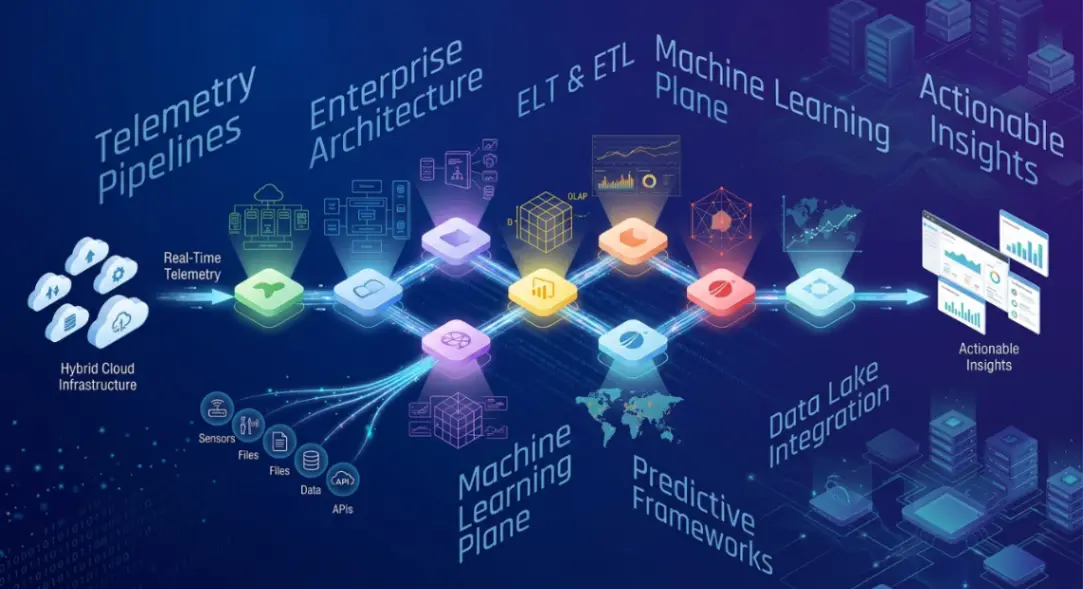
Modern enterprise data architecture demands robust, distributed systems that align natively with the standard NIST Cloud Computing Definition for multi-tenant scalability, rapid elasticity, and resource pooling. As organization infrastructures become increasingly decentralized, the technical requirement shifts from localized reporting toward global, near-zero-latency analytics engines. Enterprise systems architects must carefully evaluate how these platforms handle high-throughput stream ingestion, compute-to-storage decoupling, and cross-platform data orchestration patterns.
Deploying cloud-native data analytics at scale involves overcoming structural engineering limitations inherent to network I/O bounds, complex multi-source schema mismatches, and data synchronization across hybrid topologies. Organizations typically face significant challenges when unifying structured relational databases with completely unstructured object stores or transient event streams. Resolving these bottlenecks requires deploying advanced analytical infrastructure capable of abstracting semantic translation layers, establishing optimized in-memory query routing, and managing data cache clusters effectively.
1. AppOptics Custom Metrics and Analytics
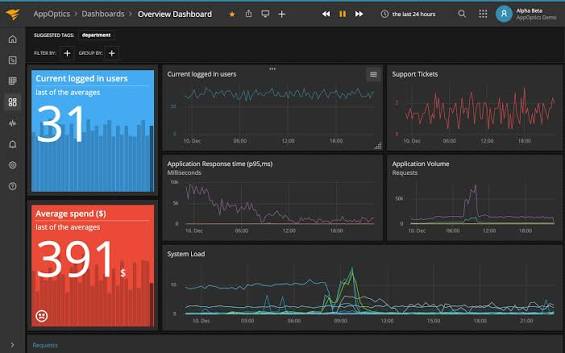
AppOptics operates as a high-throughput, multi-tenant cloud application performance monitoring (APM) and infrastructure telemetry analyzer designed for highly distributed software architectures. The platform acts as a consolidated data plane, leveraging non-blocking asynchronous event loops to capture and parse high-velocity system traces and custom programmatic metrics.
- Unified Telemetry Plane: Combines low-level infrastructure hardware telemetry (CPU registers, kernel storage I/O, network sockets) and deep application-layer transactional execution traces within a centralized monitoring environment.
- Extensible API Aggregation: Ingests high-frequency custom time-series metrics through open-source server collector agents, standardized HTTP RESTful interfaces, and custom programmatic webhooks.
- Multi-Cloud Infrastructure Hooks: Implements native cloud abstraction layers to dynamically pull system metadata and performance baselines directly from Amazon Web Services (AWS) CloudWatch and Microsoft Azure Monitor.
2. Zoho Analytics
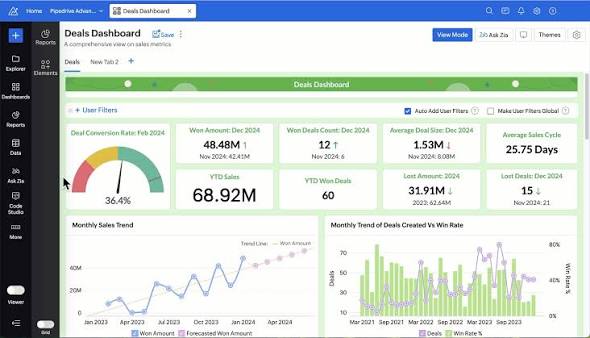
Zoho Analytics is a comprehensive business intelligence solution built over a robust columnar-logical data warehousing architecture designed to optimize complex analytical query executions. The platform relies on advanced heuristic matching algorithms to dynamically ingest cross-functional operational records and automatically build clean semantic layers without manual schema alignment.
- Extensive Integrations Fabric: Employs a dense, pre-configured database connector library that establishes low-latency API links into transactional databases, cloud object stores, and third-party SaaS ecosystems.
- Zia AI Computational Engine: Features an integrated machine learning semantic engine capable of interpreting natural language processing (NLP) requests, auto-generating complex SQL code, and performing instant anomaly detection.
- Hybrid Container Deployments: Offers flexible infrastructural portability by deploying natively as a managed SaaS solution, dedicated instances inside AWS/Azure virtual private clouds, or self-hosted isolated Docker containers.
3. IBM Cognos Analytics
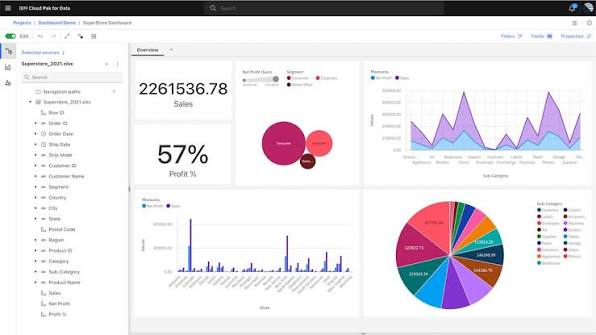
IBM Cognos Analytics is an enterprise business intelligence platform structured primarily for comprehensive retrospective data synthesis, historical trend analysis, and deep operational reporting. The platform architecture leverages powerful, multi-dimensional Online Analytical Processing (OLAP) memory structures to index and process deeply nested corporate data models without experiencing compute degradation.
- Multi-Dimensional OLAP Caching: Utilizes advanced in-memory data processing cubes to allow instant drill-down capabilities across highly stratified hierarchical organizational records.
- Cognitive Data Mining: Employs automated machine learning pipeline models to crawl connected enterprise storage nodes, systematically detect metadata anomalies, and auto-recommend schema relationships.
- Geospatial Vector Engine: Unifies spatial topology structures with corporate financial records to project complex geo-distributed key performance indicators over interactive spatial-vector map views.
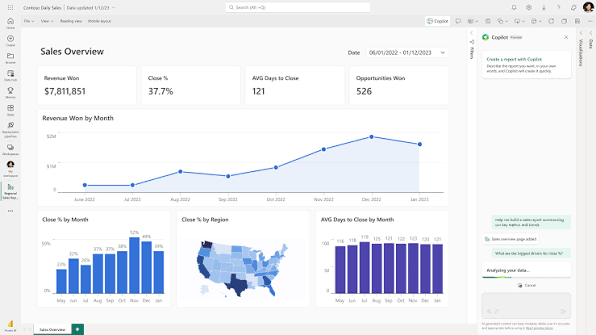
4. Microsoft Power BI
Microsoft Power BI provides an exceptionally high-performance data visualization and analytics framework engineered around the VertiPaq in-memory columnar database compression engine. This distributed computational architecture facilitates real-time streaming analytics pipelines, allowing enterprise developers to synthesize immense datasets into synchronized semantic models instantly.
- Data Lakehouse Interoperability: Integrates directly with Azure Synapse Analytics and Azure Data Lake Storage (ADLS Gen2) via Delta Lake tabular format support to maintain data lake consistency.
- Cognitive Service Integration: Embeds automated machine learning modules natively within the platform data preparation pipeline, enabling non-data scientists to run automated sentiment analysis and image tag extraction via Microsoft Power BI solutions.
- Azure Active Directory Identity Fabric: Implements deep enterprise security governance by synchronizing directly with Microsoft Entra ID for granular, row-level data security and end-to-end user lineage access control.
5. Board
Board features an innovative, all-in-one corporate performance management architecture that unifies advanced business intelligence analytics with active transactional planning databases. Its underlying storage engine is explicitly engineered to handle high-concurrency read-and-write operational workflows simultaneously during heavy predictive simulations.
- Board BEAM Statistical Engine: Integrates an out-of-the-box analytical forecasting framework that uses predictive modeling to identify distinct customer patterns like frequency, recency, nascency, and dormancy.
- Concurrent Write-Back Architecture: Empowers corporate teams to perform complex, multi-user simulation planning, writing back new calculated forecast variants immediately to the underlying transactional dataset.
- Native App Abstraction Layer: Implements specialized programmatic hooks that seamlessly bind dynamic data visualizations and reports directly inside Microsoft Office applications without sacrificing underlying metadata rules.
6. TIBCO Spotfire
TIBCO Spotfire is engineered explicitly to address hyper-velocity event processing and low-latency message streaming scenarios across large-scale IoT and financial systems. The platform utilizes a unique hybrid analytics engine designed to handle continuous real-time data calculations alongside static archival record sets seamlessly.
- Hybrid Compute-Routing Engine: Dynamically shifts analytical workloads between in-database push-down querying protocols and massive, multi-threaded in-memory processing matrices.
- Real-Time Stream Processing: Integrates natively with TIBCO Streaming middleware architectures to continuously calculate running statistics on high-velocity sensor data fields.
- Scalable Provisioning Formats: Offers elastic infrastructural resource configuration options spanning multi-tenant SaaS environments, private dedicated cloud setups, and hourly-metered cloud container engines.
7. Domo
Domo is a fully cloud-native data orchestration, pipeline management, and visualization platform designed to operate as a low-latency accelerator for enterprise data structures. The architecture utilizes a proprietary query virtualization layer that enables remote data exploration without needing resource-heavy physical migration or continuous duplication loops.
- Magic ETL Execution Pipeline: Features a visual drag-and-drop data pipeline interface that compiles behind-the-scenes into highly optimized distributed database transformations, avoiding standard SQL overhead limits.
- Dynamic Orchestration Middleware: Functions as a bidirectional automation hub that can trigger programmatic webhooks and alert signals across external third-party software platforms based on analytical thresholds.
- Polyglot Extensibility Sandboxes: Allows advanced enterprise architects to write and execute custom Python and R scripts within isolated, secure execution environments to deploy tailored machine learning routines.
Frequently Asked Questions
What is the primary architectural benefit of migrating to cloud analytics tools?
Cloud analytics platforms fundamentally decouple decoupled computing nodes from underlying static storage volumes, enabling organizations to horizontally scale OLAP data structures elastically without physical on-premise hardware capital limitations.
How do modern cloud BI tools manage high-velocity, real-time streaming telemetry?
Modern solutions implement integrated low-latency stream ingestion brokers and specialized event-driven analytics engines that continuously compute metrics on sliding windows of incoming data prior to long-term database storage archiving.
What security protocols are utilized to protect enterprise data lineage across cloud analytics?
Enterprise cloud analytics infrastructures apply multi-layered security architectures using granular row-level security (RLS), mandatory OAuth 2.0 and SAML identity authentication, and comprehensive TLS 1.3 and AES-256 encryption engines to secure records both in transit and at rest.
Advertisement