Enterprise SQL Server Security, Vulnerability Assessment & Compliance Tools
Advertisement
Enterprise SQL Server Security, Vulnerability Assessment & Compliance Tools
Ensuring relational database security requires continuous posture management, strict privilege separation, and proactive auditing across all SQL Server instances. To guard against unauthorized access, privilege escalation, and data exfiltration, enterprise architectures must adhere to cybersecurity frameworks set by standards bodies like NIST. Selecting an enterprise SQL Server security tool involves evaluating Database Activity Monitoring (DAM) drivers, automated vulnerability scanners, compliance reporting modules, and cryptographic key management integrations.
1. SolarWinds Database Performance Analyzer
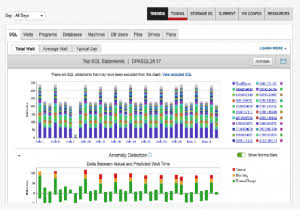
SolarWinds Database Performance Analyzer provides comprehensive SQL Server monitoring and security posture evaluation through deep agentless wait-time analysis. It identifies privilege anomalies, unauthorized query executions, and performance bottlenecks across enterprise database fleets.
- Architecture & Ingestion: Utilizes an agentless architecture connecting via JDBC/ODBC to monitor SQL Server instances with less than 1% resource overhead.
- Anomaly Detection: Applies machine learning algorithms to establish baseline query behavior and detect abnormal data access patterns or execution spikes.
- Deployment Model: Multi-platform deployment supporting Windows Server, Linux, AWS EC2, and Azure SQL Virtual Machines.
2. ManageEngine Vulnerability Manager Plus
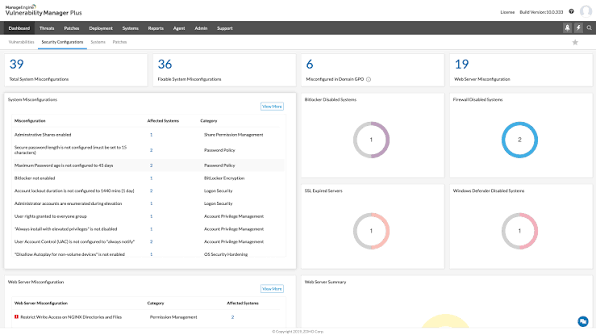
ManageEngine Vulnerability Manager Plus delivers enterprise-wide endpoint and database server vulnerability management. It automatically detects misconfigurations, missing security patches, and weak authentication schemes across SQL Server environments.
- Configuration & Audit Engines: Audits SQL Server security against CIS benchmarks, flagging excessive 'sysadmin' role assignments and unencrypted connection protocols.
- Automated Patch Pipelines: Features automated patch deployment for Microsoft SQL Server binaries, cumulative updates (CU), and host OS dependencies.
- Deployment Versatility: Deployed as on-premises enterprise software or via distributed cloud-managed agent nodes.
3. SQL Secure (Idera)
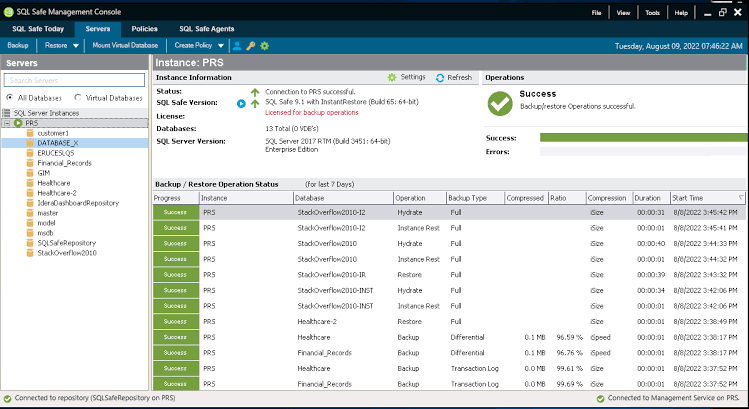
Idera SQL Secure provides deep security model analysis and access control auditing specifically designed for Microsoft SQL Server. It analyzes surface area configurations, user permissions, and object-level security hierarchies to prevent privilege creep.
- Security Snapshot Engine: Takes comprehensive snapshots of SQL Server security settings, logins, roles, and explicit permissions across all database objects.
- Risk Assessment Framework: Evaluates effective permissions against custom security policies to identify inheritance risks and orphaned user accounts.
- Deployment Architecture: Native Windows desktop application console backed by a centralized SQL Server repository database.
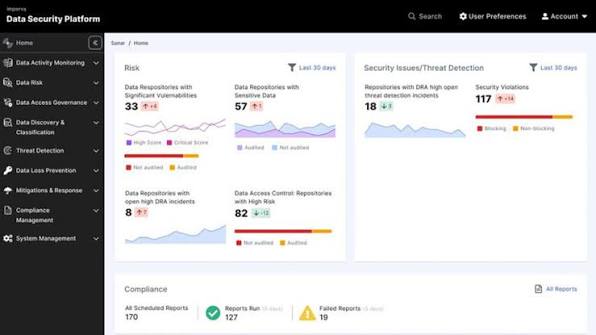
4. Imperva Data Security Fabric
Imperva Data Security Fabric delivers advanced Database Activity Monitoring (DAM) and threat prevention across enterprise data stores. It inspects all SQL Server network traffic in real time to detect SQL injection attempts, unauthorized schema changes, and sensitive data exposure.
- Traffic Inspection API: Utilizes lightweight host agents (vTAP) or network taps to perform inline packet inspection on TDS (Tabular Data Stream) protocol traffic.
- ML Threat Analytics: Integrates behavioral analytics models to identify compromised credentials, mass data extraction, and rogue DBA activity.
- Deployment Versatility: Enterprise cloud SaaS architecture integrated with on-premises gateways and hybrid Imperva sensor agents.
5. DbWatch Control Center
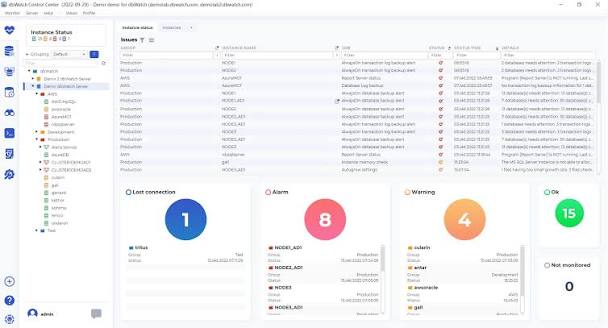
DbWatch Control Center is a multi-database management and security monitoring solution engineered for large-scale enterprise environments. It aggregates performance, patch levels, and security audit configurations into a single management interface.
- Centralized Security Auditing: Monitors SQL Server password policy enforcement, audit log status, and dynamic role memberships across heterogeneous server farms.
- Resource & License Optimization: Tracks database instance utilization, version lifecycles, and security compliance postures simultaneously.
- Deployment Model: Scalable server-agent framework running on Windows Server, Linux, and enterprise container environments.
6. Microsoft Defender for SQL
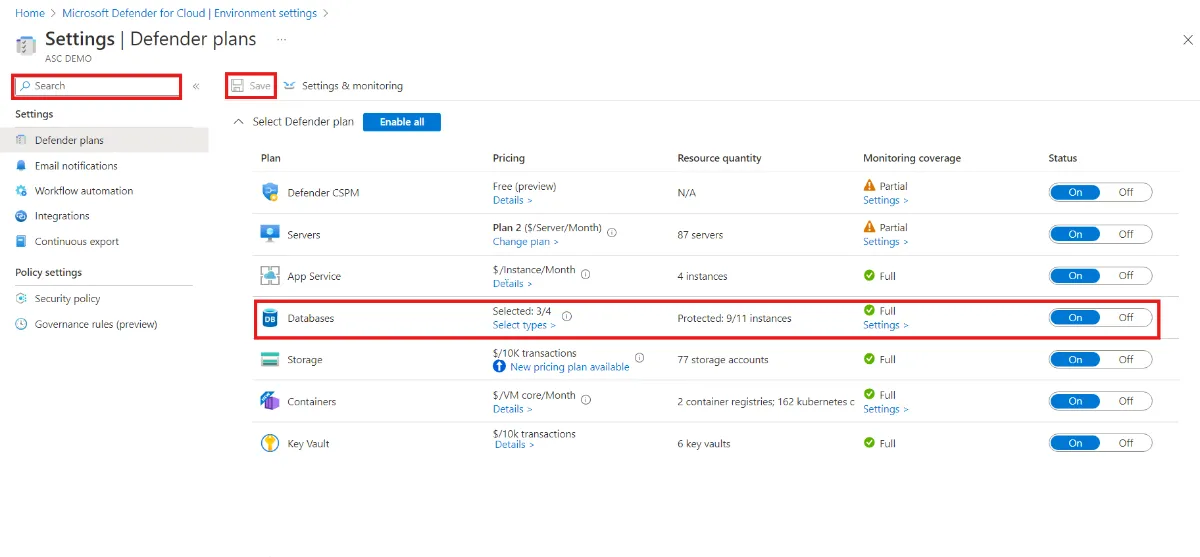
Microsoft Defender for SQL is a cloud-native security solution integrated directly into Azure SQL Database and SQL Server on hybrid machines. It provides advanced threat protection, vulnerability assessments, and real-time security alerts tailored to SQL workloads.
- Threat Detection Engine: Detects suspicious database activities, such as SQL injection attacks, brute-force logins, and unusual location access using Microsoft Threat Intelligence.
- Automated Vulnerability Assessment: Periodically scans databases for security gaps, providing actionable remediation steps and benchmark scoring.
- Deployment Architecture: Native Azure cloud service integration with Log Analytics agent or Azure Arc extension for hybrid on-premises deployments.
7. Trustwave DbProtect
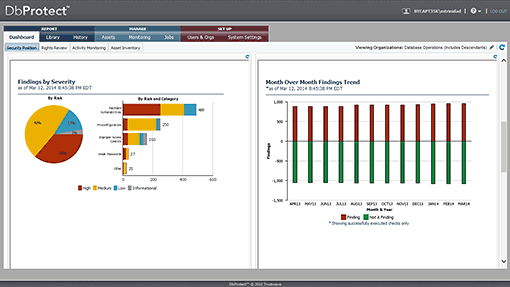
Trustwave DbProtect is an enterprise-grade database security platform focused on data discovery, vulnerability management, and audit compliance. It helps organizations locate sensitive data assets within SQL Server instances and eliminate configuration weaknesses.
- Data Discovery & Classification: Scans database schemas to automatically identify and classify personally identifiable information (PII) and financial records.
- Comprehensive Audit Engine: Generates tamper-proof audit trails for compliance frameworks including PCI-DSS, HIPAA, and GDPR.
- Deployment Model: On-premises security management appliance with agentless or agent-based database monitoring capabilities.
8. Netwrix Auditor for SQL Server
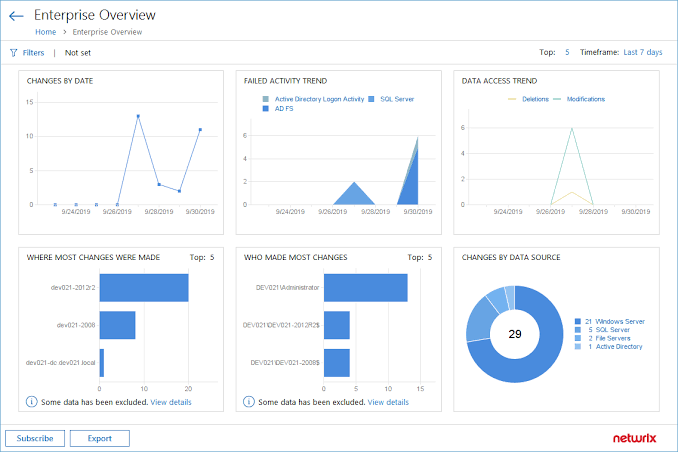
Netwrix Auditor for SQL Server focuses on change tracking, auditing, and threat detection across database instances. It captures all administrative changes, permission modifications, and data access attempts with complete before-and-after value context.
- Audit State Capture: Tracks schema modifications, login creations, role grants, and failed authentication attempts without relying on native SQL trace logs.
- Behavioral Anomaly Detection: Alerts security teams to anomalous user activity, such as bulk data deletions or unauthorized schema alterations.
- Deployment Model: On-premises Windows Server deployment utilizing lightweight collection agents to aggregate log data into a centralized audit vault.
Frequently Asked Questions
How does Transparent Data Encryption (TDE) protect Microsoft SQL Server databases?
Transparent Data Encryption (TDE) performs real-time I/O encryption and decryption of SQL Server data and log files (MDF, LDF, and tempdb) at the storage level using an AES or Triple-DES encryption key. TDE protects data-at-rest against unauthorized physical media theft or compromised raw backup files without requiring modifications to client application code.
What is the difference between SQL Server Audit and Change Data Capture (CDC)?
SQL Server Audit uses Extended Events to track server-level and database-level actions (such as login modifications, permission changes, or SELECT queries) for security auditing and compliance logging. Change Data Capture (CDC) records row-level DML insertions, updates, and deletions into change tables to track data modifications for ETL processes and operational history, rather than security profiling.
Why is SQL Server 'sa' account management critical for database security?
The 'sa' (system administrator) account is a privileged, built-in SQL Server login that bypasses all permission checks. Security best practices mandate disabling the 'sa' account or renaming it, enforcing strong complex passwords, and granting administrative access through specific, role-based Windows Authentication (Active Directory) groups instead of shared SQL logins.
Advertisement