How to Choose the Right ERP Software for Your Industry (2026)
Advertisement
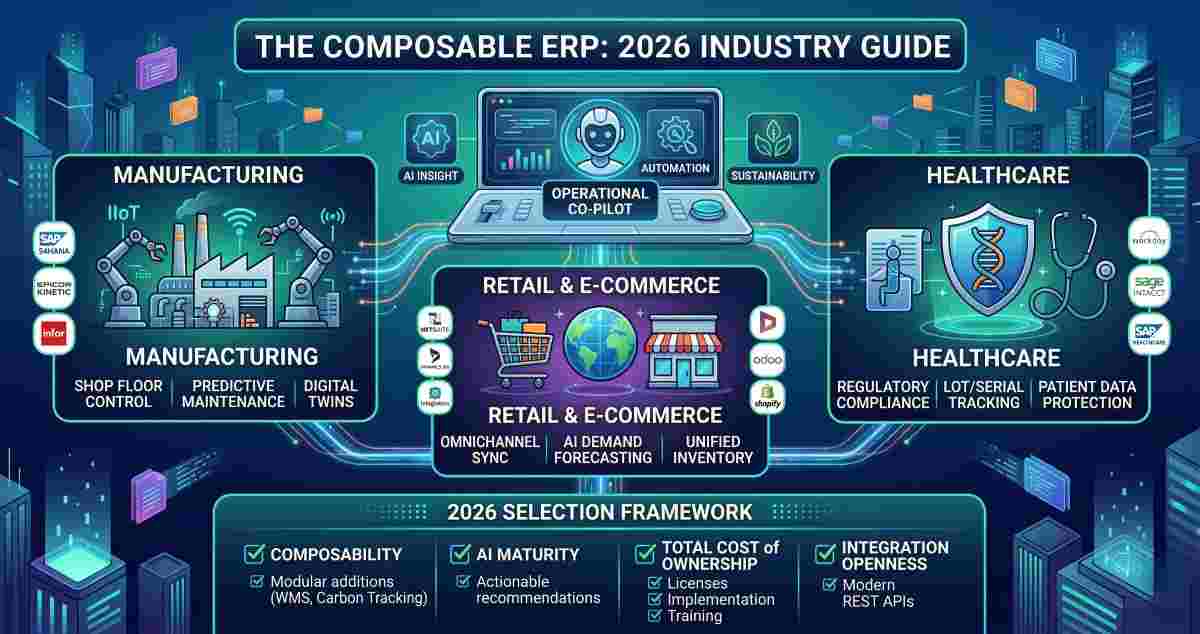
In 2026 the concept of a universal ERP platform has largely disappeared. Organizations increasingly adopt composable ERP architectures where different software components are selected based on industry requirements rather than relying on a single monolithic platform.
Instead of acting as a simple record keeping system the modern ERP functions as an operational co pilot. These platforms integrate technologies such as artificial intelligence automation and sustainability tracking to support real time business decision making.
Selecting the right ERP therefore requires understanding the operational demands of a specific industry sector. The following sections outline how businesses in manufacturing retail and healthcare evaluate ERP systems in 2026.
Manufacturing: Prioritizing the Shop Floor
Manufacturing companies require ERP systems that connect administrative planning with factory floor operations. Integration between enterprise systems and industrial machinery allows production managers to monitor performance and predict operational failures before they occur.
Industrial Internet of Things technologies enable production equipment to transmit operational data directly into ERP dashboards which supports predictive maintenance and production planning.
Key Requirements
- Multilevel bill of materials management
- Shop floor control systems
- Real time production scheduling
2026 Trend
Digital twin simulations allow manufacturers to model production processes before launching physical production runs. This approach helps identify potential bottlenecks or resource constraints early in the planning phase.
Top Platforms
Examples include SAP S4HANA, Epicor Kinetic, and Infor CloudSuite Industrial.
Retail and E commerce: Mastering Omnichannel Operations
Retail organizations compete primarily on delivery speed product availability and personalized customer engagement. ERP systems must coordinate inventory logistics and order management across multiple digital and physical sales channels.
The ERP effectively acts as the central intelligence layer behind omnichannel retail operations ensuring that stock levels pricing and order fulfillment remain synchronized across platforms.
Key Requirements
- Unified inventory visibility across warehouses and stores
- High volume order management systems
- Native integration with commerce platforms such as Shopify and WooCommerce
2026 Trend
Artificial intelligence driven demand forecasting uses historical sales patterns social media signals and environmental factors such as weather trends to anticipate product demand at regional levels.
Top Platforms
Common ERP platforms for retail organizations include Oracle NetSuite, Microsoft Dynamics 365 Business Central, and Odoo.
Healthcare: Compliance and Patient First Operations
Healthcare organizations operate within strict regulatory environments where data protection traceability and auditability are mandatory.
ERP systems in this sector manage financial records medical inventory supply logistics and compliance reporting while maintaining strong safeguards for sensitive patient information.
Key Requirements
- Lot and serial number tracking for medical equipment
- Expiration management for pharmaceuticals and surgical materials
- Detailed audit logs supporting regulatory compliance
2026 Trend
Healthcare ERP platforms increasingly automate regulatory updates ensuring operational workflows remain compliant with evolving medical regulations.
Top Platforms
Examples include Workday, Sage Intacct, and SAP for Healthcare.
The 2026 ERP Selection Framework
Before selecting any ERP vendor organizations should evaluate potential systems using four core criteria.
- Composability Determine whether the platform allows modular additions such as warehouse management or carbon footprint tracking without disrupting core functionality.
- AI Maturity Evaluate whether built in artificial intelligence provides actionable operational recommendations rather than only historical analytics.
- Total Cost of Ownership Beyond licensing costs organizations must account for implementation consulting integration development employee training and ongoing operational support.
- Integration Openness The platform should provide modern REST based APIs allowing integration with existing business software and infrastructure.
Industry Selection FAQs
Should businesses choose a best of breed or single vendor ERP?
Current enterprise software trends favor a best of breed strategy within a composable ERP architecture. Companies typically select a core ERP platform and integrate specialized tools to address industry specific processes.
What is the manual reporting tax?
The manual reporting tax refers to productivity losses caused by exporting ERP data into spreadsheets to calculate specialized business metrics. Systems lacking built in analytics often generate this hidden operational cost.
Does every industry require a cloud native ERP?
Most industries benefit from cloud native ERP systems because they allow frequent software updates enhanced cybersecurity monitoring and advanced analytics capabilities. Highly sensitive sectors such as defense or government environments may still rely on on premise infrastructure.
Advertisement