What is an ERP System? (Definition, Key Modules, and Benefits Explained)
Advertisement
In the modern business landscape of 2026, data is often described as the new oil. However without systems to refine and distribute it that data remains unusable. Enterprise Resource Planning systems exist to transform fragmented business data into coordinated operational intelligence.
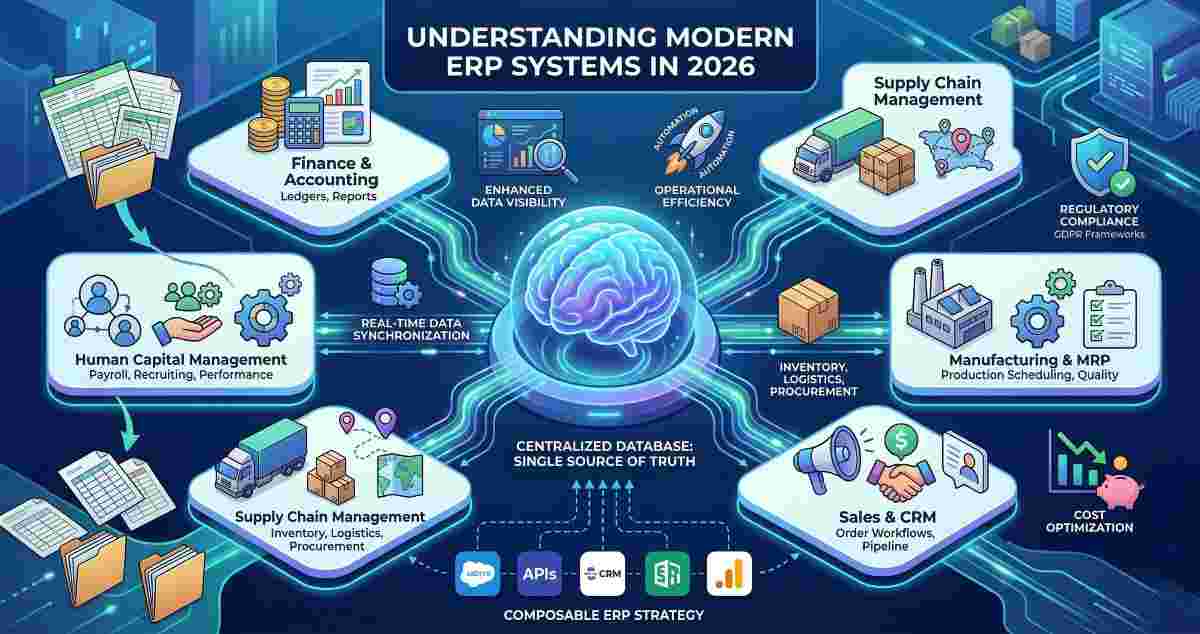
An ERP system is a software architecture that integrates a company’s core processes including finance, human resources, manufacturing, procurement, services, and supply chain management into one unified platform. Instead of departments maintaining disconnected spreadsheets an ERP establishes a single source of truth across the organization.
For example when a sales representative closes a deal inside a CRM module the ERP can automatically update inventory levels, trigger order fulfillment workflows, and record the transaction inside the financial ledger.
How an ERP System Works
The core mechanism behind ERP software is a centralized database shared across multiple operational modules.
In a traditional non integrated system each department maintains separate data repositories. When information changes the update may not propagate across teams which leads to inconsistent records.
ERP platforms solve this issue by synchronizing data across the enterprise in real time. If a customer address changes in the CRM module that update becomes immediately visible to logistics finance and support teams.
Modern ERP systems have evolved beyond monolithic architectures. Businesses increasingly adopt composable ERP strategies where different specialized applications integrate through APIs and middleware platforms.
For instance companies may use Zoho CRM for customer relationship management while financial operations run through platforms such as SAP ERP or Oracle NetSuite.
The Core Modules of a Modern ERP
ERP systems are modular which allows organizations to adopt functionality gradually rather than implementing every capability simultaneously.
- Finance and Accounting Manages the general ledger accounts payable accounts receivable and financial reporting.
- Human Capital Management Handles payroll employee records recruiting and performance management.
- Supply Chain Management Tracks inventory procurement logistics and warehouse operations across distribution networks.
- Manufacturing and MRP Supports production scheduling bill of materials management and product quality monitoring.
- Sales and CRM Stores customer history manages sales pipelines and automates order processing workflows.
Key Benefits of Implementing an ERP
- Enhanced Data Visibility Executives gain access to real time dashboards that show operational performance across departments.
- Operational Efficiency Automation reduces repetitive administrative tasks such as invoice creation or inventory reordering.
- Regulatory Compliance Modern ERP platforms include compliance frameworks for international regulations including GDPR data governance and financial reporting standards.
- Cost Optimization Organizations often replace multiple disconnected applications with a unified platform reducing software licensing costs and improving demand forecasting accuracy.
ERP Frequently Asked Questions
Is an ERP system only for large corporations?
No. Cloud based ERP platforms have made enterprise software accessible to small and medium businesses. Companies can start with a single module such as finance and gradually add additional functionality as they scale.
What is the difference between ERP and CRM?
CRM software focuses primarily on front office activities including marketing sales and customer support. ERP platforms provide a broader operational framework that also includes financial management manufacturing and supply chain operations.
How long does ERP implementation take?
Implementation timelines vary significantly depending on company size and operational complexity. Small businesses adopting cloud native ERP solutions may complete deployment in two to four months while global enterprises with manufacturing operations may require twelve to eighteen months.
Advertisement