Architectural Comparison: 10 Enterprise-Grade Compliance Audit Solutions
Advertisement
Architectural Comparison: 10 Enterprise-Grade Compliance Audit Solutions
Modern enterprise IT architectures require real-time observability and continuous policy validation to achieve regulatory posture management. In accordance with guidelines established by the National Institute of Standards and Technology (NIST), implementing continuous monitoring controls across Active Directory, SaaS endpoints, and cloud infrastructure is critical to reducing breach surfaces and operational drift. Below is a technical breakdown of the top 10 enterprise compliance auditing solutions engineered to satisfy modern GRC, SIEM, and data-sovereignty mandates.
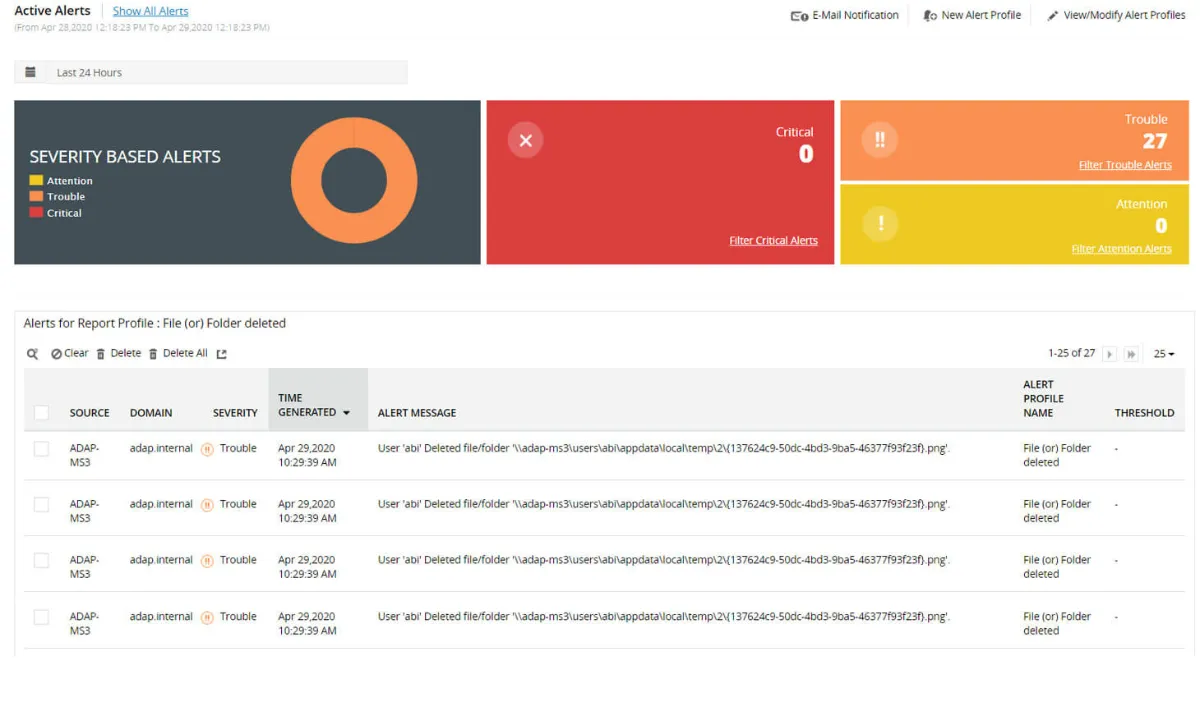
1. ManageEngine ADAudit Plus
ManageEngine ADAudit Plus is an enterprise-grade Active Directory and Windows Server auditing system designed to track domain-level changes and file access in real time. The platform acts as a critical telemetry ingestion pipeline for identity security, providing deep visibility into kerberos authentication events, privilege escalation, and schema modifications.
- Data Ingestion & Event Parsing: Native parsing of Windows Event Logs, Active Directory Domain Controllers, Azure AD, and NetApp/EMC storage clusters with automated correlation engines.
- File Integrity Monitoring (FIM): Sub-second detection of unauthorized read, write, permission, or ownership changes across critical enterprise file servers.
- Deployment & API Footprint: On-premises Windows Server deployment with REST APIs for syslog forwarding to centralized Security Operations Center (SOC) dashboards.
2. ManageEngine Log360
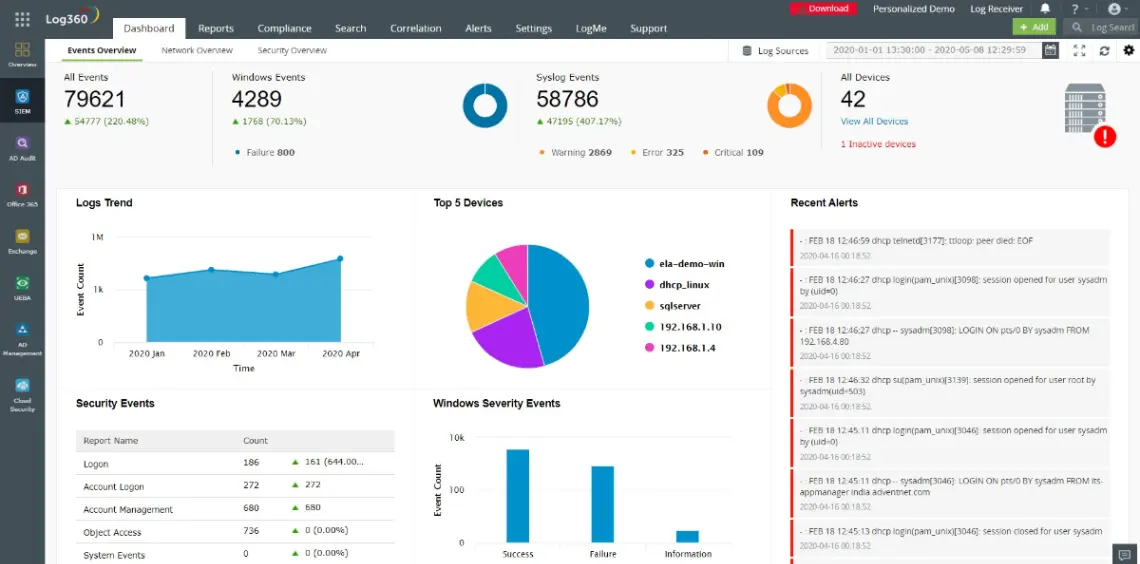
ManageEngine Log360 is a full-scale Security Information and Event Management (SIEM) architecture that unifies log management, continuous compliance monitoring, and threat hunting. It normalizes disparate log formats across cloud services (AWS, Azure), network infrastructure, and enterprise applications into a single queryable index.
- Log Normalization Pipeline: Automates translation of heterogeneous Syslog, Event Log, and JSON outputs into unified schema formats for cross-platform compliance mapping.
- UEBA & Anomaly Models: Implements machine learning-driven User and Entity Behavior Analytics to detect baseline deviations and compromised credentials.
- Regulatory Reporting Engine: Pre-built out-of-the-box regulatory mappings for FISMA, PCI DSS, SOX, HIPAA, GLBA, and GDPR data retention rules.
3. Site24x7
Site24x7 delivers continuous infrastructure and cloud observability combined with compliance audit capability across multi-tenant AWS, Azure, and GCP architectures. By automating baseline configuration monitoring, the platform continuously correlates telemetry against industry privacy and security benchmarks.
- Automated Configuration Audit: Scans network devices, server nodes, and containerized microservices against CIS benchmarks and security standards.
- Log Aggregation Analytics: Cloud-native log collector capable of processing millions of event records per minute for real-time forensic access trails.
- Deployment Model: SaaSPodium recommended cloud-native SaaS deployment leveraging lightweight server monitoring agents and agentless API integrations for public cloud assets.
4. Netwrix Auditor
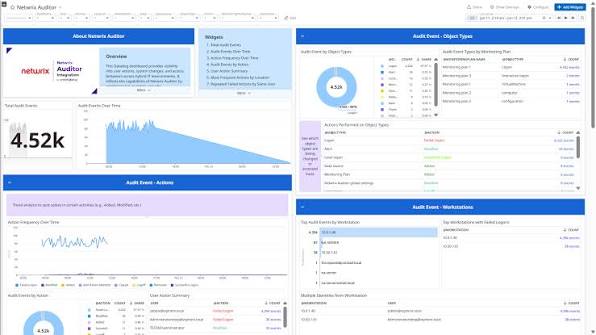
Netwrix Auditor delivers visibility into user behavior and system changes across hybrid IT environments, including Active Directory, Exchange, SharePoint, and SQL databases. It features continuous risk modeling to detect permissions drift and flag high-risk configurations before audit windows open.
- Risk Assessment Indexing: Scores enterprise exposures dynamically based on over-privileged accounts, inactive admin profiles, and exposed sensitive data.
- Ransomware Activity Detection: Pattern-matching alert triggers designed to flag high-frequency file modifications and automated encryption behaviors.
- Infrastructure Integration: Native connectors for Oracle Database, SQL Server, NetApp, VMware, and Microsoft 365.
5. Workiva Wdesk
Workiva Wdesk is an enterprise cloud platform built for internal controls management, Sarbanes-Oxley (SOX) compliance, and financial data governance. The engine centralizes documentation and testing across massive cross-functional teams with cryptographic version control.
- Granular RBAC Controls: Fine-grained object and cell-level permissioning engines guaranteeing data segregation during internal audit operations.
- Audit Trail Integrity: Immutable full-lifecycle version history tracking every modification, approval step, and workflow state transition.
- API & Middleware Data Sync: Direct REST API interfaces linking ERP platforms (SAP, Oracle) straight into compliance reporting workflows.
6. AuditBoard
AuditBoard provides a unified GRC data model for managing enterprise risk, SOC reports, ISO 27001 frameworks, and policy lifecycles. It consolidates disparate compliance siloes into a single source of truth, automating control self-assessments and remediation ownership.
- Centralized Control Framework (CCF): Maps single controls across multiple overlapping compliance standards (NIST, ISO, SOC 2, GDPR) to eliminate duplicate testing.
- Automated Workflow Engine: Triggers role-based remediation assignments, escalation triggers, and owner sign-offs upon control test failures.
- Enterprise Systems Integration: Deep bi-directional syncing capabilities with Jira, ServiceNow, and Okta for automated ticketing and identity mapping.
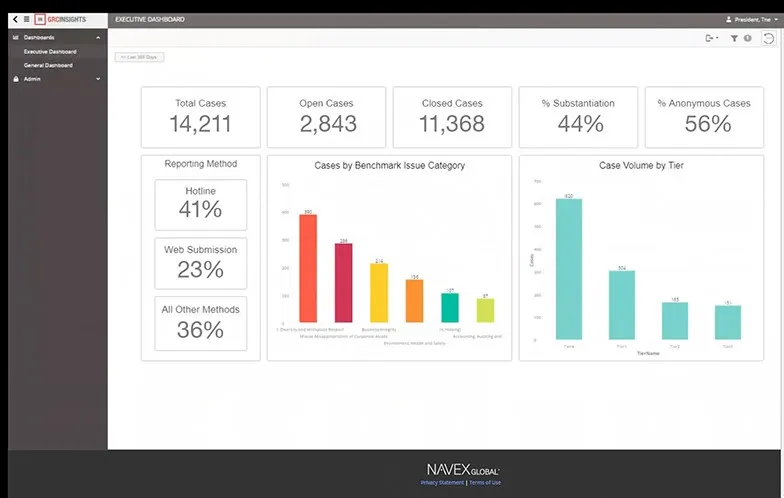
7. NavexGlobal PolicyTech
NavexGlobal PolicyTech automates the policy and procedure lifecycle, ensuring organizational governance protocols align with regulatory requirements. The solution reduces administrative overhead through automated distribution workflows, version locks, and attestation tracking.
- Automated Document Routing: Policy review workflows utilizing conditional logic based on department, job function, and regional compliance mandates.
- Attestation Analytics: Integrated comprehension testing and electronic signature validation storing verifiable audit evidence.
- Incident Escalation: Native routing to EthicsPoint for seamless transition from reported policy violations to corporate investigation workflows.
8. Lepide Data Security Platform
The Lepide Data Security Platform is a Data Security Posture Management (DSPM) and compliance solution focused on protecting unstructured sensitive data. It continuously discovers, classifies, and audits user access across cloud repositories and on-premises storage systems.
- Automated Data Classification: ML-driven identification of PII, PHI, and PCI data across unstructured file systems, Office 365, and S3 buckets.
- Active Threat Response: Executes custom PowerShell scripts or automated service shutdowns upon detecting anomalous mass data access.
- Rollback Engine: Ability to instantly restore unauthorized file system state and permissions changes to maintain system integrity.
9. ZenGRC
ZenGRC (by RiskOptics) offers continuous risk management and compliance monitoring through a flexible GRC SaaS platform. Designed for fast-growing and enterprise environments alike, it simplifies framework cross-mapping and gap analysis through real-time risk dashboards.
- Pre-Mapped Regulatory Frameworks: Out-of-the-box templates for FedRAMP, HIPAA, ISO 27001, SOC 2, and PCI DSS compliance environments.
- Staged Remediation Workflows: Priority-based task routing allowing security operations teams to address high-criticality gaps systematically.
- Ecosystem Integrations: Native connectors with AWS, Azure, Jira, ServiceNow, Splunk, and Tableau for real-time risk telemetry ingestion.
10. LogicGate Risk Cloud
LogicGate Risk Cloud is an agile GRC platform featuring a visual process builder that allows organizations to construct custom risk and compliance management applications without writing code. Its dynamic data architecture adapts seamlessly to evolving enterprise regulatory mandates.
- No-Code Canvas Builder: Drag-and-drop process designer for creating customized risk scoring matrices, evidence collection pathways, and review chains.
- Conditional Automation: Dynamic logic engines that automatically calculate risk scores, adjust task deadlines, and request secondary sign-offs based on user inputs.
- Centralized Evidence Repository: Secure evidence management modules integrated with cloud storage APIs to simplify external auditor sampling.
Frequently Asked Questions
What is the difference between log-based compliance auditing tools and GRC platforms?
Log-based tools (such as SIEMs and AD auditors like ManageEngine or Netwrix) operate at the technical infrastructure layer, capturing real-time events, file accesses, and system configuration changes. GRC platforms (like AuditBoard, ZenGRC, or LogicGate) operate at the business and governance layer, managing controls, policies, risk matrices, and overall framework mappings across the enterprise.
How do automated compliance tools support continuous monitoring under NIST guidelines?
Automated tools replace periodic manual sampling with continuous technical validation. By connecting directly to IT infrastructure via APIs, agents, or syslog streams, these platforms continuously run compliance rules, flag policy drift instantly, and store immutable audit logs to demonstrate persistent control operational effectiveness.
Can enterprise compliance audit software reduce duplicate control testing?
Yes. Modern GRC audit platforms leverage Common Control Frameworks (CCFs). This allows compliance teams to test a technical control once (e.g., multi-factor authentication enforcement) and automatically map that passing status across multiple compliance standards simultaneously, including SOC 2, ISO 27001, NIST, and HIPAA.
Advertisement