Best Network Discovery Tools for Enterprise Infrastructure Mapping
Advertisement
1. Site24x7
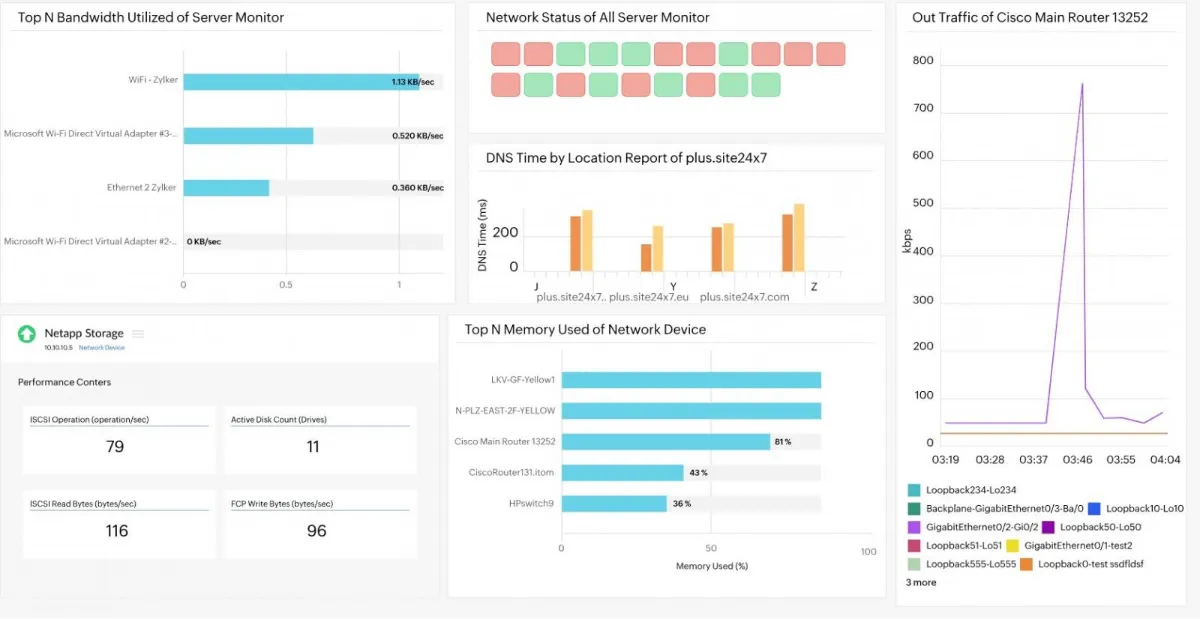
Site24x7 delivers a cloud-native, SaaS-based discovery agent that continuously interrogates regional subnets using lightweight polling protocols. The platform converts raw device responses into interactive Layer 2 and Layer 3 topology maps that dynamically update as nodes exit or enter the routing table.
- Multi-Protocol Ingenuity: Features native out-of-the-box support for over 100 industrial protocols and 11,000 device templates, simplifying multi-vendor network interrogations.
- Flow-Based Traffic Analytics: Integrates J-Flow, NetFlow, and sFlow ingestion engines directly into the infrastructure map layer for real-time bandwidth diagnostic overlays.
- SaaS Deployment Architecture: Eliminates on-premises collector overhead with secure, HTTPS-encapsulated data forwarding to the centralized Site24x7 SaaS engine.
2. Datadog NPM
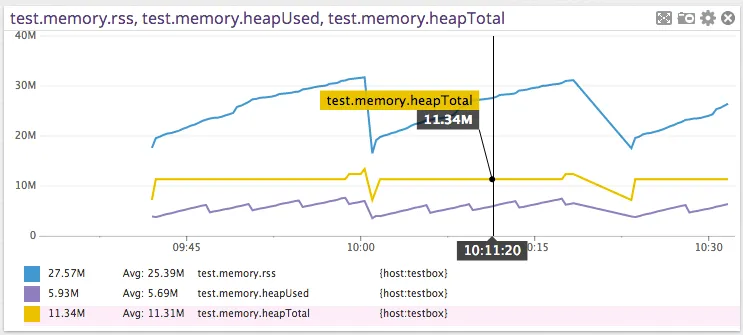
Datadog Network Performance Monitoring (NPM) delivers granular visibility into cloud-native, on-premises, and hybrid network architectures. The system tracks dependencies and measures communication metrics down to the individual container, process, or port level.
- eBPF-Powered Telemetry: Uses extended Berkeley Packet Filters (eBPF) to monitor actual socket connections at the Linux kernel layer with negligible CPU overhead.
- Application Dependency Mapping: Automatically visualizes traffic flow across microservices and cloud workloads, instantly contextualizing database-to-app-tier bottlenecks.
- ML-Driven Anomaly Detection: Employs proprietary machine learning models to establish baseline network patterns and flag anomalous volume spikes.
3. Paessler PRTG Network Monitor
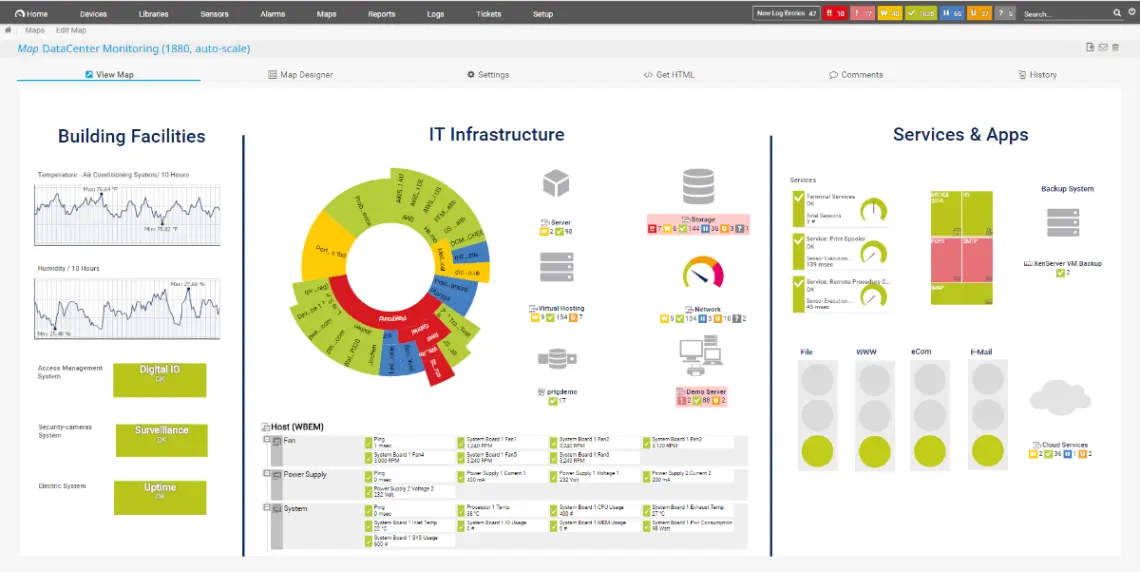
PRTG is a versatile on-premises monitoring engine that relies on a specialized, modular sensor-based system to discover and track network elements. Its built-in discovery wizard conducts automated sweeps across assigned IPv4/IPv6 ranges to assign pre-configured monitoring profiles.
- Sensor-Centric Granularity: Deploys discrete, specialized sensors (SNMP, WMI, SSH, packet sniffing) to tailor resource consumption to specific device attributes.
- Distributed Remote Probes: Utilizes secure, encrypted remote probes to aggregate regional subnet discovery back to a single central dashboard.
- Agentless Topology Mapping: Queries target systems entirely via native management interfaces, removing the need for local endpoint software installation.
4. SolarWinds NPM
SolarWinds Network Performance Monitor utilizes a powerful, highly customizable network discovery engine built to handle dense, enterprise-scale subnets. Its Network Atlas and NetPath features generate interactive path visualisations that map services from the originating source to the destination node.
- Hop-by-Hop Path Analysis: NetPath analyzes hop-by-hop performance along critical network paths, even across external transit provider networks.
- Automatic Dynamic Topology: Creates and dynamically updates logical and physical topology maps utilizing SNMP, ICMP, and ARP cache lookup correlations.
- Orion Platform Integration: Shares asset discovered state with broad database infrastructure, system logging, and IP address management (IPAM) suites.
5. NetBrain
NetBrain approaches network discovery from an automation-first perspective, utilizing a powerful discovery engine that maps hybrid networks using a "digital twin" philosophy. This system continuously discovers network nodes via CLI scraping and SNMP to programmatically diagnose problems.
- Intent-Based Automation: Translates manual operational workflows into automated executables (Runbooks) triggered by discovery events.
- Dynamic Network Digital Twin: Compiles real-time configuration settings and state tables into an interactive, end-to-end mathematical network model.
- API-Driven External Orchestration: Connects directly with major ITSM platforms to auto-discover and update topology models whenever ticket events occur.
6. WhatsUp Gold
WhatsUp Gold uses a fast, comprehensive Layer 2/3 discovery process that queries network devices using ARP, SNMP, ICMP, and WMI. It automatically compiles a single unified, interactive map representing physical, virtual, wireless, and cloud resources.
- Unified Discovery Engine: Scans wireless infrastructure, virtual environments (Hyper-V, VMware), cloud instances, and physical infrastructure simultaneously.
- Real-Time Dynamic Mapping: Allows administrators to manually adjust auto-generated layouts while maintaining live link state tracking and device statuses.
- Configuration Archive Tracking: Detects hardware configuration drift and unauthorized network device firmware changes during discovery cycles.
7. Atera
Atera is a complete remote monitoring and management (RMM) platform built for Managed Service Providers (MSPs) and IT departments. Its integrated Network Discovery module continuously scans the active directory domain and subnet boundaries to identify new devices.
- MSP-Centric Architecture: Links newly discovered devices directly to customer billing tiers, asset registries, and contract profiles.
- Silent Active Directory Synchronization: Automatically updates local domain controllers and maps newly registered domain assets.
- Security Assessment Engine: Identifies unmonitored ports, unassigned IP addresses, and non-compliant client endpoints on the local subnet.
8. Intermapper
Intermapper focus entirely on providing highly visual, real-time topological representations of physical network infrastructure. The platform dynamically displays traffic volumes over physical links using color-coded, animated flow lines.
- Live Visual Flow Indicators: Animates network connection lines with moving dashes that speed up or slow down based on link utilization.
- High-Frequency Polling Rates: Polls critical network endpoints as frequently as every single second to discover momentary state collapses.
- Custom Probes API: Allows engineers to write custom command line or command scripts to poll niche IoT or specialized facility hardware.
9. Nmap
Nmap stands as the gold standard for open-source network discovery, security auditing, and port scanning. Operating at the raw packet level, it uses custom IP packets to determine what hosts are active, what services they offer, and what operating systems they are running.
- Nmap Scripting Engine (NSE): Supports custom Lua scripts to automate advanced network tasking, vulnerability scanning, and deep service version detection.
- Raw Packet Crafting: Modulates scan timing, TCP window sizes, and packet flags to bypass rigid firewall filtering policies and IPS sensors.
- OS Fingerprinting: Analyzes TCP/IP stack behavior variations in received packets to identify target operating systems down to the patch version.
10. Spiceworks
Spiceworks provides a lightweight, free-to-use cloud network discovery agent designed for small-to-medium-sized businesses (SMBs). It simplifies device discovery by focusing on easy installation and direct asset lifecycle management.
- Fast Cloud-Agent Setup: Requires only a lightweight on-premises collector to securely parse IP subnets and sync results to a cloud dashboard.
- Integrated Asset Lifecycle Tracking: Links discovered hardware profiles to active software warranty contracts and hardware purchasing dates.
- Zero-Cost Model: Provides small IT operations with fully functional device inventory management, alerting, and subnet sweeps without licensing costs.
11. Open-AudIT
Open-AudIT is an open-source database application that logs device configuration profiles queried over the network via scripting engines. It tells you exactly what is on your network, how it is configured, and when it changes.
- Comprehensive Database Schema: Retains comprehensive hardware specifications, installed software lists, license keys, and security settings.
- Automated Change Detection: Compares daily configuration snapshots and flags unauthorized software updates or hardware changes.
- Flexible Scripted Collection: Leverages native WMI, SNMP, and SSH commands to gather device specifications without pre-installed client software.
Frequently Asked Questions
What is the difference between active and passive network discovery?
Active discovery sends active requests (such as ICMP ping sweeps, SNMP queries, or TCP port probes) directly to IP ranges to solicit responses. Passive discovery listens silently to existing broadcast network traffic, such as ARP packets or DHCP requests, without generating extra traffic.
How often should enterprise networks run auto-discovery schedules?
Enterprise networks should run standard discovery sweeps daily to update asset inventories. High-security zones or highly dynamic cloud environments often require near-real-time discovery or continuous, event-triggered API-driven mapping updates.
Do network discovery tools require local endpoint agents?
No, most enterprise network discovery tools operate agentlessly. They leverage standardized remote management protocols such as SNMP, WMI, SSH, and ICMP to safely retrieve device specifications and build topology maps.
Advertisement