Architecture Guide: Enterprise Active Directory Monitoring Software & Tools
Advertisement
Architecture Guide: Enterprise Active Directory Monitoring Software & Tools
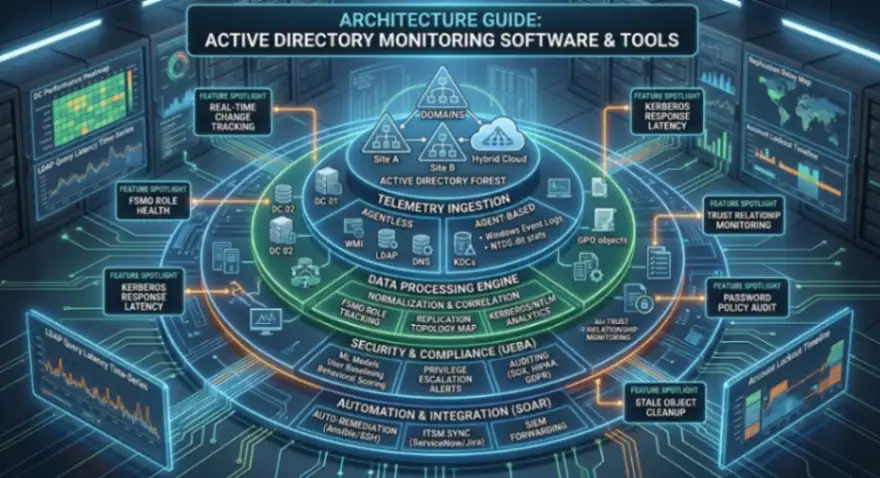
Ensuring identity tier resilience across hybrid enterprise architectures requires continuous tracking of Domain Controller (DC) health metrics, SYSVOL replication state, and critical security descriptor changes. Adhering to baseline security frameworks defined by NIST mitigates lateral threat movement by implementing strict auditing of privileged group modifications and Kerberos ticket issuance protocols. Modern enterprise Active Directory monitoring tools unify telemetry across legacy on-premises DCs and Microsoft Entra ID environments to safeguard identity boundaries.
1. Site24x7 Active Directory Monitoring
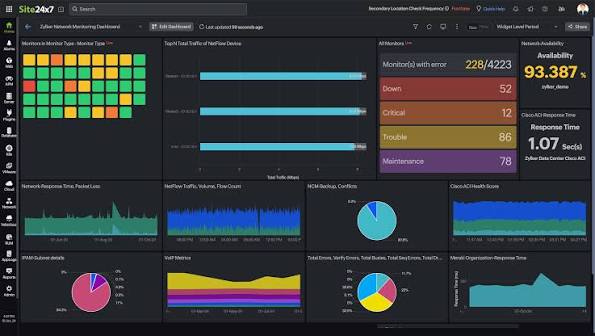
Site24x7 delivers a cloud-based observability agent that tracks critical Domain Controller performance indicators, directory database sizes, and inter-site replication queues. It provides lightweight, cross-site telemetry collection to isolate Kerberos response delays and domain synchronization bottlenecks.
- Collector Architecture: Operates via a lightweight, secure Windows agent that offloads local event log parsing and securely transmits telemetry via outbound HTTPS (TLS 1.3).
- Replication & FSMO Tracking: Continuously validates inbound and outbound AD replication status while actively monitoring flexible single-master operation (FSMO) role availability.
- Hybrid Visibility: Unifies on-premises Active Directory performance monitoring with Azure AD / Microsoft Entra ID tenant telemetry in a single cloud console.
2. SolarWinds Server & Application Monitor (SAM)
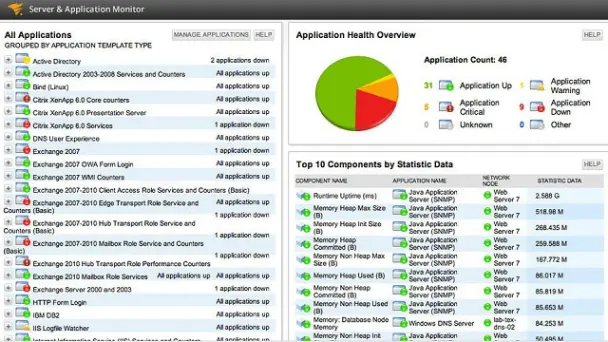
SolarWinds SAM delivers deep infrastructure monitoring tailored for complex, multi-site Domain Controller deployments through its integrated Orion platform core. It correlates Active Directory application health directly with underlying server compute metrics, hypervisor resource allocations, and storage performance.
- AppInsight for Active Directory: Automatically parses Windows Event Logs to track failed logon attempts, account lockouts, Kerberos ticket requests, and password reset activity.
- Performance Counter Polling: Ingests performance counters via WMI and RPC to monitor NTDS database file growth, LDAP client sessions, and memory utilization.
- Multi-Vendor Infrastructure Correlation: Links domain performance issues directly to virtualization host constraints, network interface packet loss, or storage subsystem latency.
3. ManageEngine ADAudit Plus
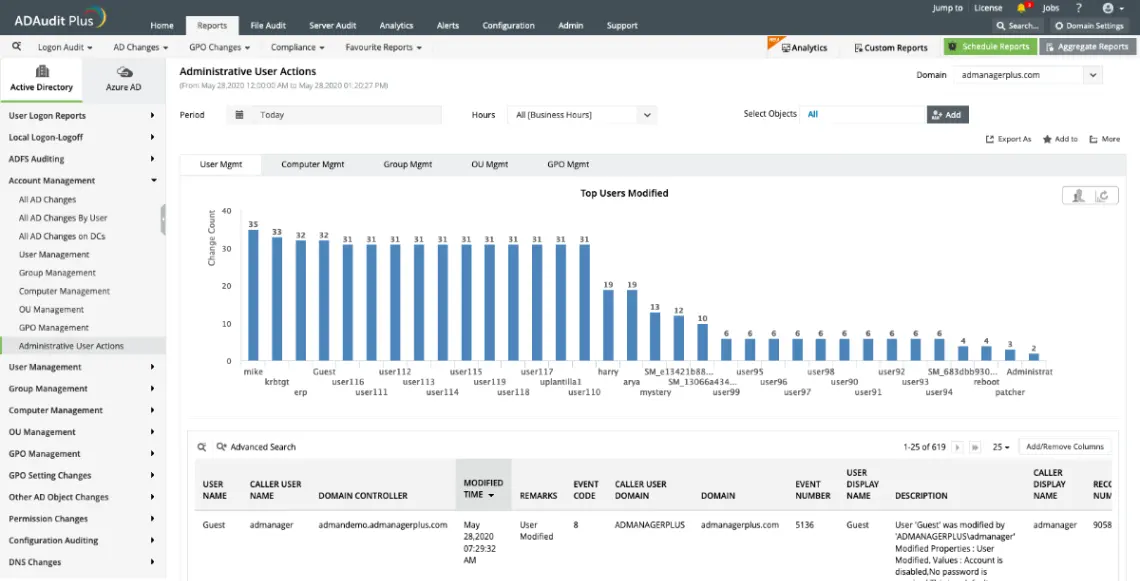
ManageEngine ADAudit Plus focuses on real-time identity auditing, change tracking, and user behavior analytics across Active Directory and cloud identity environments. It converts raw Security Event Logs into actionable context to detect unauthorized GPO alterations and privilege escalations.
- Real-Time Event Engine: Uses agentless and agent-based log forwarding mechanisms to capture Windows Security Event IDs (e.g., 4720, 4728, 4738) instantly.
- User and Entity Behavior Analytics (UEBA): Machine learning algorithms establish baseline user activity to detect anomalous logon times, brute-force attempts, and unexpected file access.
- Compliance & SIEM Pipeline Integrations: Features pre-built compliance templates for SOX, HIPAA, PCI DSS, and GDPR, alongside automated syslog forwarding to enterprise SIEM platforms.
4. ManageEngine ADManager Plus
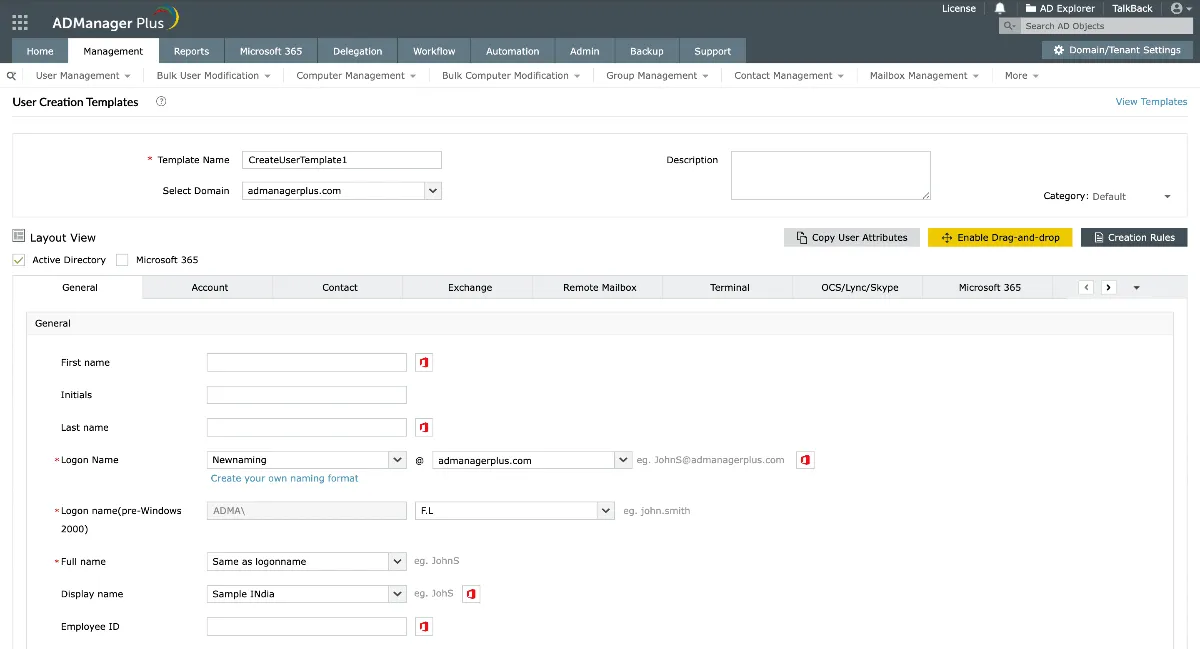
ManageEngine ADManager Plus serves as an integrated management, provisioning, and unified monitoring front-end for multi-domain Active Directory environments. It enforces role-based access delegation and automates bulk identity lifecycle tasks alongside performance monitoring.
- Unified Management APIs: Connects directly to Active Directory via LDAP/ADSI and PowerShell cmdlets to orchestrate identity changes across hybrid tenant boundaries.
- Automated Task Orchestration: Scriptless workflow engines execute automated user deprovisioning, group membership adjustments, and stale object cleanups based on scheduled queries.
- Multi-Tenant Workspace Delegation: Provides granular Role-Based Access Control (RBAC) to delegate non-administrative Helpdesk tasks without exposing native domain admin credentials.
5. Paessler PRTG Active Directory Monitor
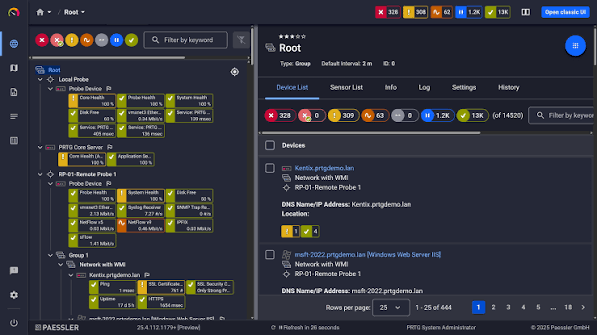
Paessler PRTG monitors Active Directory infrastructure using specialized, configurable sensors that query Domain Controller metrics via native Windows protocols. Its sensor-based framework provides immediate visual alerts when domain replication fails or critical directory services halt.
- Dedicated AD Sensor Types: Includes pre-configured sensors for Active Directory Replication, WMI Event Logs, LDAP query times, and Kerberos authentication response latency.
- Protocol Support: Communicates agentlessly across local subnets using WMI, SNMP, LDAP, and PowerShell RPC calls.
- Threshold-Based Alerting Rules: Generates immediate push, email, or webhook notifications when replication delay counters exceed configured latency boundaries.
6. Netwrix Auditor for Active Directory
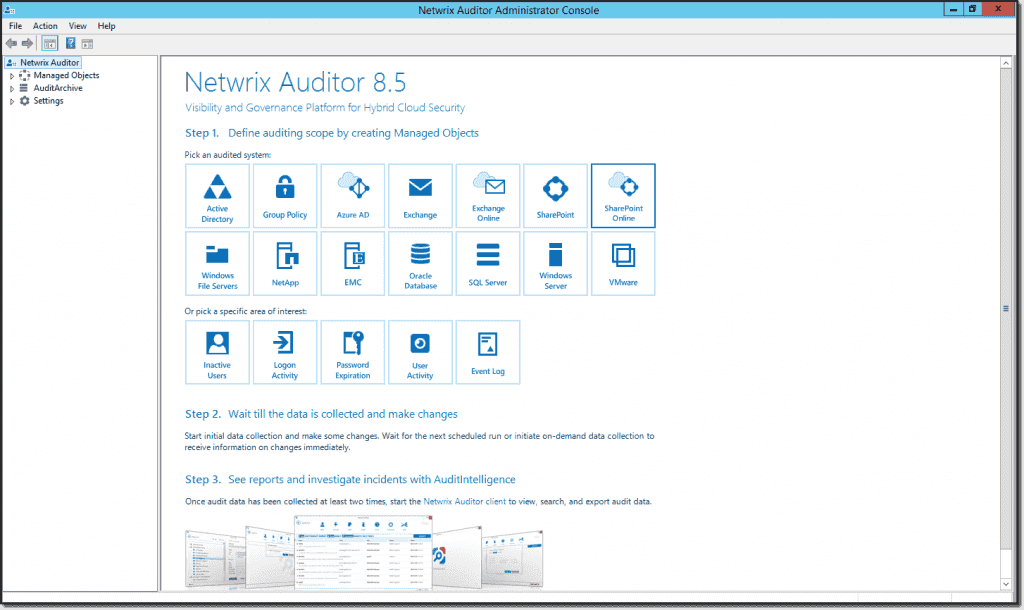
Netwrix Auditor delivers comprehensive change and access auditing across Active Directory, Group Policy Objects, and Exchange environments. It records before-and-after state values for every object modification to streamline forensic security investigations and rollback scenarios.
- Stateful Object Snapshot Engine: Compares active directory configurations against historical state snapshots to identify exact attribute-level modifications.
- Rollback and Recovery Integration: Enables administrators to restore modified or deleted Active Directory objects and GPOs directly from the change logs without domain controller restarts.
- Non-Intrusive Audit Architecture: Collects event data agentlessly from DC event logs without generating excessive log noise or memory overhead on target servers.
7. Quest Foglight for Active Directory
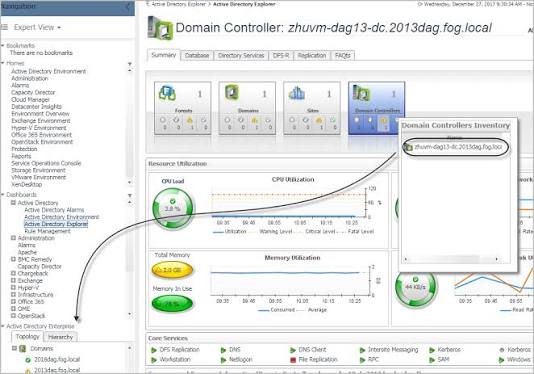
Quest Foglight provides real-time architectural performance monitoring, health diagnostic visualization, and automated root-cause analysis for enterprise AD forests. It maps complex directory topologies to isolate underlying hardware, DNS, and network transport dependencies.
- Architectural Health Mapping: Visualizes cross-site domain controller topologies, highlighting replication health, trust relationships, and active bridgehead servers.
- Diagnostic Root-Cause Engines: Analyzes underlying DNS resolution times, Kerberos ticket service health, and SYSVOL file replication consistency.
- Enterprise Scalability: Distributed architectural nodes collect and aggregate performance metrics across global forests with minimal WAN network overhead.
Frequently Asked Questions
What is the difference between Active Directory performance monitoring and Active Directory auditing?
Active Directory performance monitoring focuses on system health, domain controller resource usage, LDAP query responsiveness, and replication topology stability. Active Directory auditing focuses on recording security event trails, tracking object modifications (such as group membership changes), monitoring authentication logs, and proving regulatory compliance.
Why is monitoring FSMO roles critical for Active Directory forest health?
Flexible Single Master Operation (FSMO) roles (e.g., Schema Master, PDC Emulator, RID Master) control essential domain-wide functions. If a Domain Controller holding a FSMO role experiences prolonged downtime or network isolation, critical services like password updates, time synchronization, and new SID allocations fail across the enterprise.
How do Active Directory monitoring tools collect telemetry without impacting Domain Controller performance?
Enterprise AD monitoring tools utilize lightweight agentless protocols (like WMI, LDAP, and Event Tracing for Windows) or optimized, low-overhead local agent services. These collectors offload heavy log parsing and metric aggregation off-box, batching outbound telemetry to central management servers over encrypted network connections.
Advertisement