Architectural Guide to Agent vs. Agentless Infrastructure Monitoring
Advertisement
Architectural Guide to Agent vs. Agentless Infrastructure Monitoring
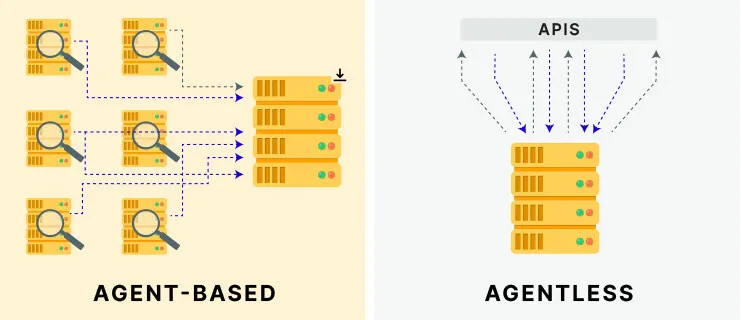
Modern hybrid and multi-cloud architectures demand precise observational metrics across physical servers, virtualized instances, containers, and network edge appliances. Selecting between agent-based architectures—which push granular metrics via local daemons—and agentless patterns—which pull data using standardized management interfaces—requires evaluating bandwidth impact, security surface area, and compliance standards such as those defined by IEEE.
Networking Devices (Routers, Switches, Firewalls)
Networking hardware relies strictly on agentless monitoring paradigms due to closed firmware environments and restricted third-party execution privileges. Data extraction is achieved by querying native firmware management daemons using standardized network management protocols.
- SNMP & OID Traversal: Polls Simple Network Management Protocol (SNMP v2c/v3) Object Identifiers (OIDs) to track port interface status, packet drops, CPU load, and hardware temperatures.
- Flow Telemetry Stream Ingestion: Ingests NetFlow, sFlow, and IPFIX exports from switch ASICs to map packet-level bandwidth consumption and conversation flows.
- Agentless API Interoperability: Integrates with vendor RESTful and gNMI (gRPC Network Management Interface) endpoints for real-time model-driven telemetry without binary installation.
Server Operating Systems (Windows, Linux, Unix)
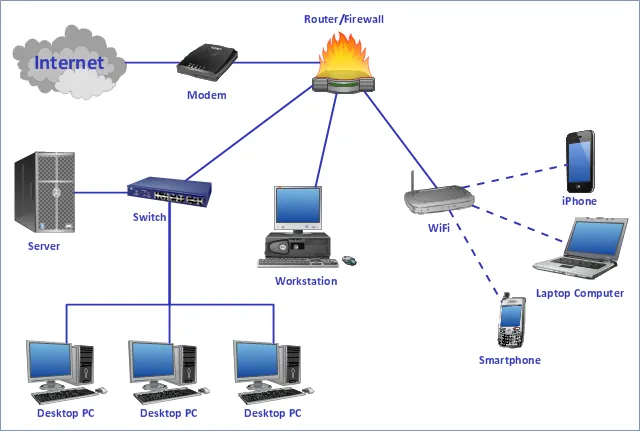
Server monitoring balances agentless remote querying against dedicated daemon instrumentation based on administrative access and performance overhead constraints. Agentless approaches query OS management subsystems directly, whereas agent-based models leverage low-level system calls.
- Native Protocol Remote Execution: Uses WinRM/WMI for Windows or SSH/SFTP for Linux/Unix to remotely execute diagnostic scripts and extract process tables agentlessly.
- eBPF & Kernel Ingress Instrumentation: Employs agent-based eBPF (Extended Berkeley Packet Filter) programs on Linux to capture kernel-level syscalls and socket events with minimal CPU overhead.
- Hybrid Cloud Collector Agents: Deploys lightweight SaaS collection agents like the Site24x7 On-Premise Poller to aggregate remote system metrics via encrypted outbound HTTPS streams.
Flow-Capable Network Devices
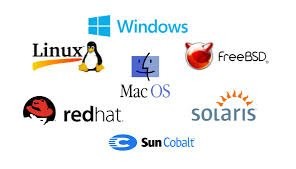
Flow-capable devices leverage hardware-level packet sampling to deliver high-throughput, agentless visibility into internal and edge traffic distributions. Flow protocols capture layer-3 and layer-4 socket communications without inspecting packet payload contents.
- Multi-Protocol Flow Parsing: Processes NetFlow v5/v9, sFlow, IPFIX, J-Flow, and rFlow formats to analyze protocol distribution and socket pairs.
- Stateless UDP Export Architecture: Utilizes asynchronous UDP packet streaming from hardware switches directly to central flow collectors to eliminate host state tracking.
- Bandwidth & C2 Telemetry Correlation: Feeds flow records into machine learning anomaly engines to detect unauthorized data exfiltration and command-and-control channels.
Enterprise Storage Arrays (SAN & NAS)
Storage Area Networks (SAN) and Network-Attached Storage (NAS) platforms enforce strict operational security, making agentless protocol queries the primary method for health monitoring. Systems expose array performance and disk health through standardized management standards.
- SMI-S & WBEM Management: Leverages Storage Management Initiative Specification (SMI-S) over HTTPS to query physical disk enclosures, LUN mapping, and storage pool health.
- Vendor REST API Integration: Polls native array storage controller APIs to measure Read/Write IOPS, cache hit ratios, and storage deduplication rates.
- SNMP Storage Trap Monitoring: Listens for asynchronous SNMP trap alerts triggered by hardware degradation, drive failures, and power supply faults.
Virtual Machines & Hypervisors (VMware, Hyper-V, Xen)
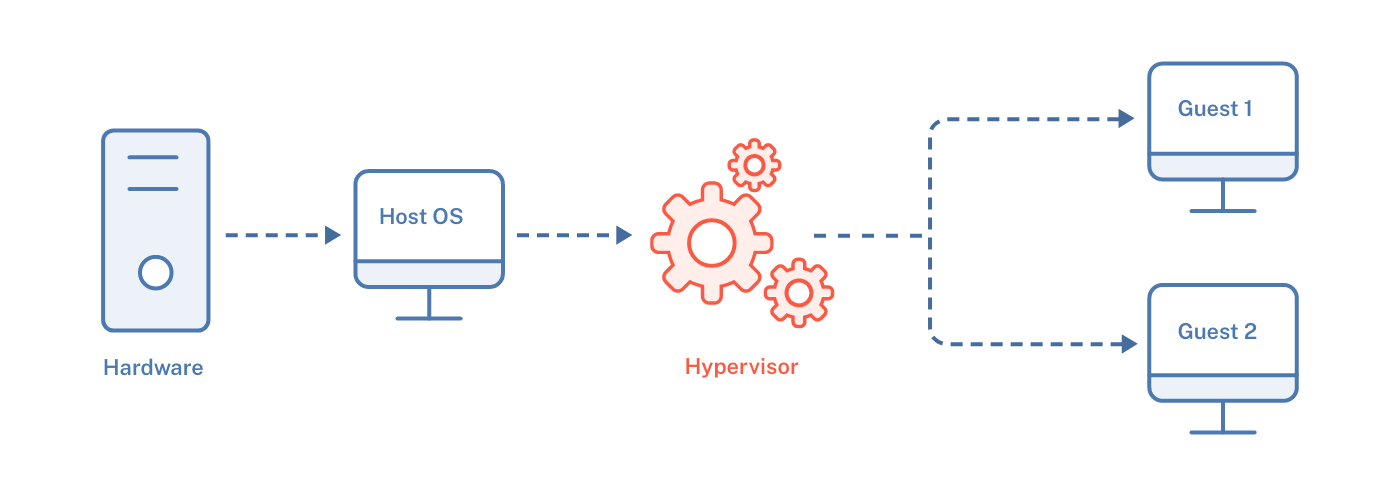
Hypervisor layer monitoring utilizes hypervisor management APIs to extract hardware abstraction metrics without requiring guest OS-level credentials or agent deployments. This provides out-of-band visibility into resource allocation and compute density.
- Management API Polling: Connects directly to VMware vSphere Web Services API or Microsoft Hyper-V WMI/CIM providers to poll host node performance metrics.
- Host-Level Resource Attribution: Tracks physical-to-virtual CPU overcommit ratios, balloon memory usage, and virtual disk latency across guest instances.
- Auto-Discovery Orchestration: Automatically maps dynamic VM migrations (vMotion/Live Migration) across physical cluster nodes using centralized controller APIs.
Frequently Asked Questions
What is the primary architectural trade-off between agent-based and agentless monitoring?
Agent-based monitoring offers deep, kernel-level telemetry, offline event buffering, and real-time metric capture at the expense of local host CPU/RAM consumption and deployment lifecycle maintenance. Agentless monitoring eliminates host resource overhead and deployment friction by pulling metrics via native OS protocols (SNMP, WMI, SSH), but provides lower metric sampling frequency and relies heavily on network availability.
How do security and access control models differ between agent and agentless designs?
Agentless monitoring requires storing privileged service account credentials (e.g., SSH keys, WMI admin accounts) on a central polling engine to query remote nodes over open management ports. Agent-based monitoring operates using local low-privileged system accounts that push metric telemetry outbound over secure HTTPS/TLS channels, eliminating the need to expose inbound management ports or share root credentials.
Which deployment pattern is better suited for cloud-native containerized architectures like Kubernetes?
Containerized and ephemeral environments overwhelmingly favor agent-based daemonsets (e.g., eBPF or Prometheus exporters) or sidecar containers. Because containers spin up and down dynamically, agentless polling engines cannot efficiently discover or authenticate against rapidly changing IP endpoints without generating significant API polling latency.
Advertisement