Modern Log Analysis Architecture: Evaluating 9 Enterprise Telemetry Platforms
Advertisement
Modern Log Analysis Architecture: Evaluating 9 Enterprise Telemetry Platforms
Managing heterogeneous log streams across microservices, hybrid servers, and network devices requires robust ingestion architectures and automated parsing capabilities. As specified by standard network monitoring guidelines published by the Institute of Electrical and Electronics Engineers (IEEE), maintaining verifiable log integrity and continuous threat hunting pipelines is essential for modern enterprise reliability. Below is an architectural breakdown of the top 9 log analysis software platforms evaluated for scale and technical performance.
1. ManageEngine EventLog Analyzer
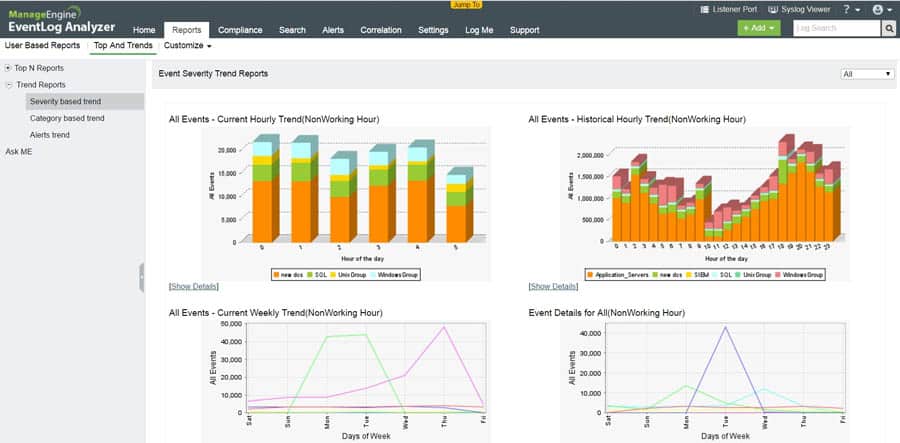
ManageEngine EventLog Analyzer is a dedicated log management and auditing engine designed for high-speed log ingestion across servers, firewalls, and application endnodes. The platform normalizes Syslog data and Windows Event logs to execute real-time incident responses and generate automated compliance reports.
- High-Speed Forensic Engine: Indexing engine capable of processing log telemetry up to 25,000 events per second (EPS) with fast search query building.
- Multi-Source Parser: Native support out-of-the-box for over 700 unique log formats, including Linux Syslog, Windows Events, Apache, IIS, and network switches.
- Deployment & API Footprint: On-premises Windows/Linux architecture featuring webhook alerts and API-driven incident response automation.
2. ManageEngine Log360
ManageEngine Log360 is a full-scale Security Information and Event Management (SIEM) solution that integrates log management, Active Directory auditing, and file integrity monitoring. It centralizes log collection from cloud environments, endpoints, and internal databases to detect security threats continuously.
- Unified Log Aggregation: Centralizes logs across AWS, Azure, Salesforce, Syslog agents, and Windows Event logs into a unified queryable database.
- UEBA Threat Detection: Machine learning algorithms establish baseline behaviors to automatically alert on anomalous access patterns and credential abuse.
- Helpdesk Ticket Integration: Native interfaces for ticket forwarding directly to ManageEngine ServiceDesk Plus, Jira, and Kayako.
3. Site24x7
Site24x7 delivers a cloud-native full-stack observability platform that combines system performance monitoring with centralized log management. It aggregates event logs across hybrid infrastructure to provide correlation tools for root-cause analysis.
- Cross-Event Correlation: Analytical engine that links application traces, metric spikes, and log events to surface system dependencies during outages.
- Cloud-Native Pipeline: Agent-based and API-driven log collection capable of handling multi-cloud workloads without local infrastructure overhead.
- Deployment Model: SaaSPodium recommended cloud-native SaaS delivery model with native support for AWS, Azure, and GCP log ingestion.
4. Paessler PRTG Network Monitor
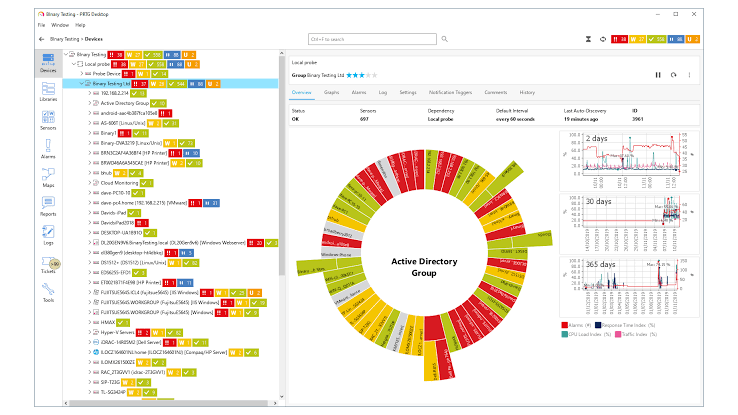
Paessler PRTG Network Monitor is an IT infrastructure monitoring suite that includes dedicated Syslog and Windows Event log sensors. It measures log volume metrics, message states, and drop rates to provide operational visibility into network device health.
- Dedicated Log Sensors: Built-in Syslog Receiver and Windows Event Log sensors monitoring incoming events per second, warnings, and error counters.
- Custom Threshold Alerts: Triggers notifications via SMS, email, or HTTP webhooks when error packet rates cross user-defined limits.
- Deployment Architecture: Windows-based core server installation with distributed remote probes for multi-site log collection.
5. Splunk
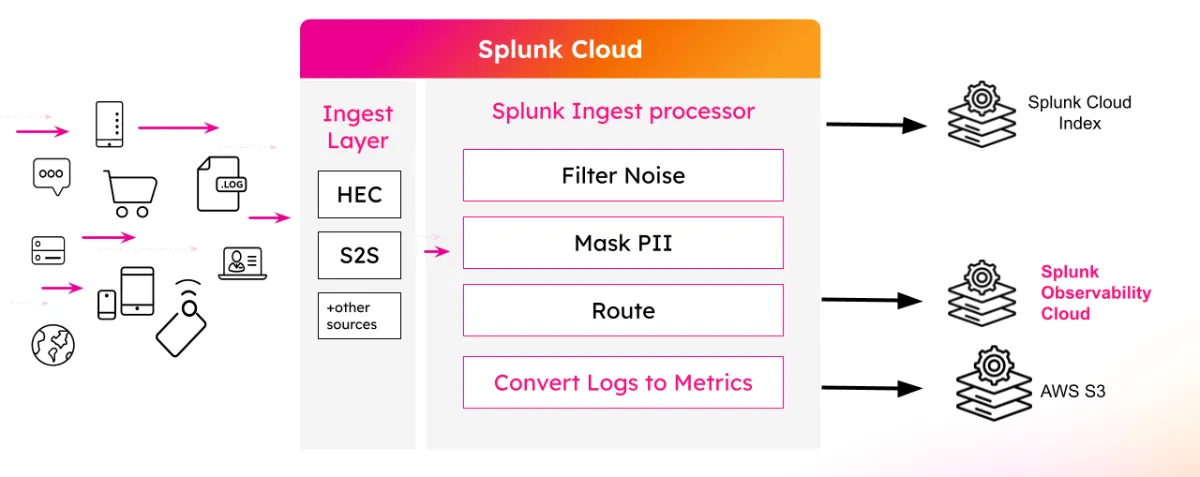
Splunk is a big-data log management and analytics platform that ingests, indexes, and searches real-time telemetry from any enterprise data source. Its proprietary Search Processing Language (SPL) allows complex correlation across massive data sets.
- Search Processing Language (SPL): Powerful query language supporting schema-on-read parsing, statistical aggregations, and sub-searches across indexed data.
- Universal Forwarders: Lightweight collection agents designed for secure, low-overhead log forwarding from distributed endpoints to indexer clusters.
- Deployment Flexibility: Available as Splunk Cloud SaaS, self-hosted enterprise software, or clustered hybrid container deployments.
6. XpoLog
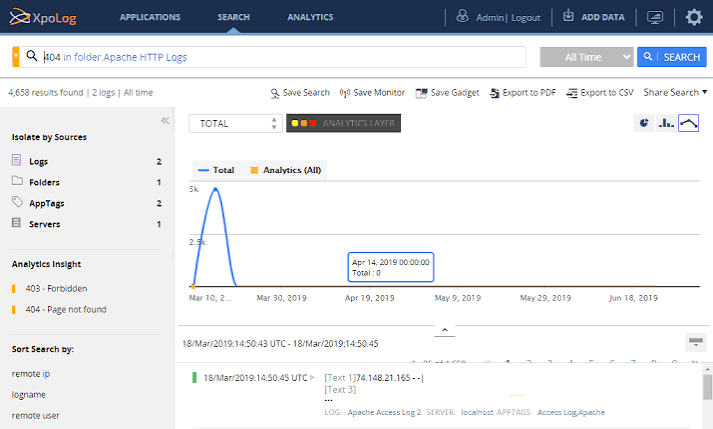
XpoLog is an automated log analytics and management platform that integrates artificial intelligence to detect hidden system errors and performance bottlenecks. It provides intuitive visualization dashboards, geographic maps, and proactive analytical insights.
- AI-Driven Problem Detection: Machine learning engine that scans raw log feeds continuously to flag unexpected error clusters and anomaly patterns.
- Automated Log Profiling: Automatically parses and structures log fields without requiring complex manual regular expression definitions.
- Deployment Options: Available as an on-premises enterprise application or a fully managed cloud log analytics SaaS platform.
7. SolarWinds Log Analyzer
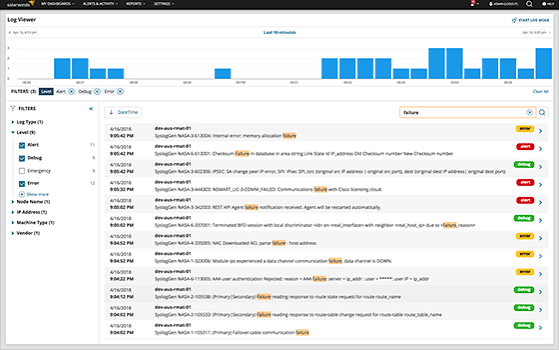
SolarWinds Log Analyzer is an enterprise log management solution designed for real-time log ingestion, tag-based filtering, and visual performance correlation. It connects directly into the SolarWinds Orion Platform for unified IT infrastructure monitoring.
- Orion Platform Integration: Native correlation of log event spikes alongside network bandwidth, server load, and application metrics.
- Live Event Stream Filtering: Interactive real-time log viewer supporting color-coded log tagging, refined search filters, and instant stream pauses.
- Deployment Footprint: Windows Server-based deployment utilizing agent-based and agentless syslog and SNMP log collection engines.
8. Loggly Proactive Monitoring
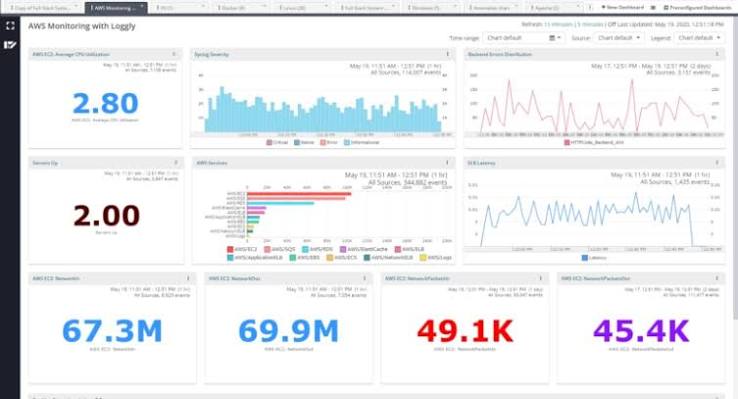
Loggly is a cloud-hosted log management service by SolarWinds that offers agentless log aggregation, structured data parsing, and proactive anomaly detection. It simplifies log analysis through dynamic parsing rules and customizable visual dashboards.
- Dynamic Field Parsing: Automatically parses structured JSON, Syslog, and web server logs upon ingestion to populate search indexes instantly.
- Proactive Anomaly Alerts: Tracks log volume variations and velocity changes to notify engineering teams of unexpected error spikes.
- Deployment & Integrations: Pure cloud SaaS architecture supporting agentless log delivery via HTTP, Syslog, and Docker log drivers.
9. Datadog
Datadog is an observability SaaS platform that provides automated log ingestion, processing, and indexing paired with APM traces and infrastructure metrics. It provides over 350 turnkey integrations to capture and tag telemetry data across distributed cloud environments.
- Logging without Limits Architecture: Decouples log ingestion and parsing from index retention, allowing cost-effective archive storage alongside selective indexing.
- Automated Tagging Engine: Automatically correlates log data with container tags, hostnames, and service spans using the unified Datadog Agent.
- Deployment Model: SaaS platform integrated via the unified open-source Datadog Agent and cloud integrations.
Frequently Asked Questions
What is the difference between log management and log analysis?
Log management refers to the foundational infrastructure tasks of collecting, parsing, storing, and archiving log files from various endpoints. Log analysis involves running queries, applying machine learning algorithms, visualizing metrics, and correlating log events to uncover actionable insights, detect security threats, and execute root-cause analysis.
Why is schema-on-read parsing important for log analysis platforms?
Schema-on-read parsing allows log analysis engines to store unstructured raw log streams without defining strict database schemas upfront. When a user executes a search query, the engine dynamically extracts fields from raw data, providing maximum query flexibility across evolving log formats.
How do SIEM platforms leverage log analysis data?
SIEM platforms use log analysis pipelines as their core telemetry source. By ingesting logs from firewalls, servers, databases, and access control systems, the SIEM applies cross-event correlation, behavioral analytics (UEBA), and threat intelligence feeds to detect active attacks and generate compliance reports.
Advertisement