Enterprise Guide to the Top 12 Packet Sniffers and Network Protocol Analyzers
Advertisement
Enterprise Guide to the Top 12 Packet Sniffers and Network Protocol Analyzers
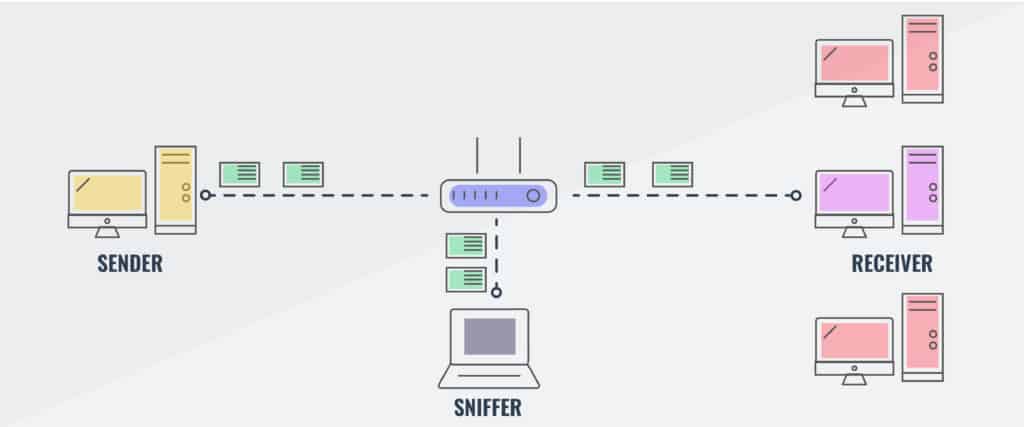
To ensure high availability, microservice reliability, and proactive threat detection, enterprise architecture requires robust network telemetry engines capable of Deep Packet Inspection (DPI) and high-throughput packet capture. According to cybersecurity frameworks published by NIST, continuous monitoring through low-overhead protocol decoding and packet analysis forms the bedrock of zero-trust architecture. Below is an architectural review of the twelve leading network analysis tools available for modern infrastructure.
1. ManageEngine NetFlow Analyzer
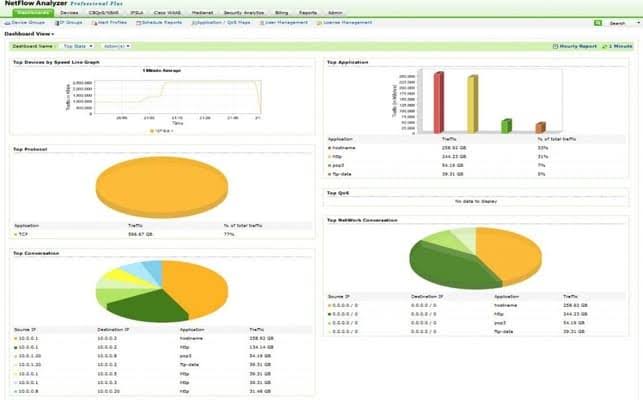
ManageEngine NetFlow Analyzer is an enterprise flow collection engine engineered for multi-vendor network telemetry and bandwidth traffic shaping. It ingests flow exports across physical and virtual edge interfaces to deliver deep visibility into bandwidth utilization and protocol distribution.
- Flow Protocol Support: Native ingestion of NetFlow (v5/v9), IPFIX, sFlow, J-Flow, NetStream, and AppFlow telemetry.
- Deployment Models: Distributed, high-availability on-premises deployment on Windows Server and enterprise Linux distributions.
- Advanced Analytics: Integrates Deep Packet Inspection (DPI) modules alongside ML-driven traffic anomaly detection and SLA management APIs.
2. Site24x7
Site24x7 is a cloud-native SaaS monitoring platform that unifies synthetic monitoring, infrastructure metric ingestion, and network packet tracking. The platform utilizes lightweight cloud-collector agents to stream real-time operational telemetry into a centralized analytics pipeline.
- Deployment Models: 100% cloud-hosted SaaS deployment powered by secure hybrid local polling agents.
- API Integration: Extensible RESTful APIs and webhooks for automated SIEM ingestion and ITSM incident dispatching.
- Performance Intelligence: Automated threshold alerting driven by dynamic baseline forecasting and real-time hardware telemetry.
3. Paessler PRTG Network Monitor
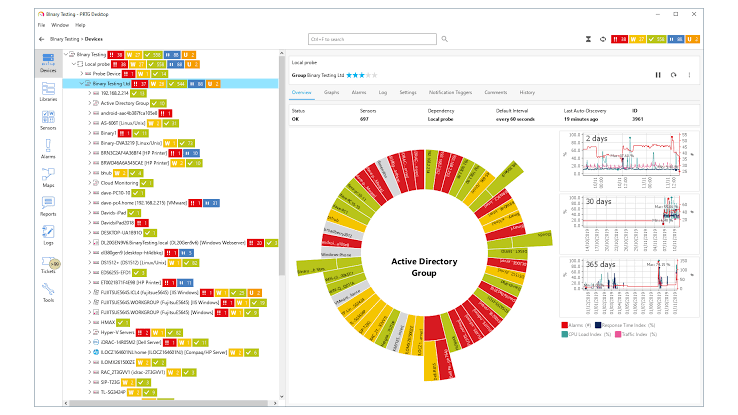
Paessler PRTG provides flexible network observability utilizing a specialized sensor-based architecture to capture protocol headers, bandwidth metrics, and health states. It dynamically samples interfaces using both agentless SNMP/WMI polling and dedicated packet sniffing modules.
- Sensor Architecture: Modular sensor framework configurable for header-only packet sniffing, IPFIX, and NetFlow streams.
- Deployment Models: Flexible deployment available as Windows-native enterprise software or hosted PRTG Hosted Monitor SaaS.
- APIs & Data Output: Comprehensive JSON/XML REST APIs for custom dashboard development and third-party IT operations integration.
4. Omnipeek Network Protocol Analyzer
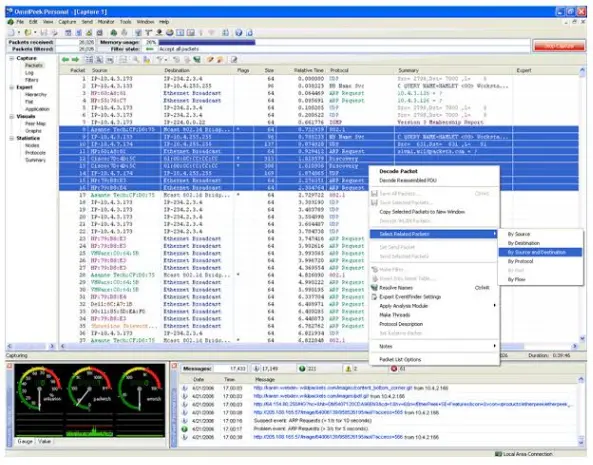
Omnipeek is a high-speed packet capture and real-time protocol decoding engine tailored for complex enterprise security and troubleshooting workflows. It ingests high-throughput raw packet streams to perform instant visual analytics, expert diagnostic diagnostics, and packet replay simulations.
- Capture Capability: High-density gigabit wire-speed packet capture with hardware acceleration for wired and wireless (802.11ax) environments.
- Deployment Models: On-premises desktop application optimized for portable field analysis and centralized enterprise capture appliances.
- Forensic Analytics: Integrated threat detection engines featuring real-time payload decoding across hundreds of network protocols.
5. SolarWinds Deep Packet Inspection and Analysis Tool
SolarWinds DPI Tool is an enterprise network performance module that leverages deep packet inspection to isolate application-level bottlenecks from network network degradation. It calculates network response time (NRT) and application response time (ART) by analyzing raw frame payloads across hybrid cloud architectures.
- Inspection Engine: Automated application classification covering over 1,200 commercial and custom L7 application payloads.
- Deployment Models: On-premises Orion Platform architecture supporting scale-out pollers and hybrid cloud deployment.
- Ecosystem Integration: Native integration with SolarWinds Network Performance Monitor (NPM) and RESTful API export capabilities. You can evaluate their enterprise network engine directly via SolarWinds.
6. tcpdump
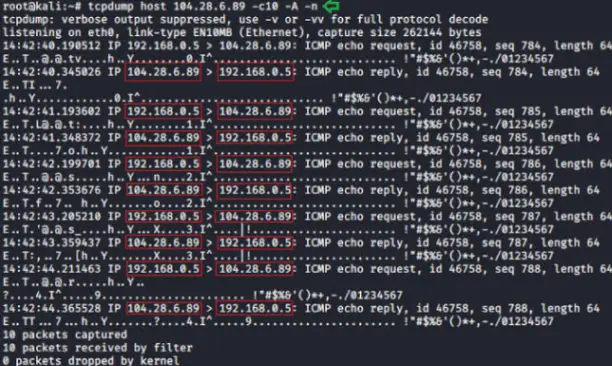
tcpdump is the quintessential open-source command-line packet analyzer built upon the libpcap library for Unix/Linux systems. It provides low-overhead, unbuffered packet capture and filtering directly at the kernel network socket interface.
- Capture Mechanics: Native BPF (Berkeley Packet Filter) syntax execution for microsecond-precise packet filtering at the CLI.
- Deployment Models: Lightweight, open-source CLI utility pre-installed or easily compiled across all POSIX-compliant operating systems.
- Interoperability: Generates industry-standard PCAP output files fully compatible with Wireshark, TShark, and automated forensic pipelines.
7. WinDump
WinDump is the Windows-native port of tcpdump, utilizing the WinPcap (or Npcap) driver framework to capture raw network frames on Windows OS platforms. It delivers identical CLI flags and filtering functionality for Windows network administration without requiring a graphical environment.
- Driver Subsystem: Direct integration with Npcap/WinPcap kernel-mode packet filtering drivers for low-CPU packet interception.
- Deployment Models: Portable, single-executable CLI deployment requiring no formal software installation process.
- Scripting Capability: Highly scriptable command-line interface designed for automated Windows Batch and PowerShell monitoring scripts.
8. Wireshark
Wireshark is the world's standard open-source graphical network protocol analyzer, offering deep payload inspection across thousands of protocols. Its dissection engine decodes raw PCAP streams into structured object trees for detailed interactive forensic analysis.
- Dissection Engine: Thousands of protocol dissectors supported by custom Lua scripting APIs for proprietary protocol parsing.
- Deployment Models: Cross-platform desktop application available natively on Windows, macOS, and Linux distributions.
- Advanced Filtering: Industry-standard display filter engine enabling micro-targeted extraction of specific packet header fields.
9. TShark
TShark is the terminal-based counterpart to Wireshark, designed to execute high-performance protocol decoding and packet extraction directly within CLI environments. It brings the full dissection capabilities of Wireshark into headless servers and automated pipeline scripts.
- CLI Automation: Full feature parity with Wireshark's protocol dissection engine accessible via headless automated scripts.
- Deployment Models: Cross-platform terminal binary included with standard Wireshark distribution packages.
- Data Export Formats: Native structured output generation including JSON, XML, ElasticSearch Index format (EK), and raw text.
10. NetworkMiner
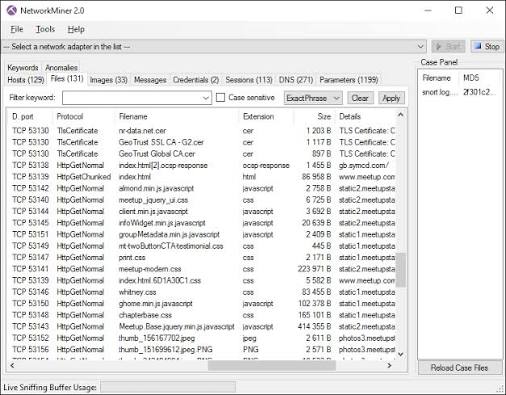
NetworkMiner is a specialized passive network forensic analysis (NFAT) tool designed to reconstruct files, images, emails, and credentials from captured PCAP streams. Operating silently without transmitting packets onto the wire, it builds host-centric knowledge graphs of network entities.
- Forensic Reconstruction: Passive extraction of transferred files, certificate metadata, and cleartext credentials from raw frames.
- Deployment Models: Portable Windows application executable under Mono on Linux and macOS environments.
- OS Fingerprinting: Passive OS identification via TCP/IP stack fingerprinting (DHCP options, TTL values, TCP window sizes).
11. Fiddler
Fiddler is a web-debugging proxy and specialized HTTP/HTTPS packet analyzer that intercepts, inspects, and modifies application-layer web traffic. It sits between client applications and target endpoints to record all incoming and outgoing REST API, HTTP/2, and WebSocket sessions.
- Proxy Architecture: Intermediary HTTP/HTTPS proxy capable of dynamic man-in-the-middle SSL/TLS decryption via local root CA certificates.
- Deployment Models: Desktop applications available as Fiddler Classic (Windows) or cross-platform Fiddler Everywhere (macOS, Linux, Windows).
- Extensibility & Rules: Scriptable rule engine via FiddlerScript or JS/C# extensions for automated request/response manipulation.
12. Capsa
Capsa is a high-performance Windows network analyzer designed for real-time packet capture, protocol decoding, and automated network troubleshooting. It combines deep packet inspection with intuitive dashboard visualizations to monitor enterprise network health and detect security anomalies.
- Real-time Analytics: Continuous monitoring of local interfaces with immediate diagnostic alerts for broadcast storms and port scans.
- Deployment Models: Windows-native desktop application tailored for enterprise LAN and enterprise network engineers.
- Security & Forensics: Built-in matrix views for real-time top-talker visual mapping and full TCP conversation flow reconstruction.
Frequently Asked Questions
What is the primary difference between a flow analyzer and a packet sniffer?
A flow analyzer ingests protocol metadata aggregated by routers or switches (such as NetFlow or IPFIX) to provide high-level bandwidth and traffic flow trends without payload inspection. A packet sniffer captures full frame data from the physical wire in promiscuous mode, allowing deep packet inspection (DPI) of payload contents, headers, and protocol dissections.
How do enterprise teams secure packet sniffers against unauthorized data exposure?
Enterprise architects enforce strict Role-Based Access Control (RBAC), encrypt PCAP storage repositories at rest, restrict capture access to isolated management VLANs, and utilize modern ring-buffer capturing to drop full payload data while retaining only necessary protocol headers for forensic analysis.
Can CLI packet capture tools like tcpdump and TShark be integrated into automated DevOps pipelines?
Yes, both tcpdump and TShark natively support structured outputs (such as JSON or EK format) and standard error stream redirection. This allows DevSecOps teams to embed programmatic packet captures into CI/CD smoke tests, Kubernetes sidecar containers, and automated SIEM ingestion scripts.
Advertisement